Technology
Hitachi's ¥699.7bn half shows who profits from the AI power rush
Hitachi's first-half results show that the money in artificial intelligence is flowing to the companies that build grids, transformers and power links. The group raised its full-year forecast, and its Indian arm is adding factories to keep up.
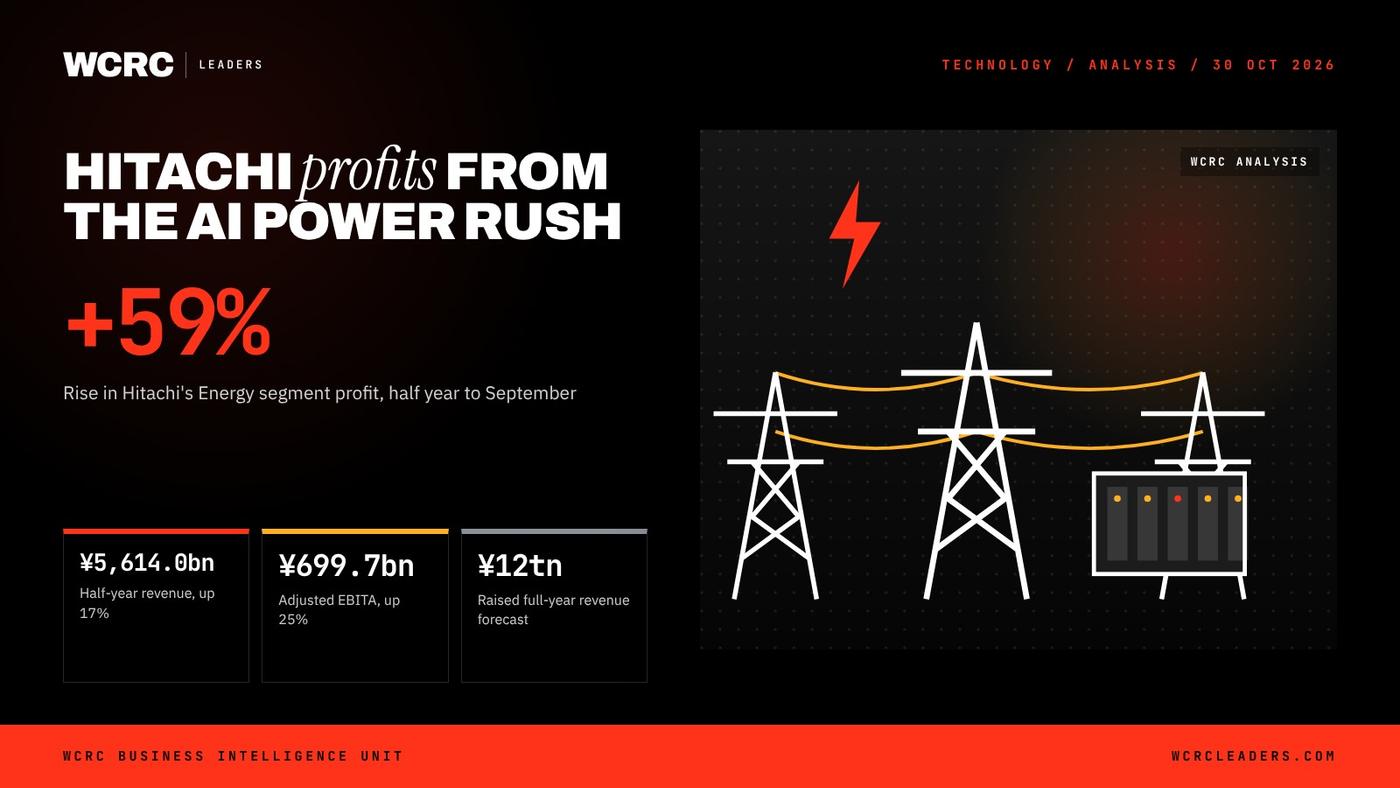
At a glance: WCRC Leaders' assessment: Hitachi is now one of the clearest beneficiaries of the AI build-out, because data centres need power equipment before they need software. On 28 October 2026 the Japanese group reported revenue of ¥5,614.0bn for the six months to 30 September, up 17%, and adjusted EBITA of ¥699.7bn, up 25%. Its Energy segment grew profit 59%. It raised its full-year revenue forecast to ¥12tn. For boards in India, the Gulf and Asia, the message is that grid capacity, not chips, is becoming the bottleneck.
What did Hitachi report?
Hitachi's consolidated results for the first half of its 2026 financial year, published on 28 October, show revenue of ¥5,614.0bn, against ¥4,787.4bn a year earlier. Adjusted EBITA, the measure the company uses for segment profit, rose 25% to ¥699.7bn. Adjusted operating income climbed 27% to ¥643.3bn.
The bottom line moved the other way. Net income attributable to Hitachi stockholders fell 12% to ¥416.6bn, and EBIT fell 8% to ¥627.5bn. The company's results presentation explains why: the year-earlier figure included a gain from the sale of its air-conditioning joint venture. In the second quarter alone, net income was ¥227.1bn, down ¥53.4bn, but the presentation says it would have risen by ¥38.3bn without that one-off comparison.
Second-quarter revenue was ¥2,904.4bn, up 15%, or 10% excluding currency effects. Adjusted EBITA for the quarter was ¥376.1bn, a margin of 12.9%.
Hitachi also raised its guidance. The full-year revenue forecast went up by ¥300bn to ¥12,000bn. Adjusted EBITA guidance rose by ¥40bn to ¥1,560bn, and the net income forecast rose by ¥20bn to ¥920bn. The interim dividend goes to ¥32 from ¥28, and the group expects total shareholder returns of ¥814bn for the year, including share buybacks of ¥550bn.
Why is energy the engine?
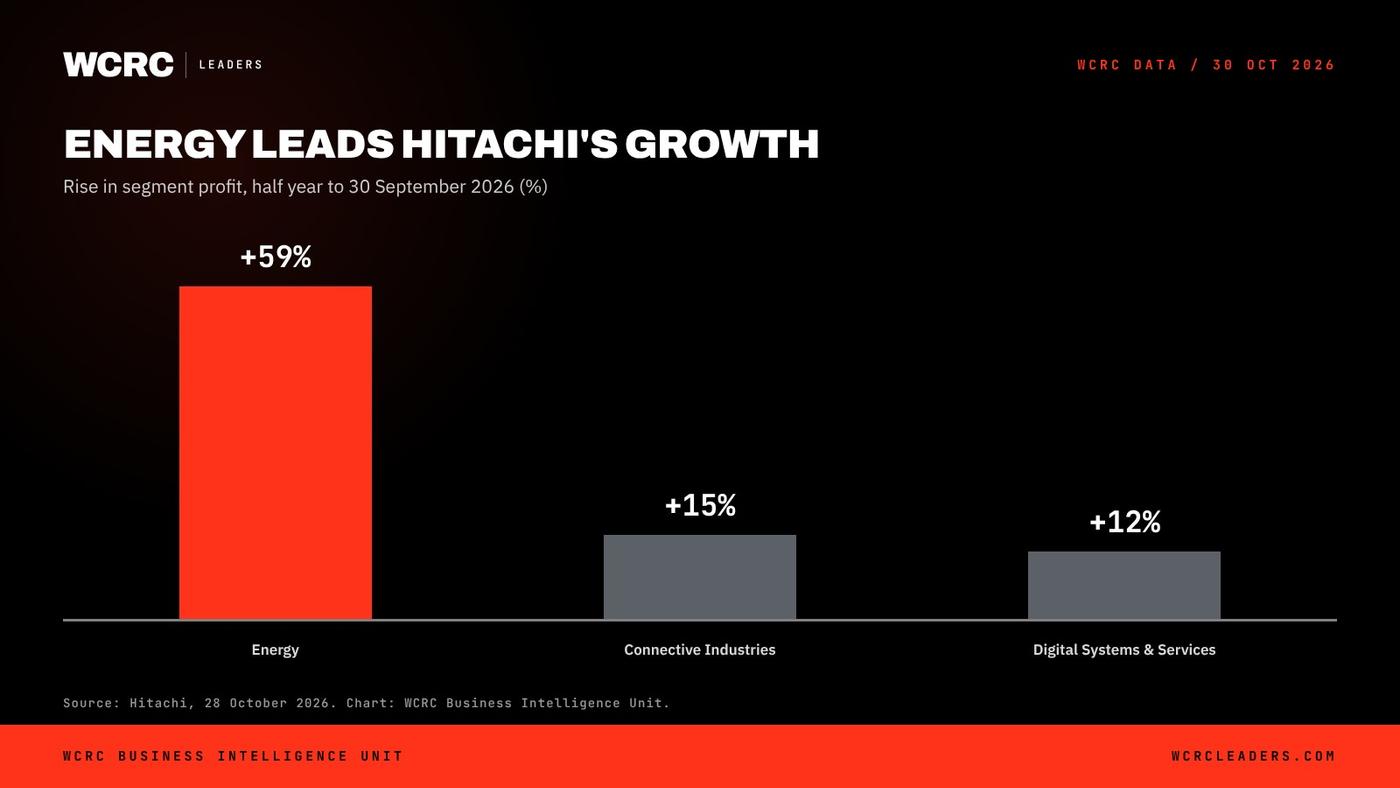
The Energy segment, which includes Hitachi Energy's grid business, is where the growth sits. Its first-half revenue rose 32% to ¥1,872.4bn and its segment profit rose 59% to ¥274.9bn. That makes Energy Hitachi's largest segment by both revenue and profit, ahead of Digital Systems & Services (profit up 12%) and Connective Industries (profit up 15%).
Orders tell the same story. Energy orders were ¥1,566.2bn in the second quarter, up 47%, and ¥3,472.5bn for the half, up 66%. The results presentation names data centre orders and data centre business growth among the drivers, alongside uninterruptible power supply products.
Hitachi Energy's own figures are striking. Second-quarter revenue was $5.60bn, up 17%, with an adjusted EBITA margin of 15.9%, an improvement of 270 basis points. The unit's order backlog stood at ¥10.5tn ($66.9bn) at the end of September. Hitachi now expects Hitachi Energy to deliver $23.65bn of revenue this year, up 20%, at a margin of 15.7%.
The logic is simple. Every new AI data centre needs a grid connection, transformers, switchgear and, often, high-voltage links to bring in power from far away. Those products take years to build and install, and the order books show customers are queuing. The same pattern appears at the hyperscalers: WCRC has written on Microsoft's $677bn backlog and the AI build Asia now has to supply.
What does this mean for India?
India is where Hitachi's grid business is adding capacity fastest. Hitachi Energy India, one of WCRC 1000, India's Most Valuable Enterprises 2026, reported revenue of ₹8,147.7 crore for the year to March 2026, up 27.6%. Its order backlog reached a record ₹29,555.3 crore, up 53.5%, on orders of ₹18,456.5 crore for the year.
In May its board approved a further ₹2,000 crore of capital spending, including a greenfield plant for large power transformers at Karjan in Vadodara, Gujarat. That takes cumulative capital expenditure announced since October 2024 to ₹4,000 crore. The company said data centres were the largest contributor to its fourth-quarter orders, followed by rail and metro, and that exports made up 36.8% of quarterly orders, with buyers in the US, Europe and Asia Pacific. It also commissioned India's first HVDC city-centre infeed, in Mumbai.
"A strong order backlog and long-term planning have sustained the Company's growth momentum," said N Venu, Managing Director and CEO of Hitachi Energy India.
Hitachi Energy India is also selected among India's Most Loved 250 Workplaces 2026 by the Business Intelligence Unit of WCRC.
For Indian manufacturers the point is that the country is becoming an export base for grid equipment, not only a market. That puts it in competition with Chinese, Korean and European factories for the same global orders. Indian engineering groups are seeing similar demand; WCRC's analysis of L&T's record ₹147,665 crore order haul found most of it energy-related, but with thinner margins.
Where do the Gulf and rail fit?
Hitachi Energy has deep roots in the Gulf. In May 2023 it signed agreements with Saudi Electricity Company and ENOWA, the utility for NEOM, to design and develop the first phase of a transmission system of three HVDC links with combined capacity of up to 9 gigawatts. The first is a 3 GW, 525 kV link connecting Oxagon with the Yanbu area, more than 650 km away.
Gulf governments now want to connect their grids more closely. WCRC has looked at how the UAE-Saudi rail and grid pact treats physical integration as policy. Interconnectors and long-distance transmission are exactly what Hitachi Energy sells, and Gulf ambitions to host AI data centres add further demand.
Rail is the slower half of the infrastructure story. Hitachi's Mobility segment, which contains Hitachi Rail, grew first-half revenue 18% to ¥693.0bn and profit 37% to ¥55.9bn. Second-quarter orders rose 69% to ¥404.1bn, which the company tied to large rail vehicle and rail control projects in Europe. Mobility's full-year guidance was unchanged, at ¥1,450bn of revenue and a 9.4% margin. Hitachi Rail has also said it will embed its HMAX digital technology in all new rolling stock from 2027.
How much is digital, and what about Lumada?
Hitachi's digital business, Lumada, posted first-half revenue of ¥2,428.0bn, up 31%. The company raised its full-year Lumada forecast to ¥5,200bn. HMAX, its AI-enabled offering for infrastructure such as trains, grids and data centres, earned ¥238.0bn in the half, and its forecast was raised to ¥510bn, a 70% increase on last year.
Analysis: this is the part of the story that matters most for Asian industrial groups. Hitachi is not selling hardware or software alone. It is selling equipment with data services attached, and charging for both over the life of the asset. That model rewards companies that already own large installed bases.
The WCRC View
The call. Hitachi's half shows that the AI boom has a physical layer that pays as well as the digital one. Energy profit up 59%, a ¥10.5tn backlog at Hitachi Energy and a raised group forecast all point the same way. Read through Corporate Value Intelligence, WCRC's framework for interpreting enterprise value, the market is rewarding firms with long, visible order books in grid equipment, and Hitachi Energy India's place in WCRC 1000 reflects that shift.
Who gains. Grid equipment makers with factories in India, utilities that secured equipment early, and Gulf states that want to host data centres. Who loses: developers who assumed power would be available on demand, and late buyers facing long lead times.
Separate fact from projection. In the terms of SeeClear, a model in WCRC's Guru Management Codex, boards should distinguish signed orders from forecasts of AI demand. Hitachi's backlog is fact. The assumption that data centre spending rises indefinitely is a projection, and capacity plans should be tested against a slower case.
People are the constraint. New transformer plants need skilled engineers, welders and testers. Read through WCRC's Workplace Equity Index, employers that offer equitable opportunity and transparency will find it easier to staff fast expansion in Gujarat and elsewhere.
What leaders should do now. CEOs in India and the Gulf planning data centres or industrial parks should lock in grid connections and equipment slots now. Asian industrial groups should look at whether their own installed base can carry a services and software layer, as Hitachi's does.
What WCRC will watch. Hitachi's full-year results, Hitachi Energy India's next quarterly order intake, progress on the Karjan plant, and whether Gulf grid interconnection plans become funded contracts.
WCRC models applied: Corporate Value Intelligence, WCRC 1000, SeeClear (Guru Management Codex), Workplace Equity Index.
Quick answers
Q: What were Hitachi's first-half 2026 results? A: For the six months to 30 September 2026, revenue rose 17% to ¥5,614.0bn, adjusted EBITA rose 25% to ¥699.7bn, and net income attributable to stockholders fell 12% to ¥416.6bn.
Q: Did Hitachi raise its full-year forecast? A: Yes. It raised its revenue forecast to ¥12,000bn, adjusted EBITA to ¥1,560bn and net income to ¥920bn.
Q: Why is Hitachi Energy growing? A: Demand for grid equipment, including from data centres, lifted Energy segment orders 66% in the half. Hitachi Energy's backlog stood at ¥10.5tn at the end of September.
Q: What is Hitachi Energy India investing? A: Its board approved ₹2,000 crore in May 2026, including a large power transformer plant at Karjan, Vadodara, taking cumulative announced capital spending to ₹4,000 crore.
SK hynix shelves the Solidigm IPO: what it says about the AI capex cycle
Junior hires fall to 9% at Anthropic: a warning for India's IT pyramid
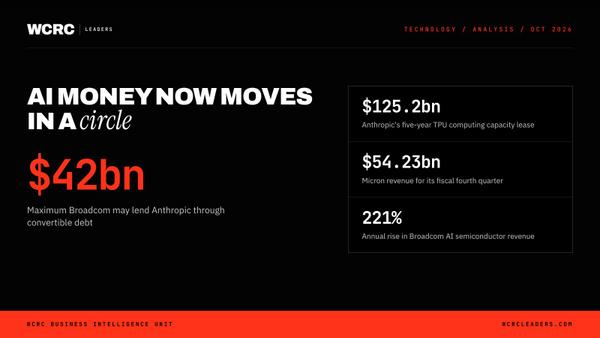
Supplier-funded compute: what CFOs should read into the AI financing loop
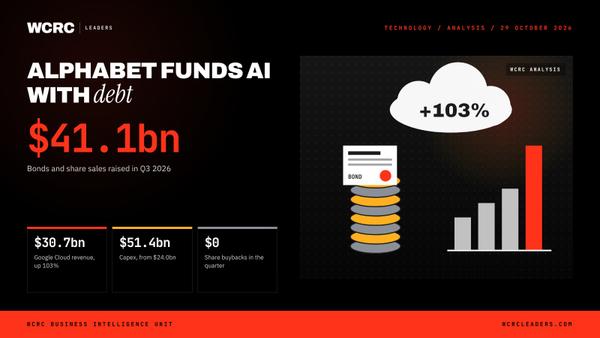
Google Cloud doubles revenue as Alphabet funds AI with debt

China's 40-technology export list puts India's solar push on notice
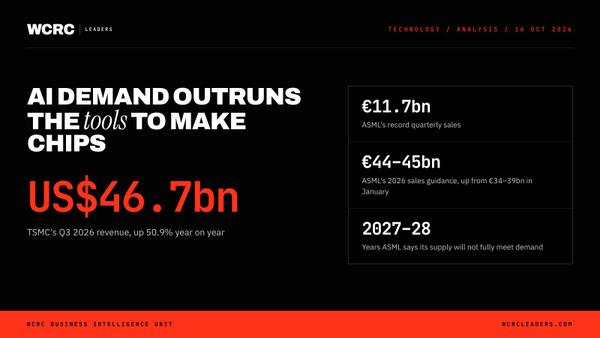
TSMC and ASML post records, and ASML says supply falls short to 2028
Filed under