Technology
SK hynix shelves the Solidigm IPO: what it says about the AI capex cycle
The world's leading AI memory maker has walked away from listing its US storage arm, blaming market volatility rather than weaker demand. For buyers and builders of AI infrastructure in India, the Gulf and Asia, the decision says more about the cost of capital than about the cycle itself.
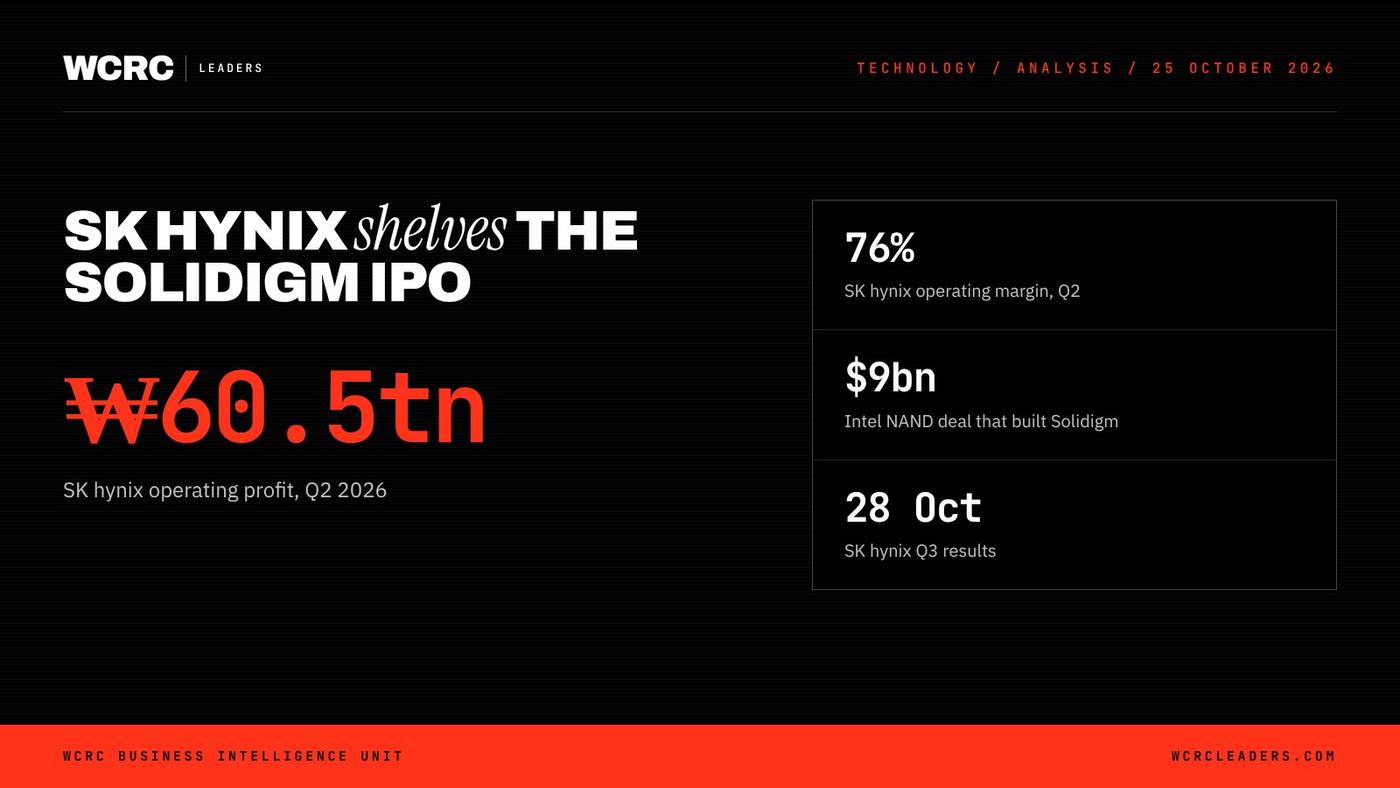
At a glance: WCRC Leaders' assessment: SK hynix has pulled the Solidigm IPO because public markets stopped paying for AI growth, not because AI demand has slowed, and that gap is now the main risk in the AI capex cycle. On 23 October SK hynix said Solidigm will halt its review of pre-IPO and IPO options after a broader correction in semiconductor stocks. The listing was meant to help fund new US capacity for AI storage. SK hynix reports third-quarter results on 28 October.
What exactly did SK hynix announce?
In a statement on 23 October 2026, SK hynix said its US-based subsidiary Solidigm "will halt its review of potential pre-IPO and IPO options." The company said both businesses are performing well, but that "financial market volatility has increased, contributing to a broader correction in semiconductor stocks." Having reassessed whether a listing still served SK hynix and its existing shareholders, Solidigm ended the review.
The statement is explicit that the need for money has not gone away. Solidigm's existing production facilities, it said, have limited capacity to meet rising demand, and the company needs additional production capacity in the United States. SK hynix had weighed two routes: investing directly, or raising outside capital through an IPO. A listing could have strengthened group cash flow, funded new facilities and supported "shareholder returns through dividends, share repurchases, and share cancellations."
Capacity expansion remains a priority. SK hynix said it will keep reviewing the timing, scale and financing of the investment and will explore other ways to support Solidigm's growth.
The move closes a month of uncertainty. On 1 October SK hynix had said no decision had been taken on Solidigm's funding, and that ample cash did not mean internal funds should cover every investment.
What is Solidigm, and why does it need a US fab?
Solidigm is the business SK hynix bought from Intel, listed among the world brands in India's Most Powerful Brands 2026 by WCRC. The deal, signed in October 2020, was valued at US$9bn and covered Intel's NAND SSD business, its NAND component and wafer business, and its NAND fab in Dalian, China. SK hynix paid US$7bn at the first closing on 29 December 2021, when Solidigm was launched as a standalone US subsidiary based in California. Intel's filings show the second closing took place on 27 March 2025, with Intel receiving about US$1.9bn net of adjustments.
Today Solidigm focuses on high-capacity enterprise SSDs for AI data centres, according to SK hynix. Its main manufacturing base came with the Dalian fab. A new US plant would add capacity closer to its largest customers and inside the US policy perimeter, at a time when SK hynix is also building an advanced packaging fab for AI memory in Indiana, where it held a groundbreaking ceremony on 27 August.
How strong is SK hynix's position going in?
Very strong, which is what makes the decision instructive. For the second quarter of 2026, SK hynix reported revenue of ₩79.32tn, up 257% year on year, and operating profit of ₩60.54tn, a 76% operating margin. Net profit was ₩93.92tn. First-half revenue passed ₩100tn for the first time. Cash and equivalents stood at ₩88tn and net cash at ₩69.4tn.
The company said high-value products, including HBM, AI server DRAM and enterprise SSDs, drove the gains. Mass shipments of HBM4, the memory stacked next to the latest AI accelerators, began in the second quarter, with production ramping in the second half. HBM4E samples shipped in the first half. SK hynix has finalised long-term supply agreements with about 10 customers and said major technology companies are raising AI infrastructure spending as AI moves into agentic services.
On 19 August the board also approved a ₩40tn programme to buy back and cancel about 3.3% of issued shares over roughly three months, and raised its shareholder return target to more than 50% of cumulative free cash flow.
Demand signals from customers remain loud. Meta reported on 21 October third-quarter capital expenditure of US$34.91bn and narrowed its 2026 guidance to US$135bn to US$145bn, saying it expects to "continue investing aggressively" next year. Earlier this month WCRC reported that TSMC and ASML posted record quarters while ASML warned supply would fall short to 2028.
Why pull an IPO at the top of a supercycle?
The answer, in WCRC's analysis, is that operating momentum and market valuation have separated. SK hynix's statement does not cite any change in Solidigm's order book. It cites share prices. A company with a 76% operating margin and ₩69.4tn of net cash need not sell a stake in a fast-growing asset at a discount. It can wait, borrow, partner or pay from cash.
That separation matters for everyone downstream. The AI build-out has relied on two engines: the cash flows of the largest platforms and memory makers, and public and private markets willing to fund the next layer of capacity. The first is still running hard; the second has slowed. When an AI memory leader judges that equity investors will not pay a fair price for AI storage growth, smaller and less profitable players across the supply chain face a higher cost of capital, and some projects will be delayed rather than cancelled.
Markets are now pricing in the $6 trillion question of whether AI spending is outrunning AI revenue, even as chip sellers report records.
What does it mean for India's semiconductor push?
India's programme is built on exactly this kind of capital decision by global firms. Under the Semicon India Programme, the government has approved 10 semiconductor projects with investment commitments of about ₹1.6 lakh crore, according to a Ministry of Electronics and IT reply to Parliament in April. Commercial production has started at two plants, including the Gujarat assembly and test facility of Micron India, a WCRC MegaBrand in semiconductor design and fabrication, which handles DRAM and NAND products. The Tata Electronics fab at Dholera, with Taiwan's PSMC, carries approved investment of ₹91,526 crore, and its special economic zone was notified in April. Listed participants include CG Power and Industrial Solutions, one of WCRC 1000, India's Most Valuable Enterprises 2026, and Kaynes Technology India, one of WCRC 1000, India's Most Valuable Enterprises 2026.
WCRC's analysis: the Solidigm decision shows that even cash-rich memory makers are rationing external capital and directing new capacity towards the US. India Semiconductor Mission 2.0, announced in the Union Budget 2026-27, must compete on approval speed, reliable power and water, and fiscal support paid on time. Packaging, testing and storage assembly, where India already has a foothold, are the most realistic near-term wins.
What does it mean for Gulf data-centre builders and Asian boards?
Gulf builders are among the largest buyers of the memory and storage SK hynix and Solidigm sell. Stargate UAE is planned as a 1GW cluster, with the first 200MW expected to go live in 2026, inside a planned 5GW UAE-US AI campus in Abu Dhabi. In Saudi Arabia, stc and HUMAIN announced a joint venture in December 2025 for data centres supporting up to 1GW of AI workloads. A slower path to new US storage capacity means supply stays constrained for longer, which favours buyers who have already signed long-term agreements.
For Asian boards buying AI infrastructure, the lesson is similar: suppliers are profitable but selective about adding capacity, so pricing power stays with memory makers and buyers without committed volumes carry the risk.
The WCRC View
The WCRC Business Intelligence Unit reads the Solidigm decision as a signal about markets, not demand. SK hynix's figures and its customers' capex guidance show AI spending still rising; what has changed is the price investors will pay for it.
The winners are buyers that locked in long-term supply and companies with internal cash. The losers are capital-hungry projects, in chips and data centres alike, that planned on easy equity.
Leaders in India, the Gulf and Asia should act now: secure memory and storage allocations for 2027 and 2028, stress-test AI infrastructure plans for a higher cost of capital, and treat supplier financing terms as a board-level risk. India's policymakers should press for packaging and storage investment that global firms can fund from cash.
What WCRC will watch next: SK hynix's third-quarter results and call on 28 October before 9am KST, including any update on Solidigm funding, HBM4 volumes and the ₩40tn buyback; whether SK hynix funds a US Solidigm fab directly or with a partner; and whether other AI hardware listings in Asia are also deferred.
Quick answers
Q: Why did Solidigm stop its IPO review? A: SK hynix said financial market volatility had increased and semiconductor stocks had undergone a broader correction, so a listing no longer looked like the best option for the company and its shareholders.
Q: Is SK hynix cutting investment in Solidigm? A: No. It said capacity expansion remains a priority and that it will keep reviewing the timing, scale and financing of new US production capacity.
Q: How did SK hynix acquire Solidigm? A: It agreed in October 2020 to buy Intel's NAND and SSD business, including the Dalian fab, for US$9bn, paying US$7bn at the first closing in December 2021; the second closing took place in March 2025.
Q: When does SK hynix next report? A: It will release third-quarter 2026 results before 9am Seoul time on 28 October 2026, followed by a conference call at 9am.
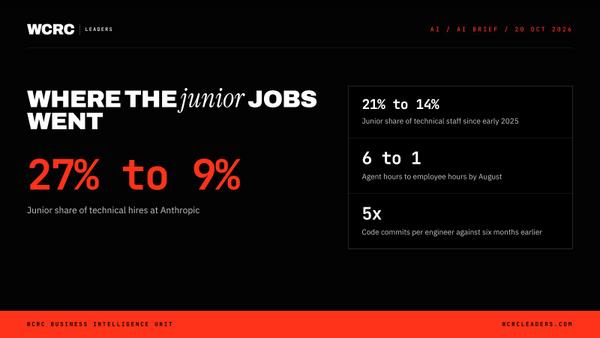
Junior hires fall to 9% at Anthropic: a warning for India's IT pyramid

Supplier-funded compute: what CFOs should read into the AI financing loop

China's 40-technology export list puts India's solar push on notice
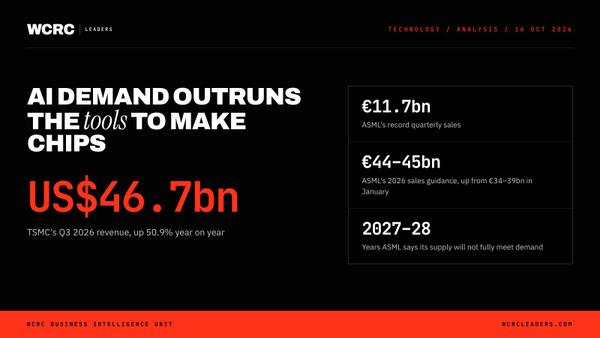
TSMC and ASML post records, and ASML says supply falls short to 2028
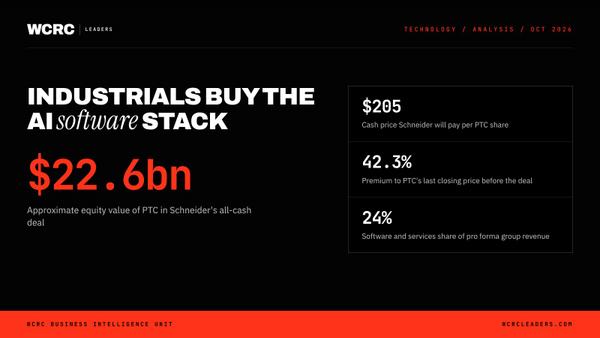
Industrial firms are buying the AI software stack: Schneider Electric and PTC
RBI's Bhubaneswar data centre: India builds a second fortress for payments
Filed under