Technology
Google Cloud doubles revenue as Alphabet funds AI with debt
Google Cloud's revenue more than doubled to $30.7bn in the September quarter, yet Alphabet spent $9.1bn more than it generated in cash and raised $41.1bn from bonds and new shares instead of buying any back. The company that once returned cash to shareholders is now borrowing to build, and enterprise buyers from Mumbai to Riyadh are its customers.
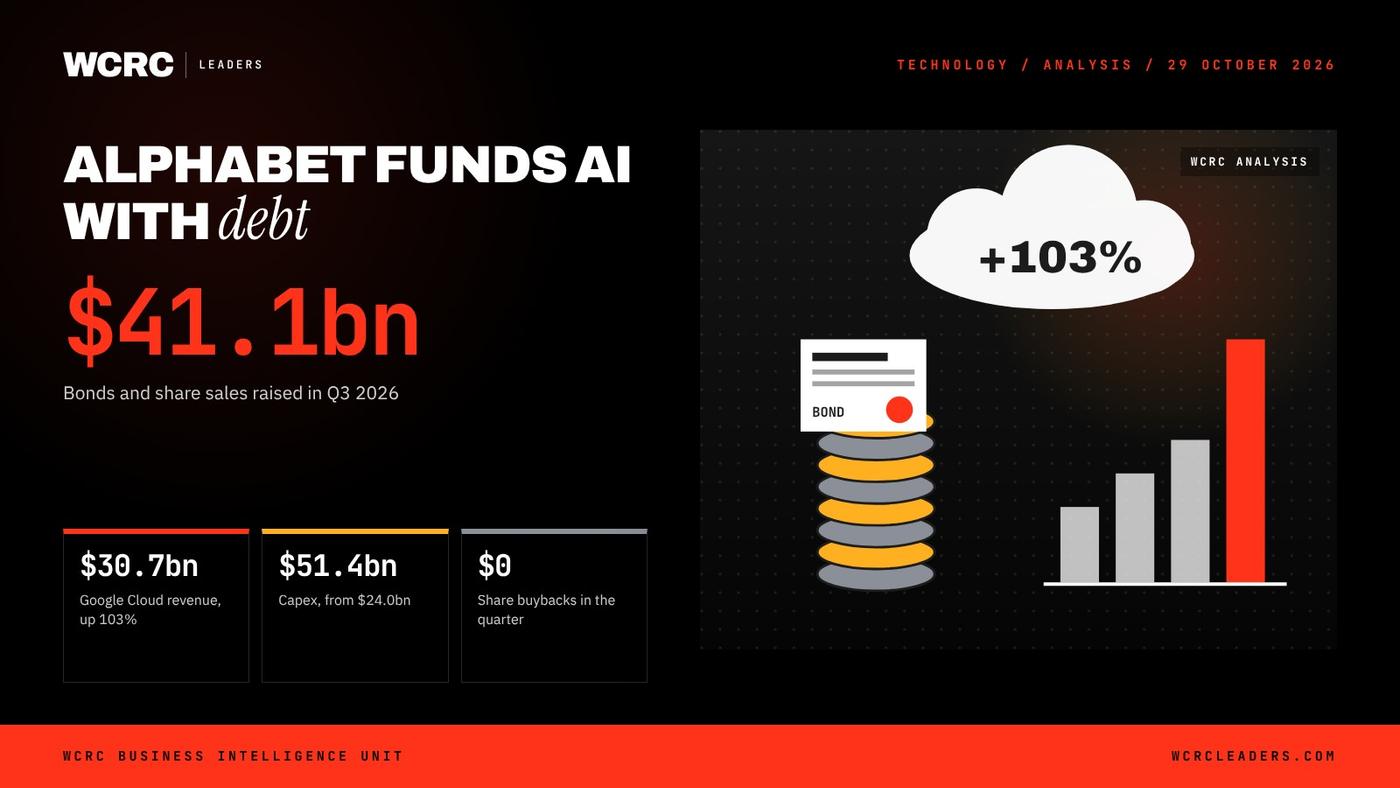
At a glance: WCRC Leaders' assessment: Alphabet has turned from a cash-returning giant into a debt-funded builder, and the reward is a cloud business now earning margins that give it pricing power over enterprise buyers in India, the Gulf and Asia. On 28 October 2026 Alphabet reported revenue of $127.6bn, up 25%, Google Cloud revenue of $30.7bn, up 103%, and capital expenditure of $51.4bn, more than double a year earlier. It issued $28.7bn of notes and sold $12.4bn of shares, and made no buybacks.
What did Alphabet report?
Alphabet's revenue for the quarter to 30 September rose 25% to $127.6bn. Operating income rose 30% to $40.6bn, a margin of 31.8%. Chief executive Sundar Pichai said in the release: "We had a strong quarter and are now on a half-trillion dollar revenue run rate." That annualises to about $510bn.
Google Search & other revenue grew 12% to $63.4bn. YouTube ads brought in $11.2bn, up from $10.3bn.
Google Cloud is the story. Revenue rose from $15.2bn to $30.7bn, and Cloud operating income from $3.6bn to $11.1bn. Cloud now accounts for about 24% of Alphabet's revenue, against about 15% a year ago, and about 27% of its operating income. Its operating margin rose from roughly 24% to 36%. The release says Cloud's product revenue comes mainly from sales of TPU systems, Google's own AI chips, and that those sales were "a meaningful contributor" to growth. Pichai said Cloud was "powered by huge demand for our AI infrastructure and AI solutions."
Headcount rose to 204,757 from 190,167. The board declared a quarterly dividend of $0.22 a share.
Why did profit fall while the business grew?
Net income fell to $26.5bn from $35.0bn, and diluted earnings per share to $2.12 from $2.87. Alphabet booked an $8.7bn net loss on equity securities this quarter, against a $10.7bn gain a year earlier: a swing of about $19.4bn in the value of stakes it holds in other companies.
WCRC analysis: In the terms of SeeClear, a model in WCRC's Guru Management Codex that asks leaders to separate fact from projection before a major decision, the 24% fall in net income is the snake in the rope. The operating business grew profit by 30%. But SeeClear cuts both ways. The fact that does matter is in the cash flow statement, and it is less comfortable than the earnings line.
How is Alphabet paying for the build-out?
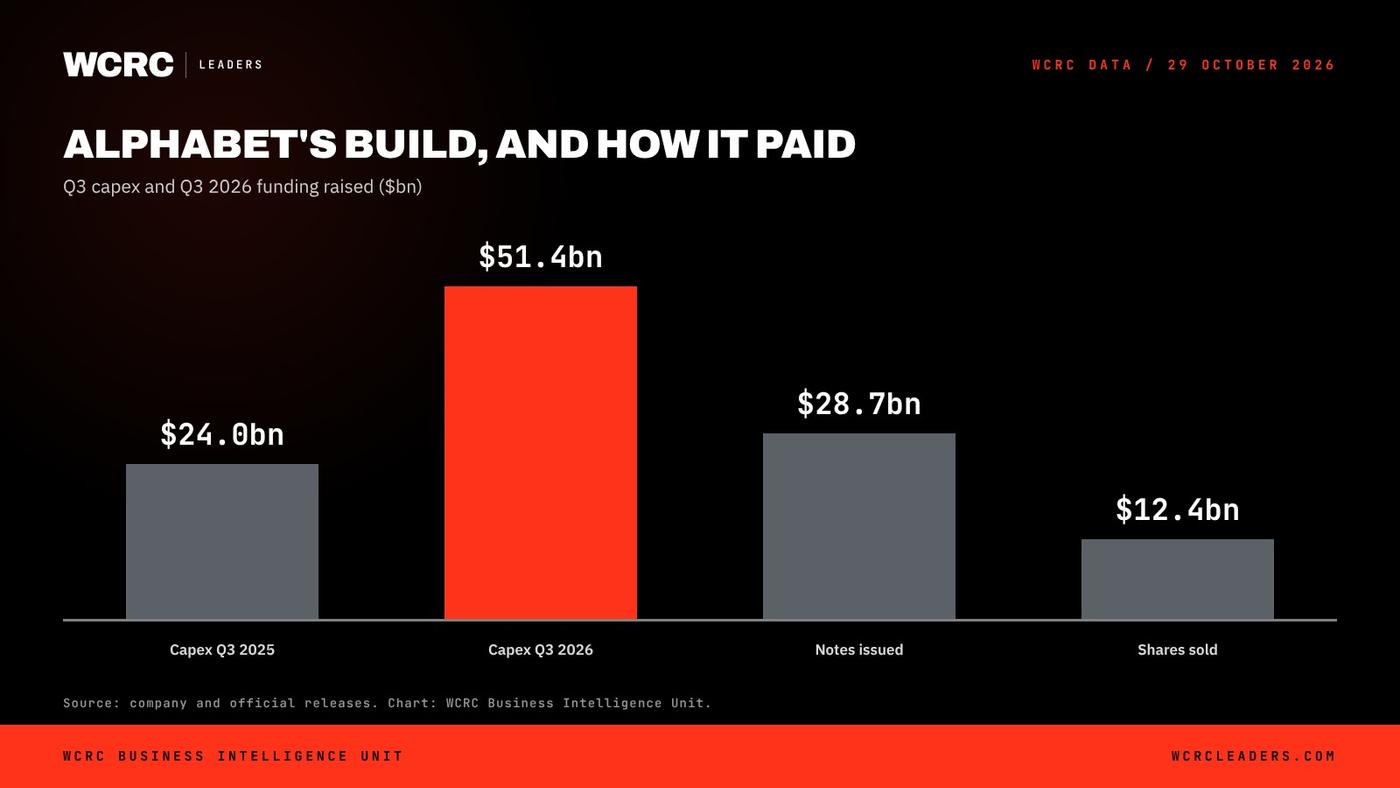
Purchases of property and equipment reached $51.4bn, against $24.0bn a year ago. That is about 40 cents of every revenue dollar, up from about 23 cents. Operating cash flow fell to $42.3bn from $48.4bn, so free cash flow was negative $9.1bn for the quarter.
Alphabet filled the gap from the capital markets. It issued senior unsecured notes for net proceeds of $28.7bn and sold 36 million Class A and Class C shares through an at-the-market programme for $12.4bn, with $27.6bn of that programme still available. Its year-to-date cash flow statement also shows about $19.1bn raised earlier in the year from 6.25% mandatory convertible preferred stock. Long-term debt rose from $46.5bn at the end of 2025 to $125.1bn at 30 September.
It bought back no shares in the quarter or the year to date. In the same quarter of 2025 it repurchased $11.5bn.
WCRC analysis: This is not a stretched balance sheet. Cash and marketable securities stood at $265.1bn, more than double the $126.8bn at the end of 2025, so Alphabet is raising more than it spends and holding the rest. It is choosing to pre-fund the build with other people's money and to issue shares rather than retire them. For a company that spent a decade shrinking its share count, that is a change in financial identity. The circular funding patterns WCRC set out in supplier-funded compute and the AI financing loop now have a sibling: hyperscalers funding capacity through public debt and equity markets. Whether the revenue arrives to service it is the question raised in the $6 trillion question on AI spending and AI revenue.
What does Google Cloud's doubling mean for buyers in India, the Gulf and Asia?
Much of Alphabet's spending lands in these markets. In October 2025 Google Cloud announced an investment of about $15bn over 2026 to 2030 in its first AI hub in India, a gigawatt-scale data-centre campus in Visakhapatnam, Andhra Pradesh, with a new subsea gateway. Its partners are AdaniConneX, a 50:50 venture of Adani Enterprises (one of WCRC 1000, India's Most Valuable Enterprises 2026) and EdgeConneX, and Bharti Airtel, also one of WCRC 1000, which is building the data centre, cable landing station and fibre with Google. Construction began on 28 April 2026.
In Saudi Arabia, Google Cloud and the Public Investment Fund announced in May 2025 a $10bn joint investment in an AI hub that expands Google Cloud's Dammam region, launching with Saudi company Humain and offering Gemini models on GPUs and TPUs.
WCRC analysis: For enterprise buyers, three things follow.
- Bargaining power has shifted to the seller. A cloud unit whose margin rose from about 24% to 36% while revenue doubled is not discounting to win business. Buyers renewing in 2027 should expect firmer pricing.
- There is a second chip route. Google now sells TPU systems in volume. For Indian banks, Gulf sovereign platforms and Asian manufacturers short of Nvidia hardware, TPUs offer an alternative, at the cost of deeper dependence on one provider.
- Capacity is moving closer. Vizag and Dammam bring in-country AI compute. Boards should ask when it is live and contracted, not when it was announced.
What does this mean for Google as a brand?
Google is a WCRC MegaBrand in search and discovery, assessed against Bing, DuckDuckGo, Perplexity, Yahoo and Brave Search. Google is also selected among the World's 100 Most Powerful Brands by the Business Intelligence Unit of WCRC, work that looks at perception and trust, governance and financial impact. Google India is named among India's Most Loved 250 Workplaces 2026 by WCRC.
WCRC analysis: Read through the Category Command Model in WCRC's Brand & Marketing Codex, which asks who leads a category and by how much, the AI-answer threat to search has not yet shown up in Google's numbers. Pichai said query growth is the highest in five years, including commercial queries, and Search revenue grew 12%. With Perplexity in the peer set, that lead must be defended, not assumed.
Through the Brand Stretch Model, which asks whether a new offer can credibly launch under an existing name, Google is stretching a consumer search brand into enterprise infrastructure: chips, data centres and models sold to banks and governments. The $11.1bn of Cloud operating income suggests the name carries.
Through the Future Readiness Compass, which asks whether a brand is positioned for the next five years, the Gemini app's one billion users, which Pichai called the fastest-growing product in Google's history, place the brand inside the AI shift. The governance side of brand power now includes a balance sheet carrying $125.1bn of long-term debt.
The WCRC View
The call. The WCRC Business Intelligence Unit reads Alphabet's quarter as the moment the AI build moved from self-funded to market-funded at the largest technology companies. The operating business is stronger than the 24% fall in net income suggests. The cash business is weaker than the 30% rise in operating income suggests.
Who gains. Google Cloud, whose doubling at a 36% margin gives it pricing power. Indian partners building its capacity in Visakhapatnam, and Gulf sovereign partners such as PIF that co-own the infrastructure rather than rent it.
Who is exposed. Enterprise buyers on short contracts, who will renew into a seller's market, and shareholders used to buybacks, who are now being diluted rather than rewarded.
What leaders should do now. CFOs should apply SeeClear to their own AI cases: separate investment marks and announcements from cash commitments. CIOs in India, the Gulf and Asia should price TPU capacity as a hedge against single-vendor chip risk and tie contracts to in-country capacity that is actually live.
What WCRC will watch. Whether free cash flow turns positive, how much of the remaining $27.6bn share programme Alphabet uses, the go-live date of the Visakhapatnam hub, and whether Cloud's margin holds as depreciation from $51.4bn a quarter of spending flows through.
WCRC models applied: Category Command Model, Brand Stretch Model and Future Readiness Compass (Brand & Marketing Codex); MegaBrands; World's 100 Most Powerful Brands; SeeClear (Guru Management Codex).
Quick answers
Q: How fast did Google Cloud grow in the third quarter of 2026? A: Revenue rose 103% to $30.7bn and operating income to $11.1bn from $3.6bn.
Q: Why did Alphabet's net income fall? A: Mainly because of an $8.7bn loss on equity securities, against a $10.7bn gain a year earlier. Operating income rose 30%.
Q: How is Alphabet funding its capital spending? A: With $28.7bn of notes and $12.4bn of share sales, after $51.4bn of capex left free cash flow at negative $9.1bn. It bought back no shares.
Q: What is Google investing in India? A: About $15bn over 2026 to 2030 in a gigawatt-scale AI hub in Visakhapatnam with AdaniConneX and Airtel. Construction began in April 2026.
SK hynix shelves the Solidigm IPO: what it says about the AI capex cycle
Junior hires fall to 9% at Anthropic: a warning for India's IT pyramid
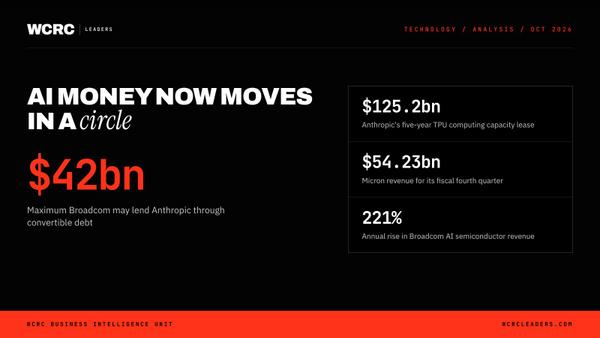
Supplier-funded compute: what CFOs should read into the AI financing loop
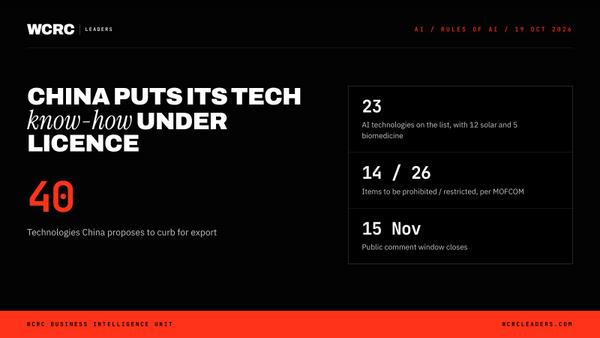
China's 40-technology export list puts India's solar push on notice
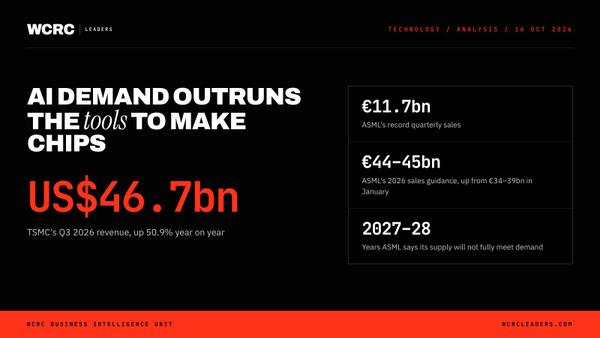
TSMC and ASML post records, and ASML says supply falls short to 2028
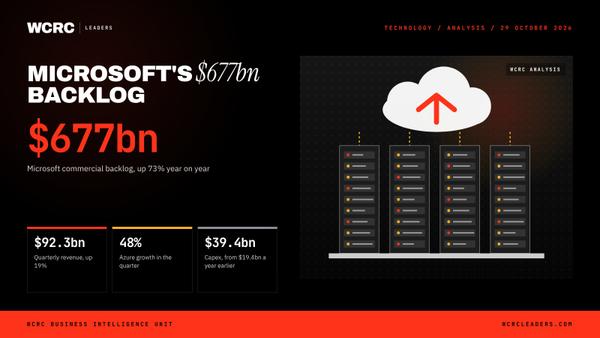
Microsoft's $677bn backlog: the AI build Asia now has to supply
Filed under