Recognitions
Eveready's eighth growth quarter: a legacy brand learns new tricks
Eveready Industries India grew revenue 10.7% to ₹428.2 crore in the September quarter and swung to a ₹31.9 crore profit. The more telling numbers sit underneath: alkaline batteries, rechargeable torches and quick commerce are each growing three to five times faster than the company.
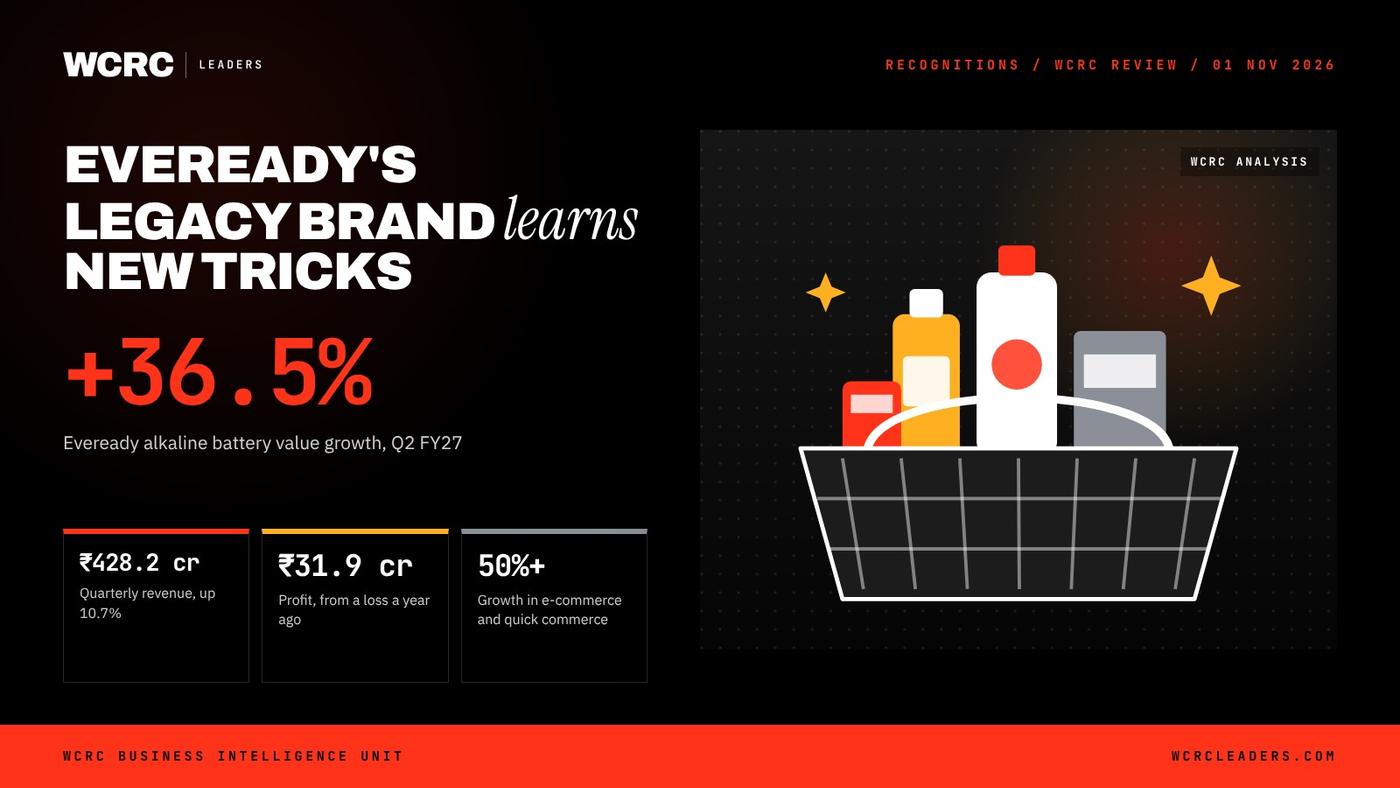
At a glance: WCRC Leaders' assessment: Eveready is renewing a household name the hard way, by moving buyers up to higher-value products, making them in India and selling them where young households now shop, and the Jammu plant will decide whether that renewal pays. On 31 October 2026 the Kolkata-based company reported its eighth consecutive quarter of year-on-year revenue growth. Alkaline battery value rose 36.5%, rechargeable flashlights 33.2%, and e-commerce and quick commerce more than 50%. For boards running old brands in India, the Gulf and Asia, it is a live case study in renewal.
What did Eveready report?
For the quarter ended 30 September 2026 (Q2 FY27), Eveready's consolidated revenue from operations was ₹428.2 crore, up 10.7% from ₹386.8 crore a year earlier. EBITDA rose to ₹53.8 crore from ₹49.4 crore, a margin of 12.6%, which the company held despite higher zinc prices and other cost pressures.
Profit after tax was ₹31.9 crore against a loss of ₹7.9 crore in Q2 FY26. That comparison flatters: the year-ago quarter carried an exceptional loss of ₹37.7 crore. Even so, the half-year picture is strong. H1 FY27 revenue was ₹836.0 crore, up 9.9%, and H1 profit after tax was ₹68.9 crore, up 209%.
Net debt fell to ₹153 crore at 30 September from ₹164 crore at the end of the first quarter. After the reporting date, on 13 October, the company completed the transfer of Plot B2 of its Noida property.
Eveready is one of WCRC 1000, India's Most Valuable Enterprises 2026, the WCRC Intelligence list of Indian enterprises by market capitalisation.
Chief Executive Anirban Banerjee said: "Our eighth consecutive quarter of revenue growth reflects the strength of the business."
Where is the growth actually coming from?
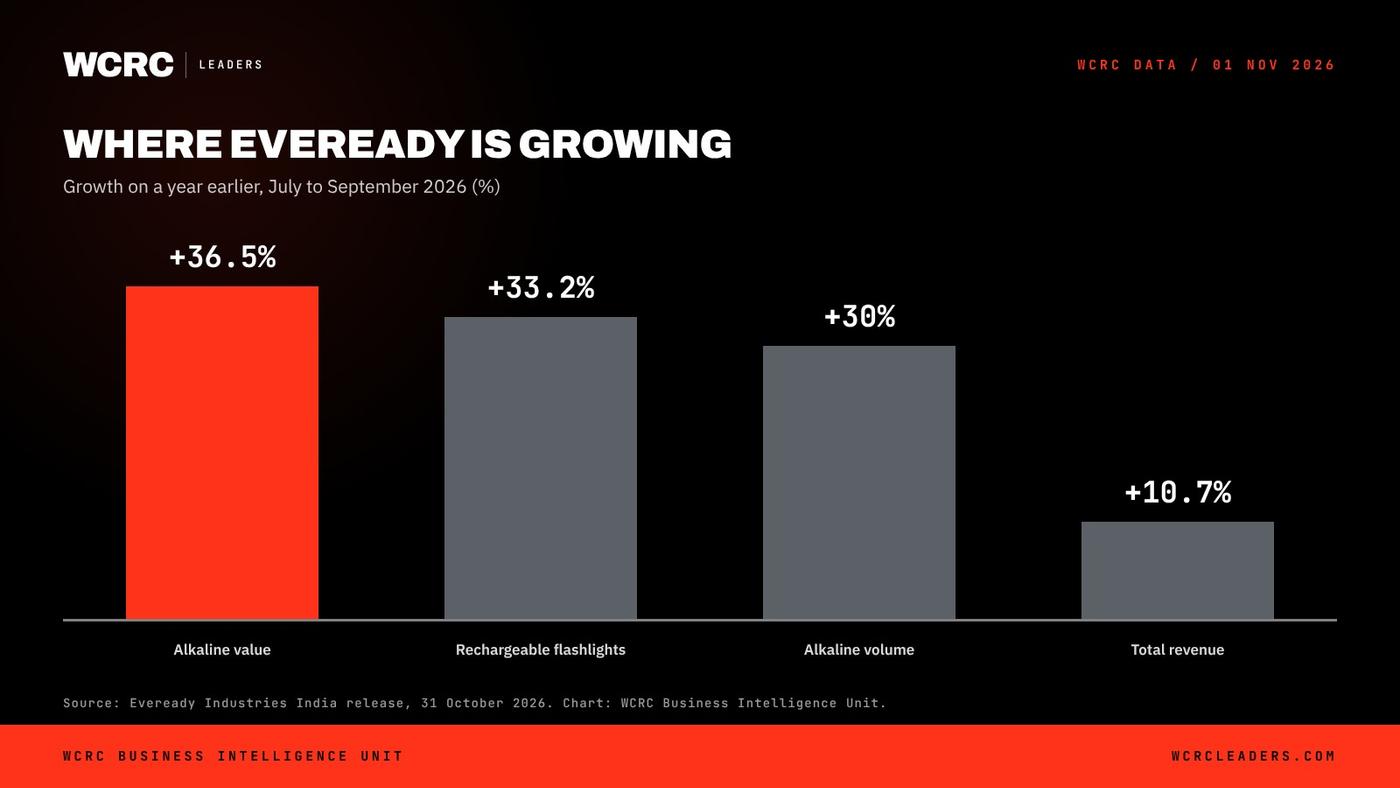
The headline 10.7% hides a business in two speeds. The overall battery segment grew 9.1% in value. Within it, alkaline batteries rose 36.5% in value and 30.0% in volume. That gap between value and volume matters: buyers are not only buying more alkaline cells, they are spending more on each purchase.
Flashlights grew 17.3%, with rechargeable models up 33.2%. Lighting grew 10.4%, led by a 26.3% rise in emergency LED bulbs. The quarter also brought new products: SHOR, which the company describes as India's only torch with an animal alarm to ward off stray animals for farm protection; an Xtra Bright emergency LED bulb; and a portable, rechargeable anti-mosquito liquid vaporiser that the company calls India's first.
"Alkaline batteries and rechargeable products remain important growth drivers," Mr Banerjee said, adding that portable liquid vaporisers widen the company's mosquito protection range, backed by an "Unplug and use anywhere" campaign.
WCRC analysis: the company does not use the word "premium", but the direction is plain. Alkaline cells and rechargeable devices sit above the zinc-carbon cell and the basic torch on price. Eveready is trading its customers up rather than chasing volume at the bottom of the market.
Why does the Jammu plant matter so much?
Eveready's Jammu alkaline battery facility began commercial production in May 2026. Until a plant like this runs at scale, a fast-growing alkaline range carries a cost penalty, and margins depend on how much of the product is made at home.
Bibek Agarwala, Executive Director and Chief Financial Officer, set out the priority: "As the Jammu facility ramps up, our priority will be to improve capacity utilisation." He also said: "We are taking calibrated pricing action to protect profitability and maintain margin stability," and that commodity and forex hedging had helped manage higher input costs.
WCRC analysis: this is the hinge of the story. The alkaline category is where Eveready's growth lives, and Jammu is where its cost position in that category will be won or lost. A rising share of local output should lift margins over the coming quarters. A slow ramp would leave the company growing its most promising line on thinner returns.
What does quick commerce change for an old brand?
The release says all of Eveready's consumer channels grew, with e-commerce and quick commerce each up more than 50% year on year. For a brand built on the corner shop and the general store, that shift is significant.
Quick commerce rewards products people buy in a hurry: batteries for a remote, a bulb during a power cut, mosquito protection at night. Those are exactly Eveready's categories. The app shelf is also smaller and more visual than a kirana counter, which favours a name shoppers already recognise. WCRC has tracked the economics of the channel in its review of Swiggy's ₹895 crore Instamart loss.
The risk is the reverse of the opportunity. On a phone screen, price comparison takes a second, and a legacy name has to earn its place against cheaper rivals every time the shopper scrolls.
How does this read through WCRC's brand models?
Read through WCRC's MegaBrands lens, which looks at perceived brand power across positioning and recall, consumer trust, product and delivery, governance and sustainability, and digital and financial soundness, Eveready's quarter shows movement on several fronts at once. Recall is the asset it inherited. Product and delivery is where the new launches and the Jammu plant sit. Digital soundness is where the quick-commerce numbers point. WCRC has not assessed Eveready under MegaBrands; this is a reading of the reported facts.
In the terms of the WCRC Brand & Marketing Codex, three models frame the test. The Brand Stretch Model asks whether a new product can credibly launch under an existing name: a battery brand selling mosquito vaporisers and animal-alarm torches is a deliberate stretch, and the 33.2% growth in rechargeables suggests buyers accept it so far. The Price Power Model asks how much premium a brand can charge before buyers switch: the gap between 36.5% value growth and 30.0% volume growth in alkaline, alongside "calibrated pricing action", is the number to watch. The Future Readiness Compass asks whether a brand is positioned for the next five years: rechargeable products and fast app-based channels are bets on how Indian households will buy power and light in 2030.
There is a value story too. Read through WCRC's Corporate Value Intelligence framework, an old consumer brand earns a higher enterprise value when growth shifts towards higher-margin lines and debt falls, which is the direction of this quarter's numbers. Whether the market rewards it will depend on Jammu.
Related reading: WCRC's review of UltraTech's Ultravolt brand extension looks at the same question of how far a trusted name can travel.
The WCRC View
The WCRC Business Intelligence Unit's call: Eveready's renewal is real, and it is built on the right three levers, but the next two quarters will show whether it is profitable renewal or merely faster growth.
- What it means. Legacy brands do not need reinvention from scratch. Eveready is using its recall to move buyers up the price ladder, a strategy the Price Power Model and Brand Stretch Model both help a board test.
- Who gains. Shareholders gain if Jammu lifts margins on the fastest-growing line. Quick-commerce platforms gain a trusted name in urgent-need categories. Importers of finished alkaline cells stand to lose share as local output rises.
- What leaders should do now. CEOs and boards in India, the Gulf and Asia that hold old consumer names should ask three questions: which of our lines is growing faster in value than in volume, where do we make it, and are we visible on the app shelf where the next generation shops? A Future Readiness Compass reading starts there.
- What WCRC will watch. Jammu capacity utilisation and gross margin in Q3 and Q4 FY27, whether alkaline value growth keeps running ahead of volume, the share of revenue from e-commerce and quick commerce, and further progress on net debt from ₹153 crore.
WCRC models applied: MegaBrands, Brand Stretch Model, Price Power Model, Future Readiness Compass, Corporate Value Intelligence.
Quick answers
Q: What were Eveready's Q2 FY27 results? A: Consolidated revenue rose 10.7% to ₹428.2 crore, EBITDA was ₹53.8 crore at a 12.6% margin, and profit after tax was ₹31.9 crore against a loss of ₹7.9 crore a year earlier, which included a ₹37.7 crore exceptional loss.
Q: How fast did alkaline batteries grow? A: Alkaline battery value rose 36.5% and volume rose 30.0% in the quarter, against 9.1% value growth for the battery segment as a whole.
Q: When did the Jammu plant start? A: Eveready's Jammu alkaline battery facility began commercial production in May 2026. The CFO said improving its capacity utilisation is the priority.
Q: What is Eveready's net debt? A: Net debt was ₹153 crore at 30 September 2026, down from ₹164 crore at the end of the first quarter of FY27.
Hindustan Unilever's 15% quarter: Priya Nair's volume-led reset
Maruti Suzuki sells a record 696,654 cars as quarterly profit falls 27%
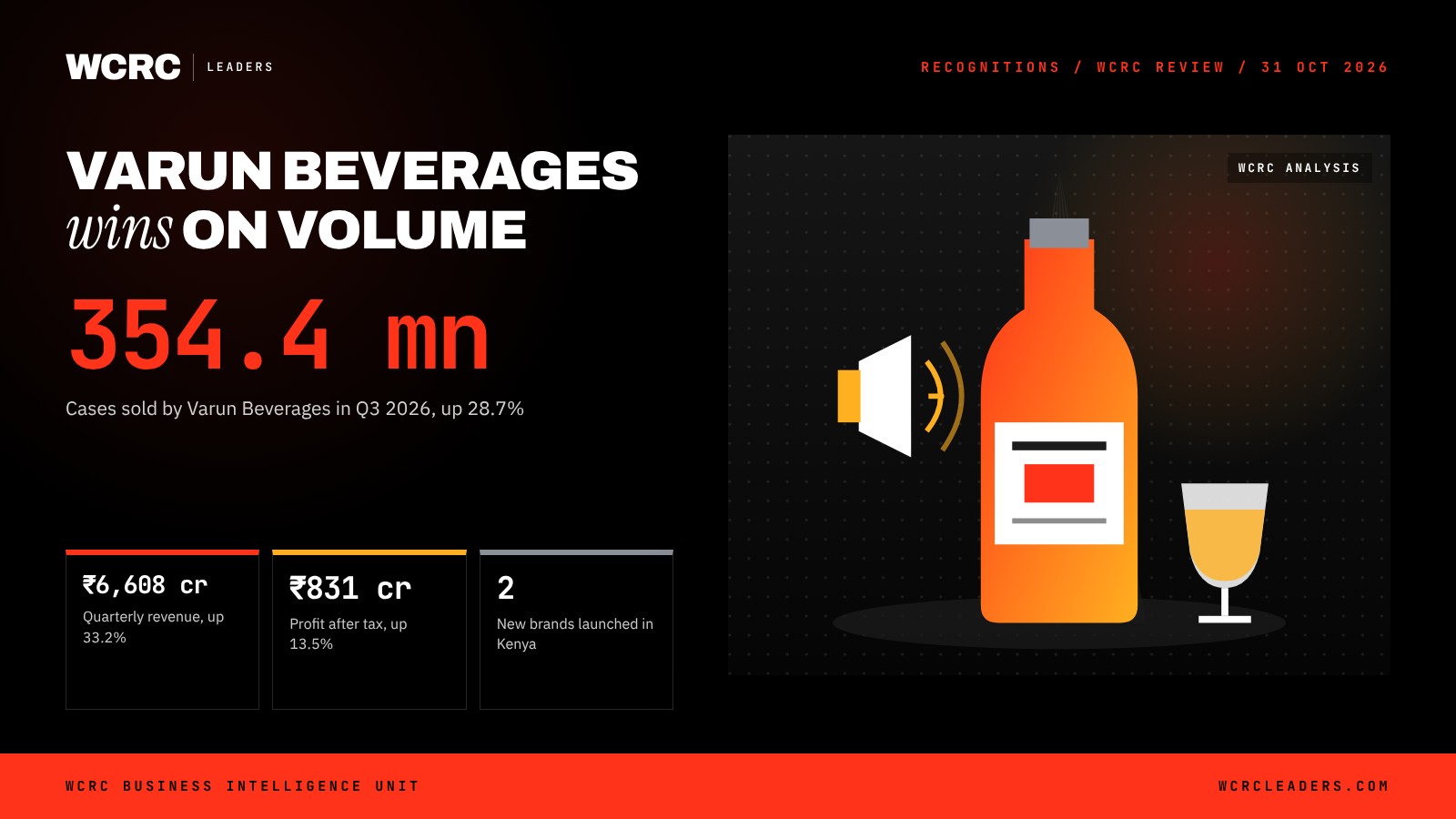
Varun Beverages sells 354.4 mn cases and launches two new brands in Kenya

No strings attached: what the MacArthur model teaches about recognising talent
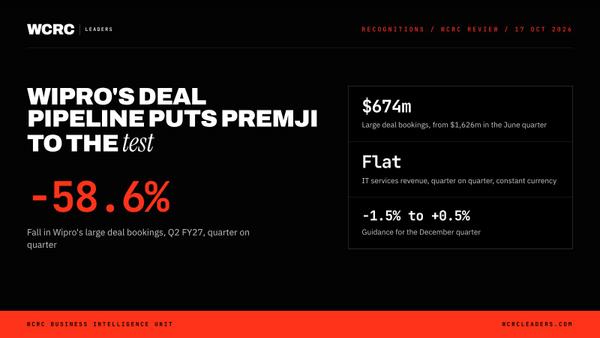
Wipro's 58.6% large-deal drop puts Rishad Premji to the test
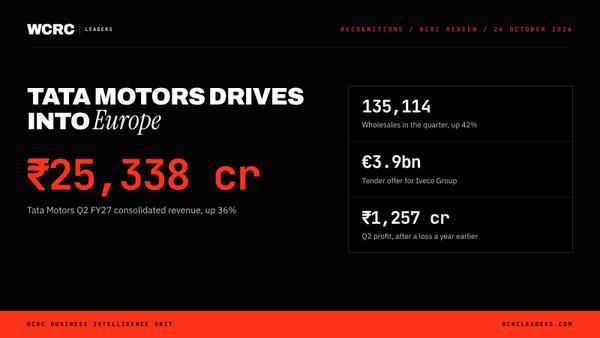
Tata Motors posts 42% volume jump as its €3.9bn Iveco bid nears close
Filed under