Investing
What a US rate hike would mean for India: your loan, the rupee, your SIP and gold
The US Federal Reserve held its key interest rate at 3.75% to 4.00% on 28 October, but two of its officials voted to raise it. Futures markets now price about an 80% chance of a rise at the Fed's December meeting. A decision taken in Washington reaches Indian households faster than most people think: through the rupee, through fuel prices, through stock markets and through the cost of borrowing. Here is what it would mean, in plain terms.
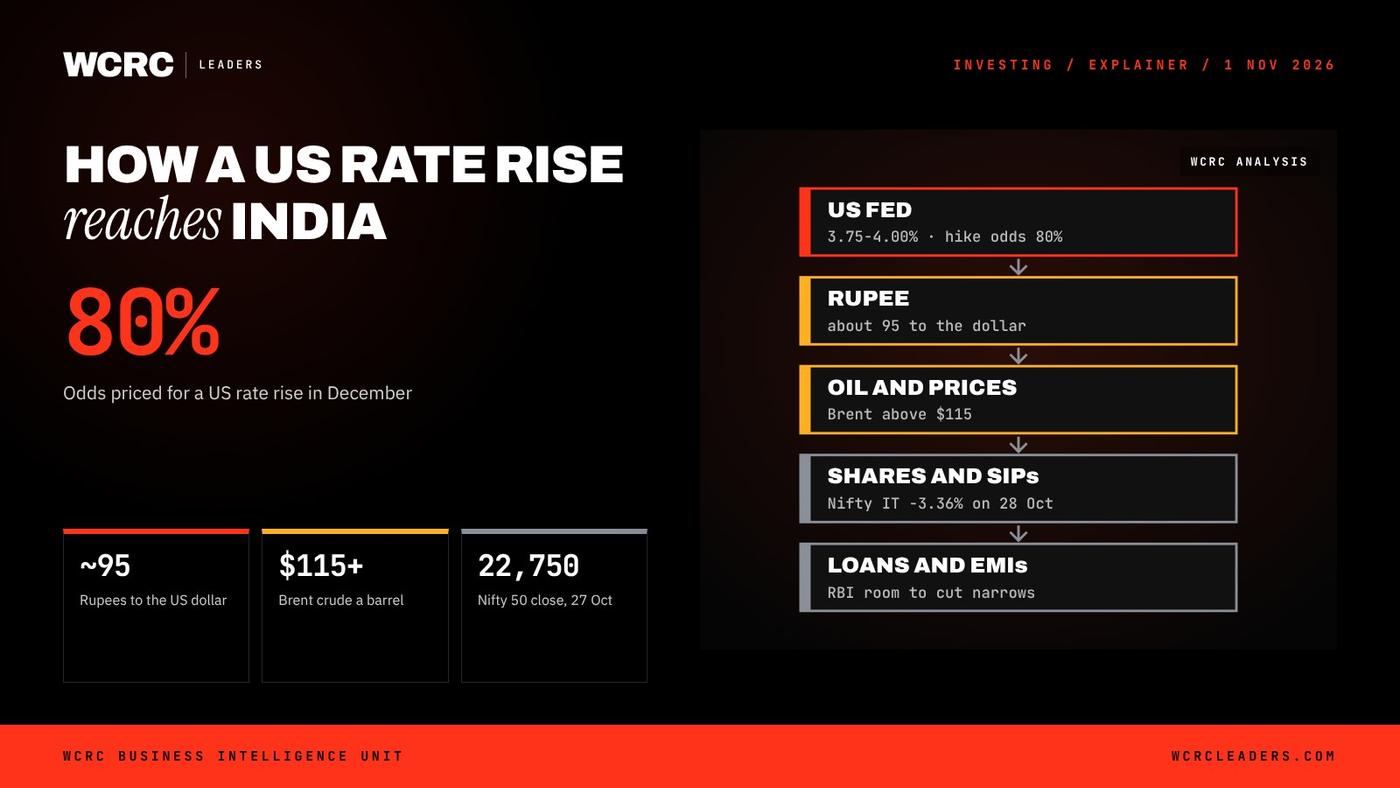
At a glance: WCRC Leaders' assessment: a US rate rise would not change Indian loan rates overnight, but it would add pressure on the rupee, which is already near 95 to the dollar, and on foreign money in Indian shares. Households feel it first through imported inflation (fuel and electronics), then through markets. For long-term investors, the right response is usually discipline, not reaction.
| Fact | Figure |
|---|---|
| US Fed policy rate (held 28 Oct 2026) | 3.75% to 4.00% |
| Fed officials who voted for a rise | 2 |
| Market-priced odds of a December rise | about 80% |
| Rupee | about 95 to the US dollar (28 Oct) |
| Brent crude | above $115 a barrel (28 Oct) |
| Nifty 50 close, 27 Oct | 22,749.75 |
| Sensex close, 27 Oct | 73,598.67 |
| Nifty IT on 28 Oct | down 3.36% |
| Gold close, 30 Oct | $3,884.90 an ounce |
Why the Fed is thinking about a rise
The Fed's job is to keep US inflation in check. Renewed attacks on shipping in the Strait of Hormuz have pushed oil above $115 a barrel, and higher oil feeds directly into inflation. Two Fed officials argued in October that rates should go up now to stop that inflation from settling in. The majority waited, but markets read the split vote as a signal that December is live.
A rate rise makes US bonds and deposits pay more. That pulls global money towards the dollar and away from riskier markets, including India.
1. The rupee
This is where Indians feel a Fed rise first. When US rates rise, global investors tend to move money into dollars, and the rupee weakens. The rupee is already at about 95 to the dollar.
A weaker rupee makes everything India imports more expensive in rupee terms. That includes crude oil, edible oils, electronics, and foreign education and travel. Families paying fees for a child studying abroad, or planning an overseas trip, feel it directly: the same dollar bill costs more rupees.
Exporters, especially IT services and pharmaceutical companies that earn in dollars, gain a little from a weaker rupee. But that gain can be offset if a US slowdown reduces demand for their services.
2. Your home loan and EMIs
A US rate rise does not automatically raise Indian loan rates. Indian home-loan and car-loan rates follow the Reserve Bank of India's policy decisions and banks' own funding costs.
The link is indirect. If the rupee falls sharply and imported inflation rises, the RBI has less room to cut rates and may need to keep them higher for longer to protect the currency and contain prices. For a borrower on a floating-rate home loan, that means the hope of a lower EMI may be delayed. Borrowers should plan their budgets on today's EMI, not on a cut that may not come.
3. Your SIP and the stock market
Foreign portfolio investors are among the biggest buyers and sellers of Indian shares. When US rates rise, some of that money leaves emerging markets. The Nifty 50 closed at 22,749.75 and the Sensex at 73,598.67 on 27 October, and markets have already been volatile: the Nifty IT index fell 3.36% in a single session on 28 October.
For someone investing through a monthly SIP, a falling market has a quiet benefit: the same instalment buys more units. SIPs are built for exactly this kind of volatility. The usual mistake is to stop or redeem in a falling market and restart after prices have recovered, which locks in the worst of both.
4. Fixed deposits and debt funds
Higher global rates and a cautious RBI usually mean deposit rates stay firm. That is good news for savers and retirees who rely on fixed deposits. Debt mutual funds behave differently: when interest rates rise, the prices of existing bonds fall, so funds holding longer-dated bonds can show short-term losses. Shorter-duration funds are less affected.
5. Gold
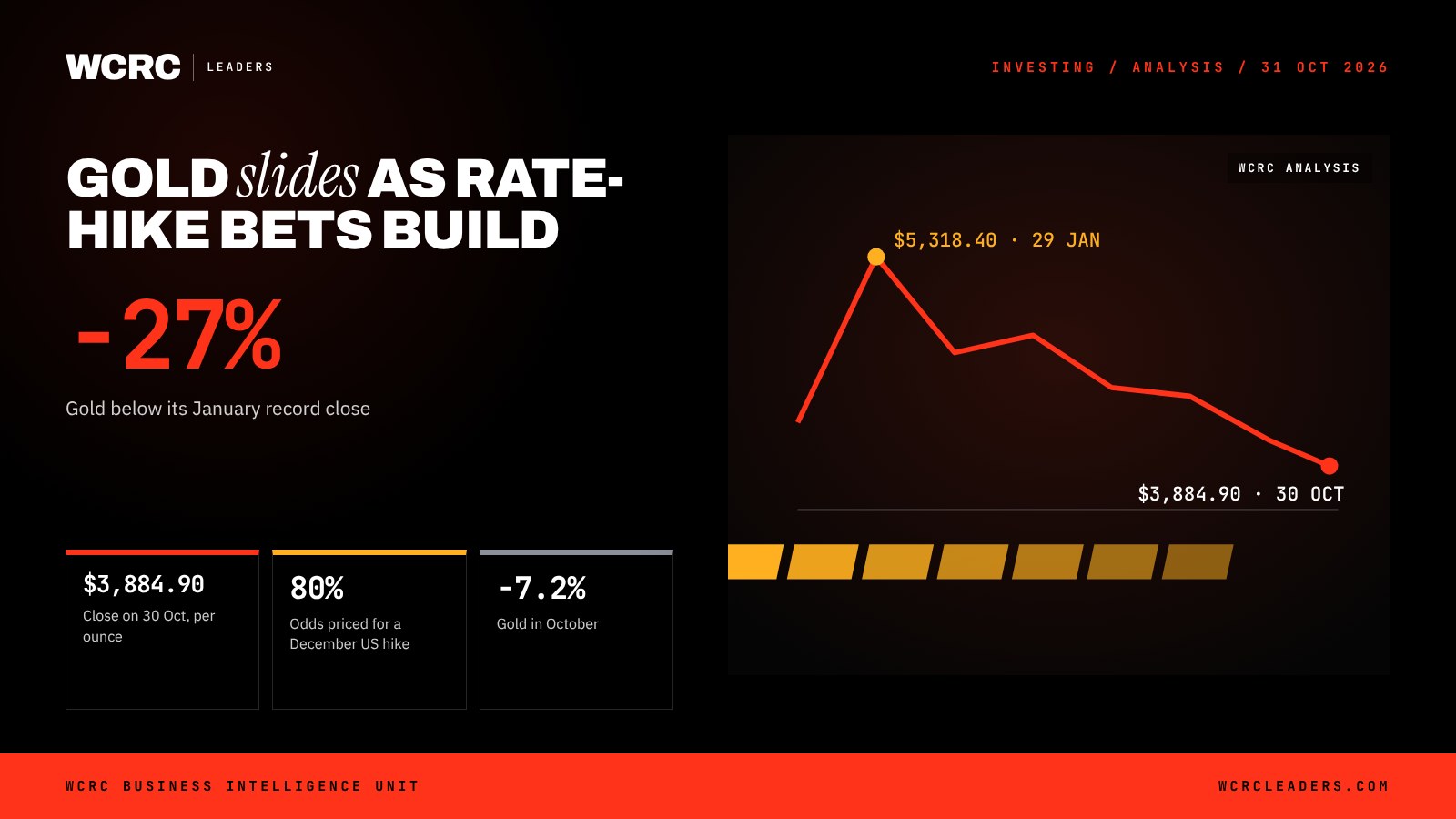
Gold pays no interest, so higher rates make it less attractive by comparison. That is a big part of why gold has fallen: it closed at $3,884.90 an ounce on 30 October, about 27% below its January record. A weaker rupee partly cushions the fall for Indian buyers, because gold is priced in dollars. For households, that means rupee gold prices fall less than the dollar price. We explained the gold slide in detail in an earlier story.
The WCRC lens: which companies hold up
Rate cycles are a stress test for companies as much as for households. Read through WCRC's MegaBrands lens, which looks at areas such as consumer trust, governance and sustainability, and digital and financial soundness, the companies best placed for a tighter cycle are the ones with strong balance sheets and customers who stay loyal when prices rise.
Two models from WCRC's Brand & Marketing Codex add useful questions:
- Price Power Model. It asks how much premium a brand can charge before buyers switch. When a weaker rupee raises import costs, companies with price power can pass the cost on; those without it see margins shrink.
- Trust Equity Model. It asks how much pressure a brand's trust can absorb. In uncertain markets, customers and investors both move towards brands they trust.
These are lenses for thinking, not ratings of any stock, and this story does not recommend buying or selling any security.
The leadership view
For finance heads, a December rise is a planning question. WCRC's leadership parameter of Resilience Factor describes the ability to keep a business steady when outside conditions change. Companies with dollar debt, large import bills or heavy reliance on foreign investors should be stress-testing a weaker rupee now, not after the Fed meets.
WCRC's Guru Management Codex model SeeClear, which asks leaders to separate fact from projection, is the right discipline for households too. The fact is that the Fed held rates in October and two officials want a rise. The 80% figure is a market projection, and projections change with every new inflation report.
What to watch
- US inflation data in November, which will shape the December decision.
- The Fed's December meeting.
- Oil prices and the Strait of Hormuz, the main driver of the inflation worry.
- The RBI's next policy statement, for how it balances the rupee against growth.
The WCRC View
A US rate rise in December would reach India through the rupee and through foreign money in the stock market, long before it touches a home-loan EMI. Households should expect imported inflation and market swings, keep SIPs running, and avoid borrowing in the hope of rate cuts that may be delayed. For companies, the test is balance-sheet strength and price power. The 80% odds are a forecast, not a decision; the facts to watch are US inflation and the price of oil.
WCRC models applied: MegaBrands; Brand & Marketing Codex (Price Power Model, Trust Equity Model); WCRC leadership parameters (Resilience Factor); Guru Management Codex (SeeClear).
This article is for information only and is not investment advice. Speak to a registered adviser before investing.
Gold is 27% below its record: what the slide means for India

The brand behind the stock: how investors can read brand strength
India tops the world's IPO table in October with ₹45,500 crore raised
The AI price war: why intelligence keeps getting cheaper, and who pays for it

One year on: how India's World Cup win changed the business of women's cricket

India's concert economy: why live events became entertainment's fastest-growing business
Filed under