Sports
One year on: how India's World Cup win changed the business of women's cricket
A year ago today, on 2 November 2025, India beat South Africa by 52 runs at the DY Patil Stadium in Navi Mumbai to win the Women's Cricket World Cup for the first time. Harmanpreet Kaur's team ended decades of near misses in front of a home crowd. Twelve months later, the effect is visible well beyond the trophy cabinet: in sponsorship rosters, in brand budgets and in what a women's cricketer is now worth to a company.
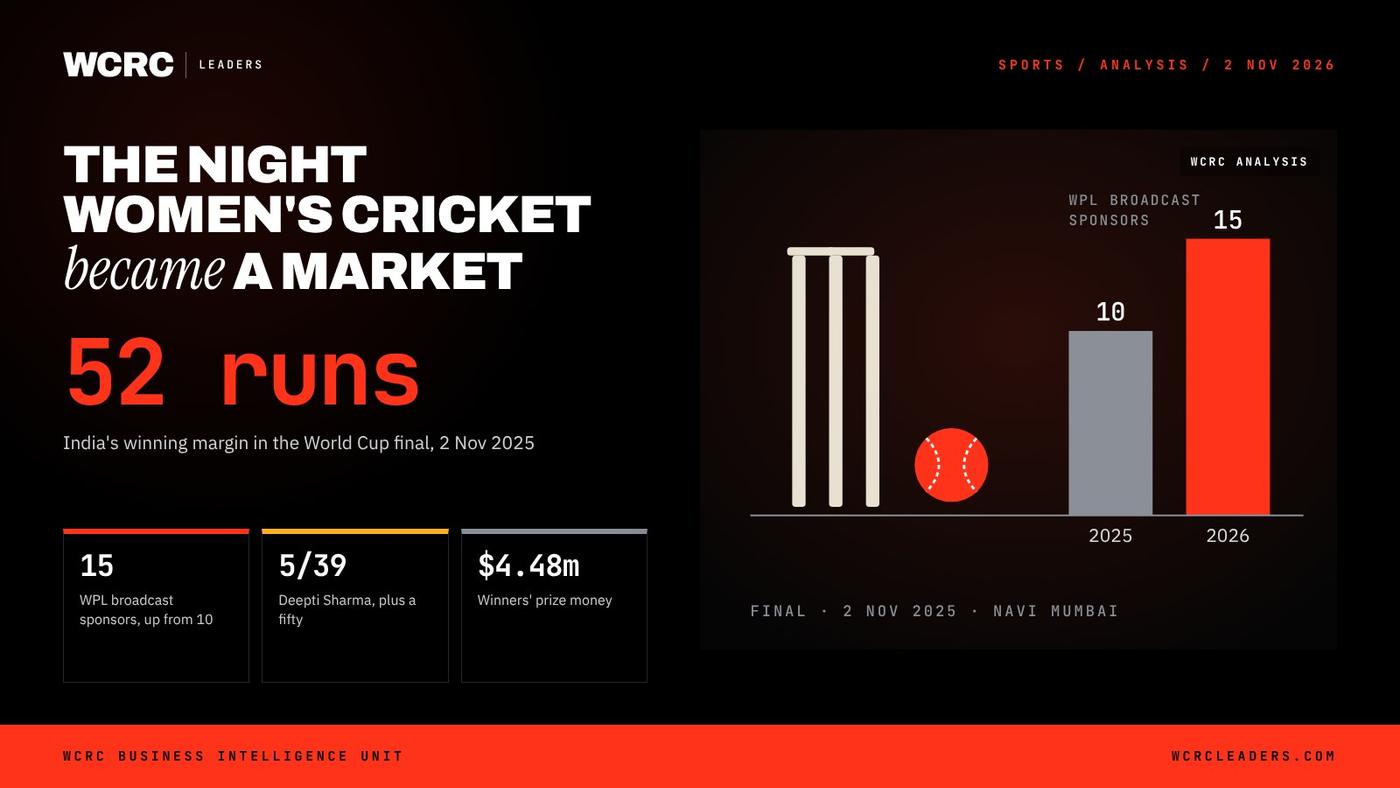
At a glance: WCRC Leaders' assessment: the World Cup win turned women's cricket in India from a promising property into a proven one. Broadcast sponsors for the Women's Premier League rose from 10 to 15 for the 2026 season, and brands raised their budgets. The next test is whether that interest lasts between big tournaments, which depends on how the game is run, scheduled and marketed.
| Fact | Detail |
|---|---|
| Final | 2 November 2025, DY Patil Stadium, Navi Mumbai |
| Result | India beat South Africa by 52 runs |
| India captain | Harmanpreet Kaur |
| Shafali Verma | 87 off 78 balls and 2 wickets |
| Deepti Sharma | 5 for 39 and a half-century |
| Winners' prize money | US$4.48 million |
| WPL broadcast sponsors | 15 in 2026, up from 10 |
The night that changed the market
The final had everything a sponsor could want. Shafali Verma made 87 off 78 balls and then took two wickets. Deepti Sharma took 5 for 39 and also made a half-century, becoming the first player, man or woman, to do both in an ODI knockout match. India's winning margin of 52 runs left no doubt.
For Indian women's cricket, the title meant more than one result. India had reached World Cup finals before and lost. Winning at home, in a stadium full of fans, created the moment that sports marketers wait years for: a team that the whole country recognised as champions.
Follow the money: what changed in a year
The clearest evidence comes from the Women's Premier League season that followed in early 2026.
- Broadcast sponsors. JioStar signed 15 broadcast sponsors for the 2026 WPL season, up from 10 the year before. They included SBI, Kalyan Jewellers, VIDA, OpenAI's ChatGPT, OnePlus, Tata Capital, Wipro and Reckitt.
- New team and league partners. Amul, L'Oréal Professionnel, BKT Tyres, EaseMyTrip, Skechers, De Beers Group and DHL were among the new partners for the league and its five teams. De Beers Group's deal with Mumbai Indians was its first in the WPL.
- Budgets. Industry estimates put the increase in brand budgets for the women's game at 30% to 50%, and franchises raised their asking prices for sponsorship.
- Audiences. A media-agency estimate put the viewership of women's cricket in India at about 300 million in 2025, roughly double the 2023 figure.
The list of sponsors matters as much as the number. Banks, jewellers, consumer-tech companies and global brands are not buying a novelty; they are buying an audience that now watches women's cricket by choice.
Players as brands
The win also changed the commercial standing of individual players. Before the World Cup, only a handful of India's women cricketers had significant personal endorsement deals. After it, players such as Harmanpreet Kaur, Shafali Verma and Deepti Sharma became faces that brands could build campaigns around.
That shift brings its own pressures. Players now balance training, a crowded international calendar, league commitments and commercial shoots. How boards and franchises manage that load will decide whether the players can perform at their peak while their market value is highest.
The WCRC lens: what makes a sports property a strong brand
Read through WCRC's MegaBrands lens, which looks at areas such as positioning and recall, consumer trust, and product and delivery, the Indian women's team made the leap that every sports property aims for. It moved from being admired to being remembered, and from being followed to being trusted to deliver.
Three models from WCRC's Brand & Marketing Codex explain why sponsors moved so quickly:
- Cultural Currency Model. It asks whether a brand is part of the current public conversation. A home World Cup win is cultural currency at its peak, and sponsors pay to be part of that conversation.
- Recall Ladder. It asks whether spending builds lasting memory or just noise. The final created a memory that sponsors can now attach themselves to for years.
- Love-to-Loyalty Funnel. It asks where affection stops turning into repeat behaviour. The WPL's job is to turn the love of one night into a habit of watching every season.
The leadership and culture view
Championship teams are built over years. WCRC's leadership parameter of People Leadership describes the ability to build a team that performs together under pressure, and Resilience Factor describes the ability to recover after a setback. India's team carried both through years of near misses before the final.
WCRC's Guru Management Codex model Make-It-Your-Own Belonging, about helping people feel they belong, is a useful frame for the next phase. A team that grows quickly, with new players, new money and new attention, has to keep the sense of belonging that made it successful. The CultureCrest framework, which looks at impact on people, career development and engagement, applies to sports organisations too: the boards and franchises that offer women cricketers stable careers, not just a season's contract, will attract and keep the best talent.
What could hold the momentum back
- The gap between tournaments. Interest peaks during World Cups and the WPL. Bilateral series need better scheduling and promotion to keep audiences engaged.
- The domestic pipeline. The next generation needs more matches, better pay and stronger coaching at state level.
- Unequal treatment. Pay parity at international match level was a big step, but facilities, scheduling and broadcast slots still lag the men's game.
The WCRC View
India's World Cup win a year ago was a sporting milestone that has since become a commercial one. More sponsors, bigger budgets and a growing audience show that brands now see women's cricket as a proven property. The challenge for the next five years is to keep that interest between big tournaments and to treat players as long-term assets, not campaign faces for a season. If the game is run well, 2 November 2025 will be remembered as the night women's cricket in India stopped being a promise and became a market.
WCRC models applied: MegaBrands; Brand & Marketing Codex (Cultural Currency Model, Recall Ladder, Love-to-Loyalty Funnel); WCRC leadership parameters (People Leadership, Resilience Factor); Guru Management Codex (Make-It-Your-Own Belonging); CultureCrest.
Kimi Antonelli, 20, is one race from the title: Mercedes' bet on a young leader
Adani Ports raises FY27 capex by ₹3,000 crore as overseas ports surge
Vedanta doubles Gamsberg, and Ramaphosa now wants a zinc smelter
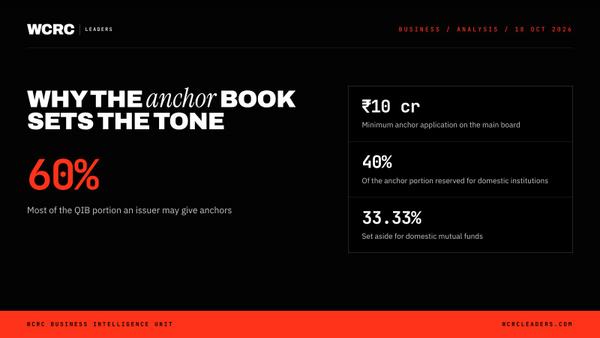
Anchor investors in Indian IPOs: why the 60% book sets the tone
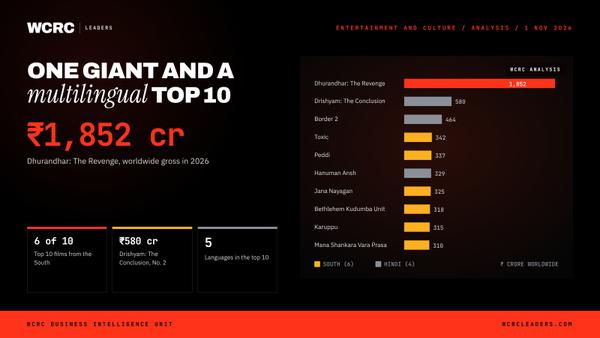
Indian cinema's top 10 of 2026: one giant, five languages and a franchise habit
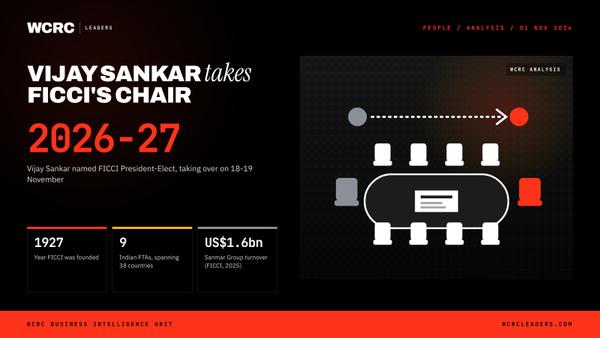
Vijay Sankar takes FICCI's chair in a year of trade deals and tariffs
Filed under