Entertainment and Culture
India's concert economy: why live events became entertainment's fastest-growing business
India staged about 34,000 live shows in 2025, and live events grew 44% in the year, the fastest rate of any part of the country's media and entertainment industry. The government now wants to make India a global hub for live events by 2030. Behind the headline tours sits a new kind of business, one that moves fans between cities, fills hotels and turns a ticket into a weekend.
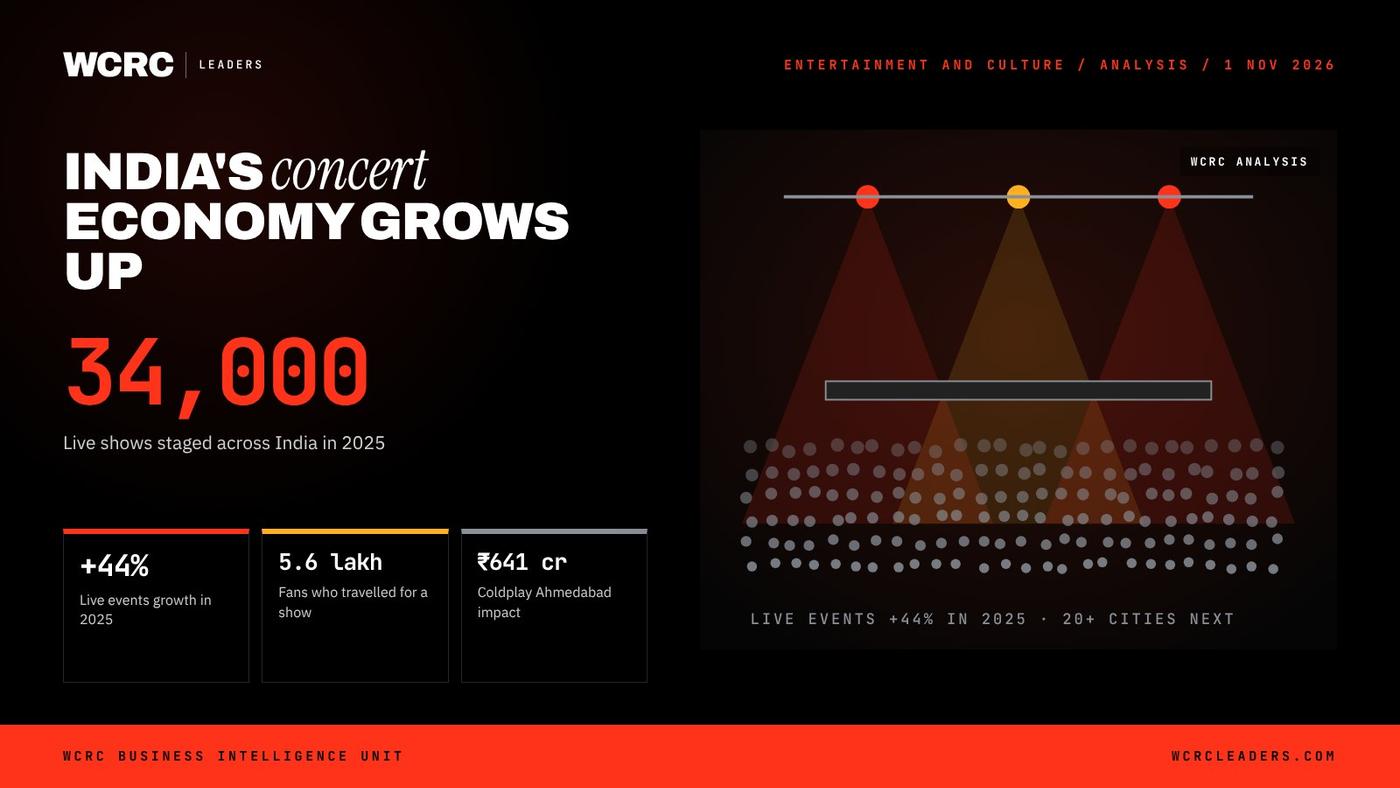
At a glance: WCRC Leaders' assessment: the concert boom has moved from a few headline tours to a national circuit reaching smaller cities. Growth is real, but the business depends on things organisers do not control alone: permissions, venues, crowd safety and transport. Brands and cities that treat a concert as an experience rather than a show will win the most from it.
| Fact | Figure |
|---|---|
| Live shows staged in India, 2025 | about 34,000 |
| Growth of live events in 2025 | 44%, fastest in media and entertainment |
| Fans who travelled to another city for a concert, 2025 | over 5.6 lakh |
| Coldplay in Ahmedabad: attendance | over 2.2 lakh |
| Coldplay in Ahmedabad: estimated economic impact | about ₹641 crore |
| Government goal | global live-events hub by 2030 |
| Single-window permissions | on the India Cine Hub portal |
From a few tours to a national circuit
For years, India was an occasional stop for international acts and a strong but seasonal market for domestic stars. That changed quickly. The FICCI-EY Media and Entertainment report for 2026 found that live events grew 44% in 2025, ahead of every other segment, and expects the business to spread to more than 20 cities in the next few years.
Ticketing data points the same way. BookMyShow's year-end report counted about 34,000 live shows across India in 2025. More than 5.6 lakh people travelled to another city to attend a concert, and over 18 lakh fans went to events on their own. Overall consumption on live entertainment rose 17%, and demand for premium formats such as VIP pits and hospitality zones nearly doubled.
The cities growing fastest are not the usual metros. Visakhapatnam, Vadodara, Indore, Shillong and Rajkot all recorded strong growth in attendance. For artists and promoters, that means a tour can now run longer and reach audiences who used to travel to Mumbai, Delhi or Bengaluru.
What one concert is worth to a city
The clearest case study is Coldplay's Music of the Spheres shows in Ahmedabad in January 2025. More than 2.2 lakh people attended, most of them from outside the city. An economic-impact study by EY-Parthenon and BookMyShow Live estimated a total impact of about ₹641 crore, with about ₹392 crore spent directly in Ahmedabad on hotels, food, transport, shopping and services. The shows were projected to bring in about ₹72 crore in GST.
Those numbers explain why state governments now compete for concerts. A two-night stadium event fills hotel rooms, flights and restaurants in a way that few other events can. BookMyShow has signed agreements with the tourism boards of Assam, Telangana, Gujarat and Delhi to build concert tourism, a sign that live music is now treated as part of a state's tourism plan.
Government steps in: permissions and a 2030 goal
The biggest complaint from organisers has long been permissions. A large concert can need clearances from police, fire services, municipal bodies, excise departments and more. The Ministry of Information and Broadcasting has set out to simplify this.
- Live Events Development Cell. The ministry runs a cell with central ministries, states and industry members. At its fourth meeting, on 1 May 2026, it set out the goal of making India a global hub for live events by 2030 and of adding 15 million to 20 million jobs in the sector.
- Single window. A single-window clearance system for live-event permissions has been built on the India Cine Hub portal, and states are being encouraged to adopt it.
- Model Executive Order. A model order for streamlining licences and permissions for live events was shared with states and Union Territories on 13 March 2026, with a target adoption date of 31 May 2026.
The ministry had earlier said it aims to double the size of India's concert economy. Whether that happens will depend on how many states adopt the single window in practice, not on paper.
The WCRC lens: the concert as a brand experience
Read through WCRC's MegaBrands lens, which looks at areas such as positioning and recall, consumer trust, and product and delivery, the concert boom is a test of delivery. A fan judges a promoter, a ticketing platform and a sponsor brand on the whole evening: entry queues, sound, safety, transport home. One badly run event can undo years of goodwill.
Three models from WCRC's Brand & Marketing Codex help explain what brands are buying when they sponsor a tour:
- Cultural Currency Model. It asks whether a brand is part of the current public conversation. A sold-out stadium tour is cultural currency at its most concentrated, which is why sponsors pay for association.
- Sensory Signature Model. It asks whether look, sound and feel make a brand instantly recognisable. Live events are one of the few places where a brand can control all three at once.
- Promise Gap Model. It measures the distance between what a brand claims and what it delivers. Premium tickets promise comfort and access; if the venue cannot deliver, the gap lands on every brand on the poster.
The workplace and leadership view
A 34,000-show year needs a large, skilled workforce: stage crews, sound engineers, security staff, logistics teams and event managers, many of them on short contracts. WCRC's CultureCrest framework, which looks at impact on people, career development and engagement, is a useful test for event companies. The firms that can offer steady careers in a gig-shaped industry will keep the best crews as the circuit grows.
For leaders, WCRC's Guru Management Codex offers the Fortress Model of Crisis Leadership. Crowd safety is the single biggest risk in the business, and the organisers who plan for a crisis before the gates open are the ones who protect both fans and their own licence to operate. In the terms of WCRC's leadership parameters, this is Stakeholder Trust: fans, artists, police and city officials all have to believe the event is in safe hands.
What could slow the boom
- Venues. India has few purpose-built arenas. Most big shows use cricket stadiums or open grounds, which limits the calendar and raises costs.
- Ticket prices. Premium demand is strong, but a market that depends on high-priced tickets is exposed if household spending tightens.
- Uneven adoption. The single window only helps where states use it. Organisers will route tours to the states that make permissions predictable.
The WCRC View
India's concert economy has outgrown its novelty phase. The growth figures are strong, smaller cities are joining the circuit, and the government is working on the permissions problem that held the business back. The next stage will be decided by delivery: safe crowds, reliable venues and a fan experience that justifies the ticket. The promoters, sponsors and cities that get delivery right will turn a boom into a lasting industry; those that do not will find that a fan's trust, once spent at the gate, is hard to win back.
WCRC models applied: MegaBrands; Brand & Marketing Codex (Cultural Currency Model, Sensory Signature Model, Promise Gap Model); CultureCrest; WCRC leadership parameters (Stakeholder Trust); Guru Management Codex (Fortress Model of Crisis Leadership).
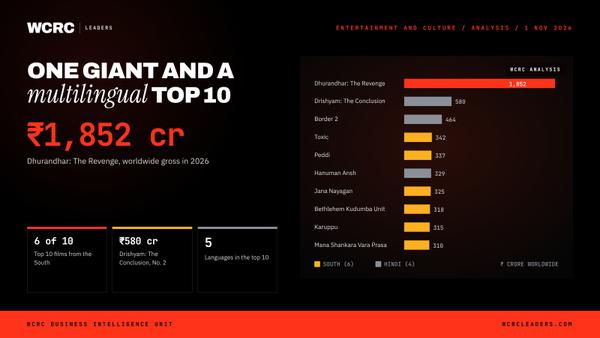
Indian cinema's top 10 of 2026: one giant, five languages and a franchise habit
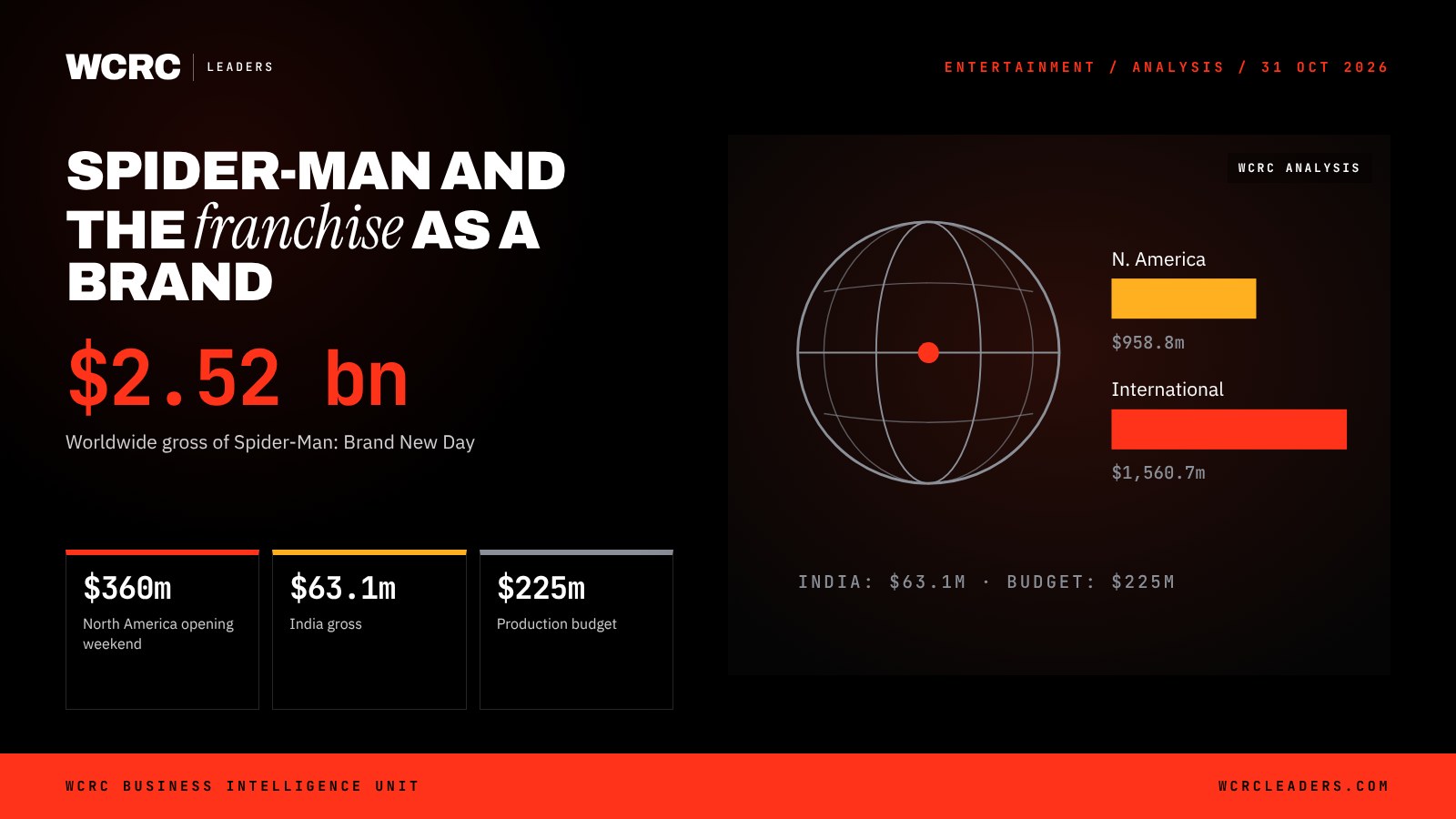
Spider-Man: Brand New Day at $2.52 billion: the franchise as a MegaBrand
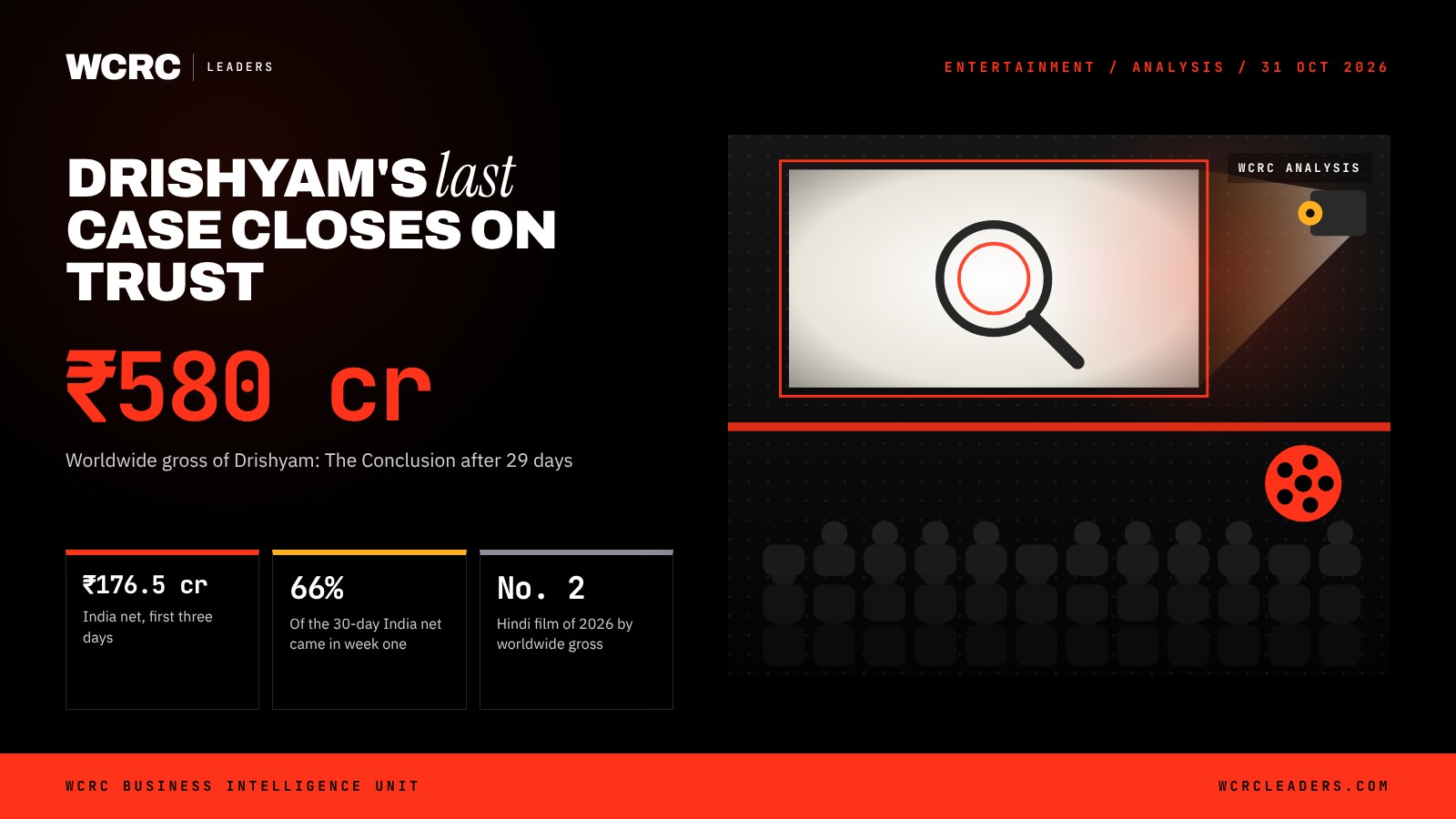
Drishyam: The Conclusion at ₹580 crore: the last case closes, and the brand wins
Ramayana Part 1: a ₹4,000 crore bet on India's oldest story
Adani Ports raises FY27 capex by ₹3,000 crore as overseas ports surge
Vedanta doubles Gamsberg, and Ramaphosa now wants a zinc smelter
Filed under