Entertainment and Culture
Indian cinema's top 10 of 2026: one giant, five languages and a franchise habit
Ten months into 2026, one film towers over Indian cinema. Dhurandhar: The Revenge has grossed about ₹1,852 crore worldwide, more than three times the film in second place. Behind it, the year's top 10 spans five languages, and six of the ten come from the South. Read together, the list says more about how Indian audiences now choose films than any single hit does.
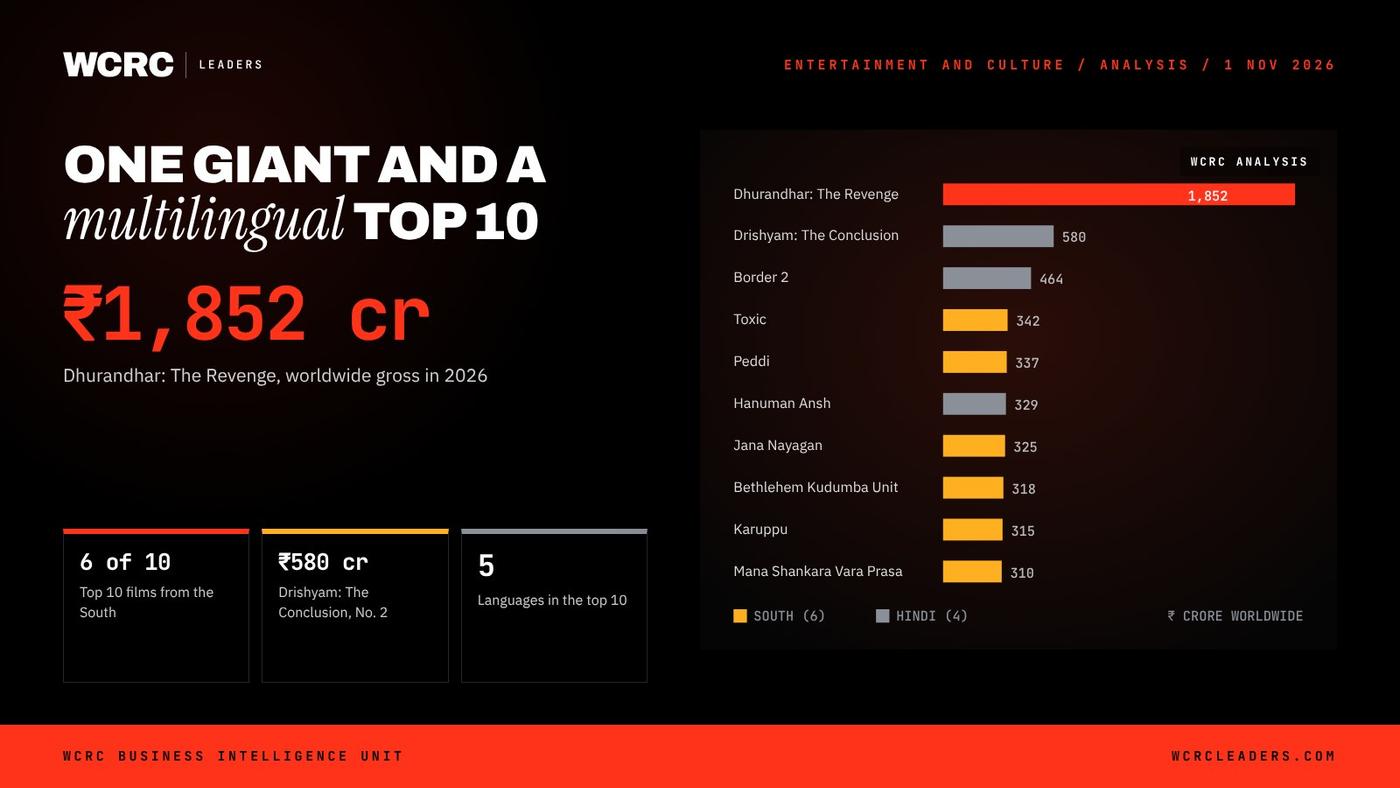
At a glance: WCRC Leaders' assessment: 2026 is a year of concentration and spread at once. One film holds more than a third of the top 10's combined gross of roughly ₹5,100 crore to ₹5,200 crore, yet the remaining nine come from Hindi, Telugu, Tamil, Kannada and Malayalam cinema. Sequels and known worlds dominate. The lesson for studios is that audiences are paying for names they already trust.
| Rank | Film | Language | Worldwide gross (estimate) |
|---|---|---|---|
| 1 | Dhurandhar: The Revenge | Hindi | ₹1,852.44 crore |
| 2 | Drishyam: The Conclusion | Hindi | ₹580.22 crore |
| 3 | Border 2 | Hindi | ₹464.50 crore |
| 4 | Toxic | Kannada/English | ₹341.52 crore |
| 5 | Peddi | Telugu | ₹330 crore to ₹336.85 crore |
| 6 | Hanuman Ansh | Hindi | ₹329 crore |
| 7 | Jana Nayagan | Tamil | ₹320 crore to ₹325 crore |
| 8 | Bethlehem Kudumba Unit | Malayalam | ₹317.97 crore |
| 9 | Karuppu | Tamil | ₹310 crore to ₹315 crore |
| 10 | Mana Shankara Vara Prasad Garu | Telugu | ₹300 crore to ₹310 crore |
India has no official box-office tracking. Figures are producer and trade estimates as last published and can differ by source; ranges are shown where they do. Mirzapur (Hindi, about ₹295 crore) sits just outside the top 10.
One film, one-third of the table
Dhurandhar: The Revenge, the sequel led by Ranveer Singh, is the year's defining commercial event. At about ₹1,852 crore, it has earned more than the films ranked second, third and fourth combined, with plenty to spare.
That scale matters beyond bragging rights. A single film of this size lifts the year's total box office, carries cinema chains through quieter months and resets what investors and financiers think a Hindi film can earn. It also concentrates risk. A year whose total depends heavily on one release looks very different if that release slips or disappoints.
Drishyam: The Conclusion, released on 2 October, moved into second place within a month at ₹580.22 crore. Nearly half of its India net came in its first three days, a sign of an audience buying on trust in the name rather than on reviews. WCRC Leaders' full box-office analysis of the film is published separately.
Six of ten from the South
The language split is the most striking feature of the table. Four films are in Hindi. The other six are from the South: two in Telugu, two in Tamil, one in Kannada and one in Malayalam.
- Kannada: Toxic, starring Yash and made in Kannada and English, is the year's biggest Kannada release and the clearest sign that the Kannada industry can now produce films for a national and overseas audience.
- Telugu: Peddi, led by Ram Charan, and Mana Shankara Vara Prasad Garu, led by Chiranjeevi, show the depth of Telugu star power across generations.
- Tamil: Jana Nayagan, Vijay's film, and Karuppu, starring Suriya, give Tamil cinema two places.
- Malayalam: Bethlehem Kudumba Unit, at about ₹318 crore, is a remarkable number for an industry that has historically worked with smaller budgets. It is the clearest sign that Malayalam cinema's reputation for writing now travels.
For a viewer, the practical result is simple: the biggest film in any given week may not be in their own language, and increasingly they do not mind. Dubbed and subtitled releases, and streaming windows that follow a few weeks later, have made Indian cinema one national market with several production centres.
Known worlds sell first
Look at the titles. Dhurandhar: The Revenge, Drishyam: The Conclusion and Border 2 are sequels. Mirzapur, just outside the top 10, takes a world that audiences already know from streaming to the big screen. Even the originals in the list are, in most cases, sold first on a star's name.
This is a rational response by audiences to the rising cost of a cinema outing. When a family spends on tickets, travel and food, it wants to reduce the risk of a bad evening. A familiar title or a trusted star is the cheapest form of insurance.
The WCRC lens: why trust sells tickets
Read through WCRC's MegaBrands lens, which looks at areas such as positioning and recall, consumer trust, and product and delivery, the 2026 table is a list of brands as much as films. A franchise is a promise about what the audience will get, and the box office is the market's verdict on whether the promise still holds.
Three models from WCRC's Brand & Marketing Codex help explain the pattern:
- Trust Equity Model. It asks how much trust a brand holds and how much pressure it can absorb. Drishyam's opening weekend, before word of mouth could build, is trust equity in action.
- Recall Ladder. It asks whether spending builds lasting memory or just noise. A sequel inherits years of memory; an original has to buy it, which is why originals in the list lean so heavily on established stars.
- Brand Stretch Model. It asks whether a new product can credibly launch under an existing name. Mirzapur's move from streaming to cinemas, and the step-up of Kannada and Malayalam films to national scale, are stretch tests that the market is now grading in public.
The risk is also visible through the Codex's Promise Gap Model, which measures the distance between what a brand claims and what it delivers. Franchises open big on trust, but week-on-week drops expose any gap quickly. A sequel that disappoints spends trust that took a decade to build.
The leadership view
Behind every film in the table is a set of leadership decisions: when to release, how much to spend and whether to bet on the familiar or the new. In the terms of WCRC's leadership parameters, the year rewards Vision Quotient, the ability to see where audiences are going, and Global Mindset, the willingness to build films that travel beyond one language.
WCRC's Guru Management Codex offers a caution through SeeClear, which asks leaders to separate fact from projection before a major decision. A ₹1,852 crore hit is a fact. The idea that every sequel will now earn a fraction of that is a projection, and studios that greenlight on the projection rather than the fact tend to learn expensively.
What to watch in November and December
The table is not final. Ramayana: Part 1, which WCRC Leaders has examined separately, opens on 5 November with a global release plan and could reshape the top of the list. The year-end holiday releases follow. Any film that enters the top three before 31 December will do so on the back of the same forces this list shows: scale, a trusted name and a release that works in more than one language.
The WCRC View
Indian cinema in 2026 has one runaway winner and a broad, multilingual chasing pack. The top 10 shows that audiences are spending on trust: sequels, known worlds and familiar stars. That is good for franchise owners and hard for original storytelling, which must now borrow trust from stars to get a hearing. The industries that will gain most in the next two years are the ones turning regional reputations, such as Malayalam writing and Kannada scale, into national brands without losing what made them distinct.
WCRC models applied: MegaBrands; Brand & Marketing Codex (Trust Equity Model, Recall Ladder, Brand Stretch Model, Promise Gap Model); WCRC leadership parameters (Vision Quotient, Global Mindset); Guru Management Codex (SeeClear).
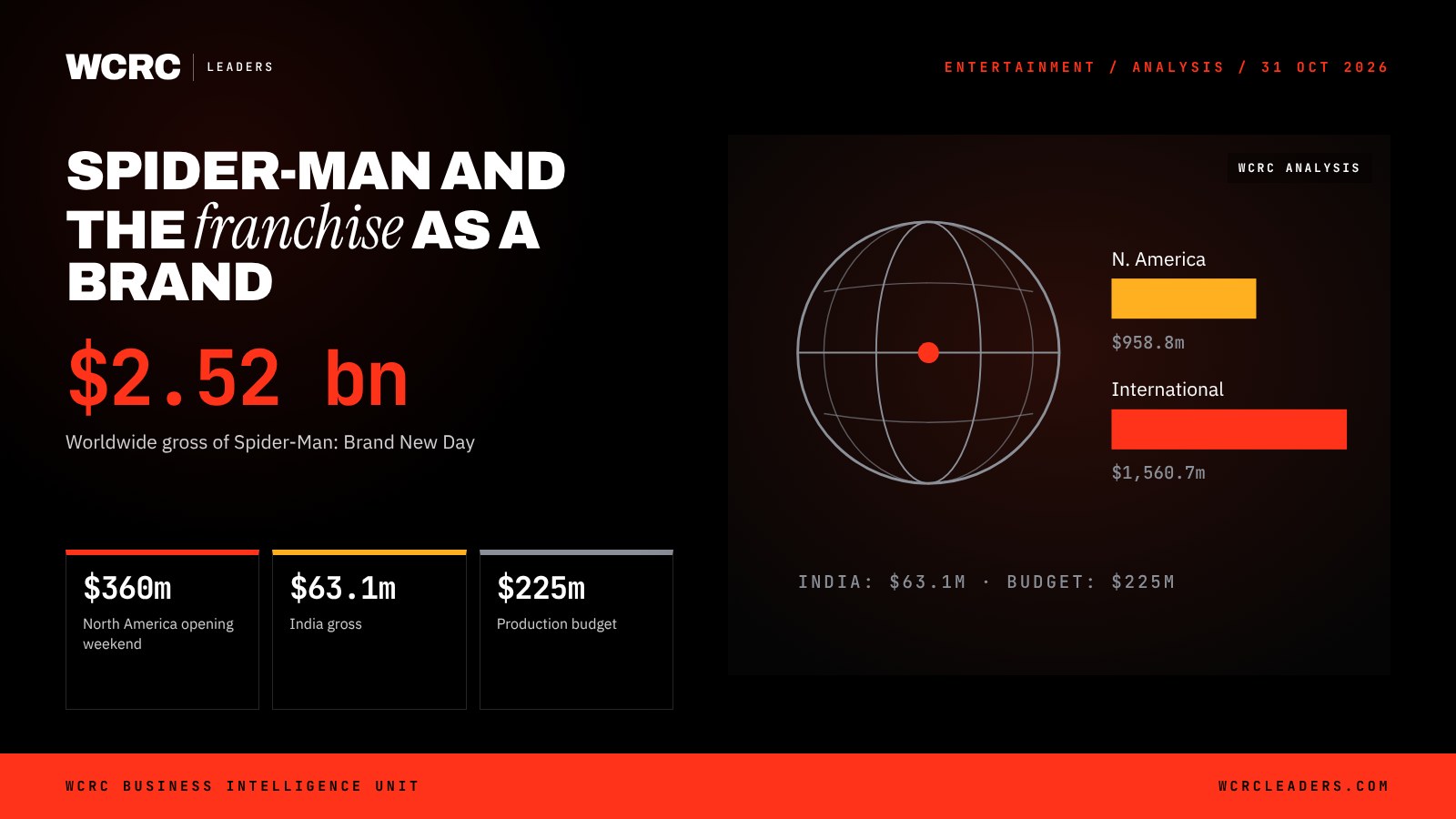
Spider-Man: Brand New Day at $2.52 billion: the franchise as a MegaBrand
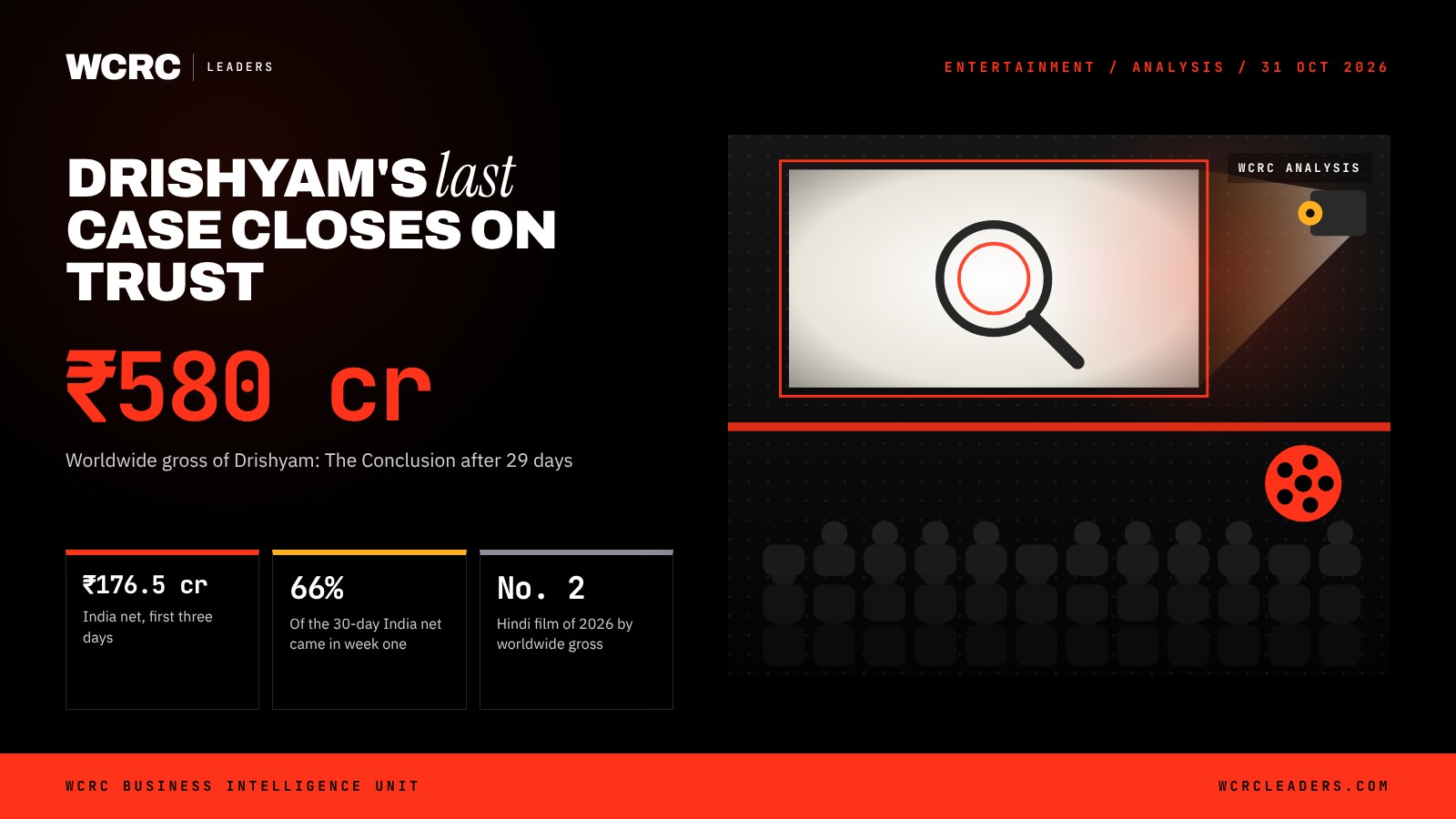
Drishyam: The Conclusion at ₹580 crore: the last case closes, and the brand wins
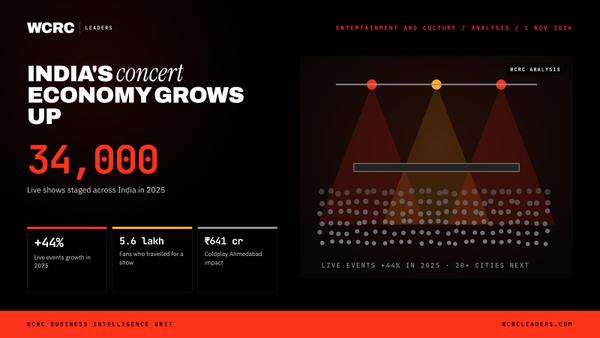
India's concert economy: why live events became entertainment's fastest-growing business
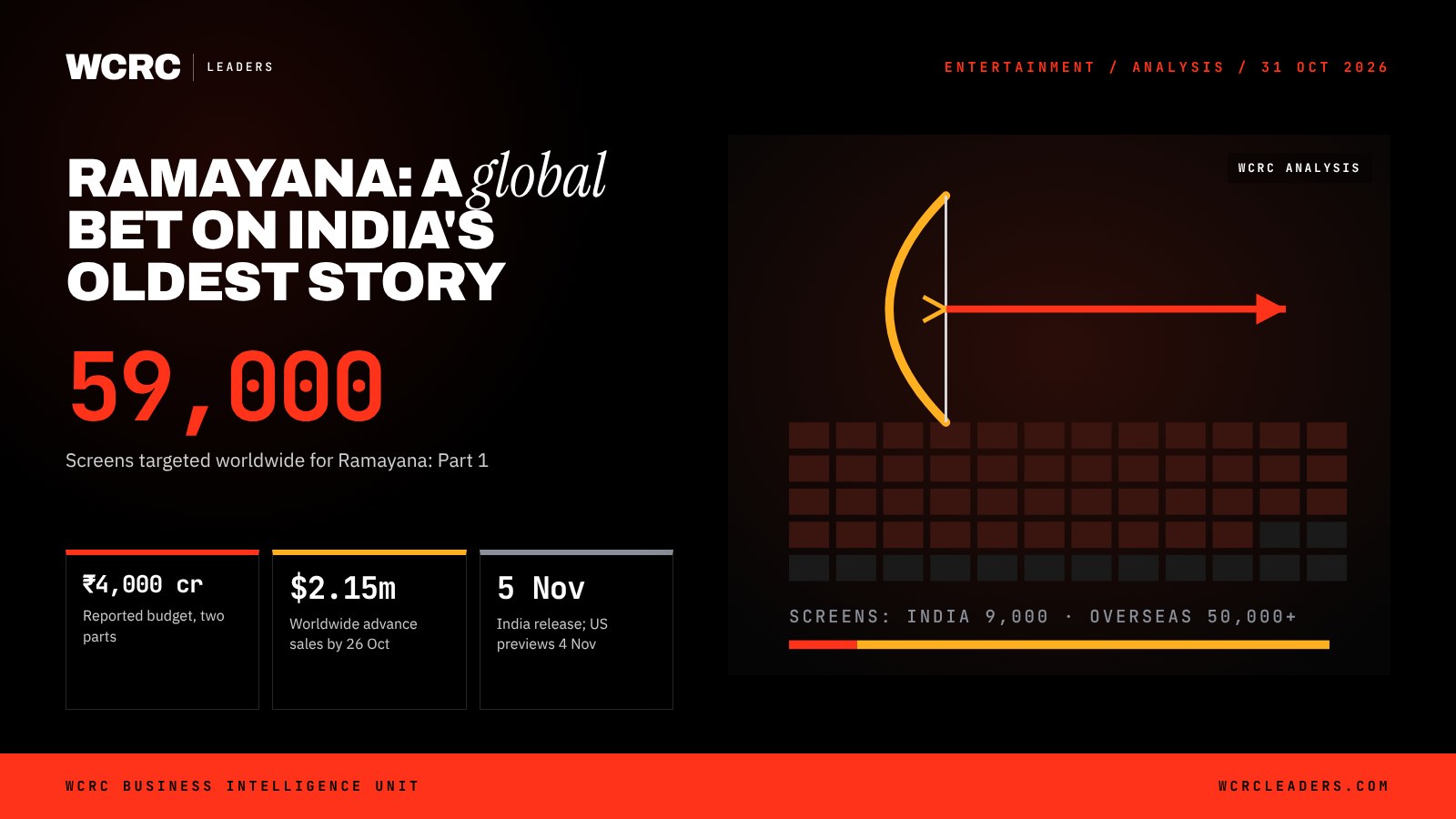
Ramayana Part 1: a ₹4,000 crore bet on India's oldest story
Adani Ports raises FY27 capex by ₹3,000 crore as overseas ports surge
Vedanta doubles Gamsberg, and Ramaphosa now wants a zinc smelter
Filed under