Skip to content
WCRCLeaders

Best Workplace Recognition

Workplace research that starts from employee evidence and published criteria, with the cohort and the scoring on the record before a list is drawn.

India's Most Loved 250 Workplaces is the current cohort, and the parameters it was assessed on are published alongside it.
On WCRC Leaders

Tata Motors posts 42% volume jump as its €3.9bn Iveco bid nears close

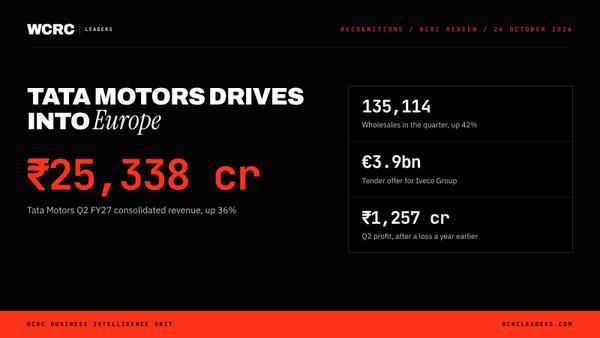
Tata Motors posts 42% volume jump as its €3.9bn Iveco bid nears close

India's largest truck maker sold 135,114 commercial vehicles in the September quarter and swung back to profit. Within a week it expects to own Iveco, and with it a European brand that it must now learn to run.

Saudi Arabia's 50% accountant quota starts 27 October: a CFO checklist

Saudi Arabia's 50% accountant quota starts 27 October: a CFO checklist

From next Tuesday, half of the accounting workforce at larger private employers in the Kingdom must be qualifying Saudi nationals. For Indian, Gulf and Asian firms, the test is not headcount alone but wages, accreditation and payroll data.

Wipro's 58.6% large-deal drop puts Rishad Premji to the test

Wipro's 58.6% large-deal drop puts Rishad Premji to the test

Wipro held its margin and its cash in the September quarter, but its biggest contracts dried up. For Executive Chairman Rishad Premji and CEO Srini Pallia, the question is now whether the AI bet can turn into bookings before the core business shrinks.

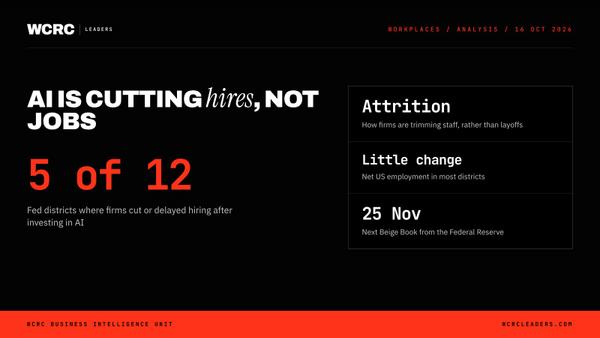
Fed Beige Book: AI is slowing hiring in 5 of 12 US districts

Fed Beige Book: AI is slowing hiring in 5 of 12 US districts

The US Federal Reserve's October Beige Book puts on the official record what many boards have suspected: companies investing in AI are hiring fewer people. The cuts are quiet ones, through attrition and empty requisitions, and that is exactly why workforce planners in India and the Gulf should pay attention.

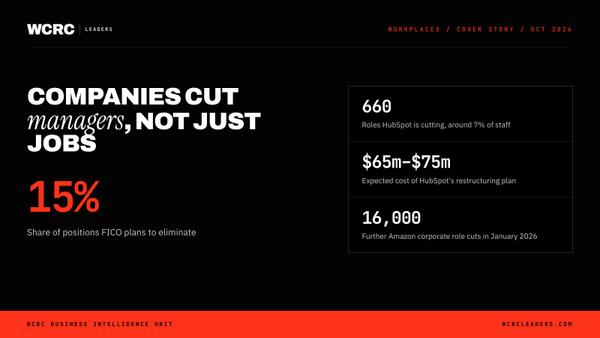
The great flattening: companies are cutting managers, not just jobs

The great flattening: companies are cutting managers, not just jobs

In the first week of October, HubSpot, FICO and Amazon each cut roles with the same stated aim: fewer layers between the people who decide and the people who do the work. The cost savings are modest. The leadership consequences may not be.

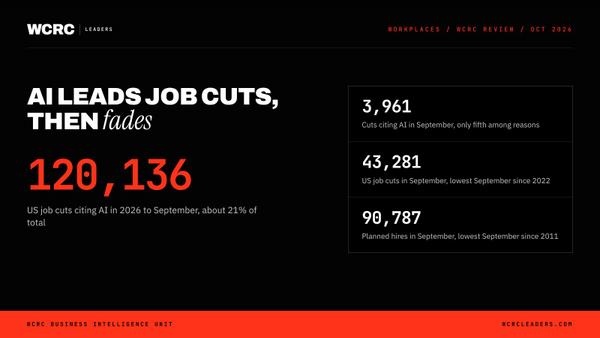
AI layoffs: cause or cover story?

AI layoffs: cause or cover story?

Artificial intelligence is the most-cited reason for US job cuts this year. In September it fell to fifth place. The gap between the headline and the monthly detail is a warning for any leader tempted to put "AI" in a layoff announcement.

California makes AI workforce decisions auditable

California makes AI workforce decisions auditable

Four laws signed on 30 September 2026 set the most detailed rules yet in the United States for how employers use AI on their workforce. For any company with staff in California, the practical result is the same: AI-assisted people decisions now need a paper trail.

The UK's employment-law reset is live: a checklist for leaders

The UK's employment-law reset is live: a checklist for leaders

Employees in Great Britain now have twice as long to bring most tribunal claims, and from 30 October employers face a tougher duty to prevent sexual harassment and new obligations to trade unions. The next change, on unfair dismissal, follows in January.

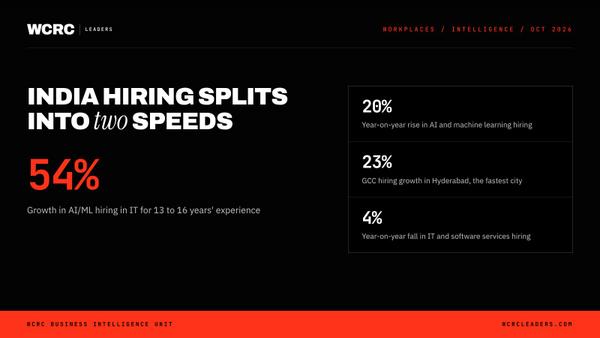
India's two-speed job market: AI roles and GCCs up, IT services down

India's two-speed job market: AI roles and GCCs up, IT services down

India's white-collar hiring barely moved in September, but beneath the flat headline, demand is shifting fast: towards AI skills, experienced talent and global capability centres, and away from traditional IT services.

Leading in a low-hire, low-fire market

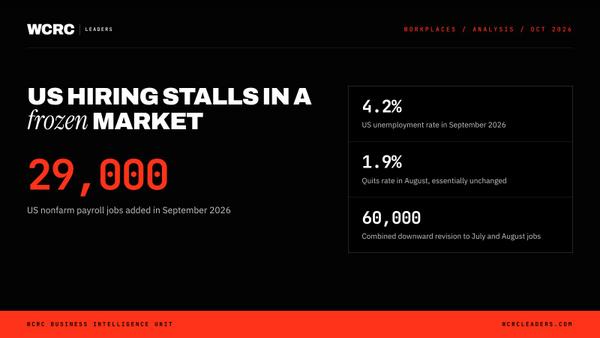
Leading in a low-hire, low-fire market

The US labour market has stalled into an unusual equilibrium: companies are not hiring much, not firing much, and employees are not leaving. That changes the talent playbook, and it makes reputational shocks a direct workforce risk.

This year's economics Nobel, read for business leaders

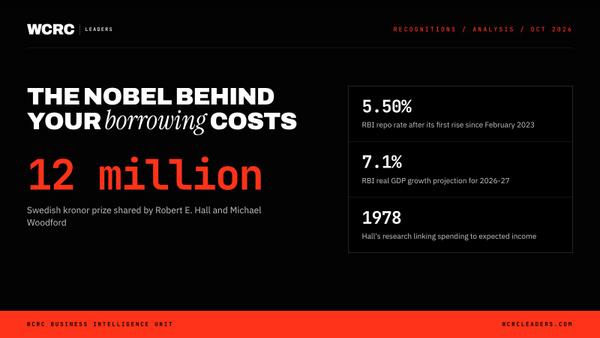
This year's economics Nobel, read for business leaders

The 2026 prize honours the thinking behind how central banks try to steady an economy. With India's central bank raising rates for the first time since February 2023, that thinking is now showing up in boardroom borrowing costs.

What makes a business recognition credible

What makes a business recognition credible

A recognition is only worth what its process is worth. Here is the standard WCRC holds itself to: how candidates come forward, what is assessed, who selects, how money is kept out of the decision, and how anyone can check a claim.

The 'alternative Nobel' goes to an AI accountability pioneer

The 'alternative Nobel' goes to an AI accountability pioneer

The 2026 Right Livelihood Award has honoured AI researcher Timnit Gebru for challenging concentrated power in artificial intelligence. For boards deploying AI, the message is that accountability is no longer a niche concern: it is now recognised alongside human rights work.

What this year's Nobel prizes teach about long bets and open sharing

What this year's Nobel prizes teach about long bets and open sharing

The 2026 science Nobels reward ideas that took decades to mature, and one that spread because its inventors gave their tools away. Both lessons sit awkwardly with quarterly R&D budgets, and both are worth a boardroom discussion.

Navi Pillay and leadership through institutions

Navi Pillay and leadership through institutions

The 2026 Nobel Peace Prize honours a jurist who spent six decades building rules that outlast the people who wrote them. Her career is a study in a kind of leadership business rarely celebrates: making institutions work.

No strings attached: what the MacArthur model teaches about recognising talent

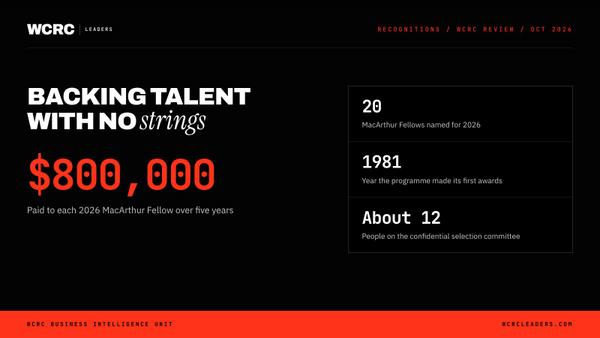
No strings attached: what the MacArthur model teaches about recognising talent

The MacArthur Foundation has named 20 new fellows, each receiving $800,000 over five years with no application, no conditions and no reports. Its model raises a sharp question for corporate awards and leadership programmes: are we rewarding the past, or backing the future?

Related