WCRC Intelligence
Bank of Korea holds at 3.00% and keeps more hikes on the table
Korea's central bank paused after two increases since July, but said it will decide "the timing and pace of further increases". With India and Indonesia also leaning tighter, Asia's cheap-money window is closing as oil bites.

At a glance: WCRC Leaders' assessment: the Bank of Korea's hold is a pause in a tightening cycle, not the end of one, and Asian borrowers should plan for higher rates through 2027. On 22 October 2026 Korea's Monetary Policy Board voted unanimously to keep the Base Rate at 3.00%, after hikes in July and August. It expects inflation to stay above target "for a considerable time", citing the rebound in oil prices and the Middle East conflict. The Reserve Bank of India and Bank Indonesia have both moved in the same direction this month.
What did the Bank of Korea decide, and why does the wording matter?
The Monetary Policy Board left the Base Rate unchanged at 3.00% on 22 October, with all seven members backing the decision. That follows two 25 basis point increases: from 2.50% to 2.75% on 16 July, and from 2.75% to 3.00% on 27 August, when one member, Hwang Kunil, dissented in favour of holding.
The hold is not a signal that the cycle is over. The Board said it needed to assess "the effects of the two prior rate hikes" while keeping the rate where it is. In the same statement it said it "will decide the timing and pace of further increases in the Base Rate".
The inflation numbers explain the caution. Consumer price inflation was 2.9% in September and core inflation, which strips out food and energy, was 2.8%. The bank said inflation "is expected to remain above the target level for a considerable time". It now expects 2027 inflation to exceed its August forecasts of 2.3% for headline and 2.5% for core, and it named the pass-through of cost pressures "from the rebound in oil prices and increases in semiconductor prices" as the reason.
How strong is Korea's economy right now?
Strong enough that the central bank sees little reason to protect growth. The Board said the domestic economy "continued to grow at a higher than expected pace, led by strong exports and investment", and expects growth in 2026 and 2027 to be considerably higher than its August forecasts of 3.3% and 2.9%.
Exports are the engine. Korea's Ministry of Industry and Trade reported on 1 October that September exports reached $120.9bn, up 84% on a year earlier and the first month ever above $120bn. Semiconductor exports alone were $60.3bn, also a first above $60bn. The trade surplus of $49.9bn was, the ministry said, the largest on record. Exports for January to September totalled $814.5bn.
The Bank of Korea now projects customs-based exports above $1tn for 2026 and a current-account surplus above its August forecast of $450bn. On WCRC's arithmetic (analysis), Korea needs about $185bn of exports in the final quarter, roughly $62bn a month, to cross $1tn.
The risks the Board listed are mostly external: tensions in the Middle East and oil prices, monetary and fiscal policy in major economies including the US after the midterm elections, and the sustainability of AI investment. At home, it flagged accelerating housing prices in Seoul and its surrounding areas, even as household loans in the financial sector declined.
Is Korea alone, or is Asia tightening together?
It is not alone. Two other central banks have moved in the same direction this month, each for its own reasons.
The Reserve Bank of India raised its repo rate by 25 basis points to 5.50% at the end of its 5 to 7 October meeting. The minutes, published on 21 October, show a unanimous six to nothing vote for the hike and a change of stance from neutral to "calibrated tightening", which rules out near-term cuts and leaves a hike or a pause as the next options. The RBI projects CPI inflation of 5.2% for 2026-27, peaking at 6.0% in the October to December quarter, and cites a deficient monsoon, El Niño conditions, high energy and commodity prices and rupee depreciation. The next meeting is on 2 to 4 December. WCRC covered the decision in India's first rate hike since 2023: what it means for capex and the festive season.
Bank Indonesia, meeting on 20 and 21 October, held its BI-Rate at 5.75% but raised its Deposit Facility rate to 5.00%, keeping the Lending Facility at 6.50%. Its stated aim is to "stabilise the Rupiah exchange rate amid persistently strong external headwinds". The rupiah stood at Rp17,985 to the dollar on 20 October. The bank linked "escalating tensions associated with the ongoing war in the Middle East" to high oil prices. September CPI inflation was 3.28%, inside its 2.5% plus or minus 1% target band.
| Central bank | Latest decision | Policy rate | Stated driver |
|---|---|---|---|
| Bank of Korea | Hold, 22 Oct, 7-0 | 3.00% | Inflation above target "for a considerable time"; oil |
| Reserve Bank of India | Hike 25bp, 7 Oct, 6-0 | 5.50% | CPI seen at 5.2% in 2026-27; energy, monsoon, rupee |
| Bank Indonesia | Hold BI-Rate, deposit rate up, 21 Oct | 5.75% | Rupiah stability; Middle East and oil |
What does this mean for borrowing costs and currencies?
The following is WCRC analysis based on the decisions above.
Borrowing costs in Asia's largest emerging markets are now set to rise or stay high, not fall. Korean corporate and mortgage rates price off a Base Rate that has risen 50 basis points since July and could rise again. Indian borrowers face a central bank that has removed near-term cuts. A higher Indonesian deposit rate tends to lift the floor under short-term lending rates.
The currency picture is split, and that matters for planning. Korea's tightening comes with a strong external account; the Bank of Korea said the won to dollar exchange rate "fell significantly", meaning the won strengthened. Indonesia's move is defensive, aimed at a weak rupiah. India sits between: the RBI names rupee depreciation as an inflation risk. WCRC has examined the cost of that support in $133bn: what India's rupee defence is costing its biggest banks.
For the Gulf, the transmission is indirect. Most Gulf currencies are pegged to the US dollar, so domestic rates follow US policy rather than Asian central banks. But Gulf groups with Indian or Korean subsidiaries, or Asian supply contracts, will see local funding costs rise in those markets, and Gulf investors in Asian debt will see higher yields on offer.
What should CEOs and boards in India, the Gulf and Asia do now?
The common thread is energy. All three central banks cite oil or the Middle East. As long as that pressure stays, rate relief is unlikely in the next two quarters. Boards should treat the current rate as the floor for 2027 budgets, not the ceiling. Companies with floating-rate debt in rupees, won or rupiah should test what another 25 to 50 basis points does to interest cover. Exporters in Korea, and suppliers into its semiconductor chain, should plan for a stronger won squeezing margins earned in dollars.
The WCRC View
The call: the WCRC Business Intelligence Unit reads the Bank of Korea's hold as a pause, not a peak. The bank has kept the language of further increases, raised its growth outlook and pushed up its 2027 inflation view. That is a central bank keeping its options open to the upside.
Who gains: Korean exporters in semiconductors and IT are riding a demand cycle strong enough to absorb higher rates. Savers and cash-rich companies across Korea, India and Indonesia earn more on deposits.
Who loses: leveraged mid-sized companies on floating rates, property developers in Seoul and its surrounding areas, and Indian firms that timed capex on the expectation of further cuts. Importers of energy and dollar-priced inputs in India and Indonesia face both higher funding and weaker currencies.
What leaders should do now: fix or hedge a larger share of floating-rate debt, revisit 2027 capex hurdle rates, and build oil price bands into treasury plans. In Korea, plan for a stronger won. In India, plan for a December meeting that may not deliver relief.
What WCRC will watch next: the RBI's 2 to 4 December meeting, the Bank of Korea's next decision and any revised forecasts, Bank Indonesia's November meeting and the rupiah, and oil prices tied to the Middle East conflict. If Korea's exports keep running near $120bn a month while inflation stays near 3%, a third hike becomes the base case.
Quick answers
Q: What did the Bank of Korea decide on 22 October 2026? A: It held the Base Rate at 3.00% by a unanimous seven to nothing vote, after 25 basis point hikes in July and August, and said it will decide the timing and pace of further increases.
Q: What is Korea's inflation rate? A: Consumer price inflation was 2.9% in September 2026 and core inflation was 2.8%. The bank expects inflation to stay above target "for a considerable time".
Q: How large were Korea's September exports? A: $120.9bn, up 84% year on year and the first month above $120bn, with semiconductors at $60.3bn, according to the Ministry of Industry and Trade.
Q: How does Korea compare with India and Indonesia? A: The RBI raised its repo rate to 5.50% on 7 October and moved to "calibrated tightening". Bank Indonesia held its BI-Rate at 5.75% on 21 October but raised its Deposit Facility rate to 5.00%.
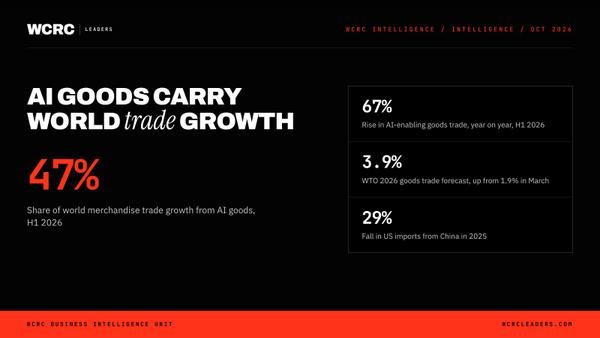
The AI trade economy: chips and servers now carry almost half of world trade growth
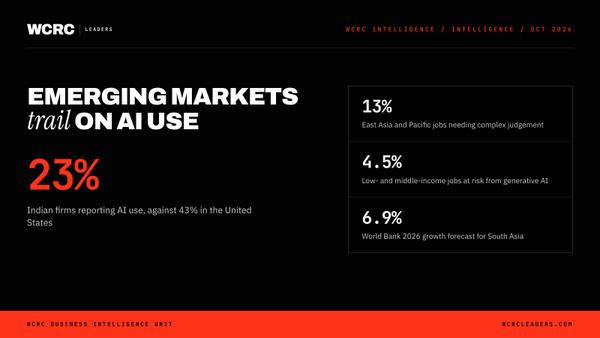
The AI adoption gap: what the World Bank's new numbers say about emerging markets
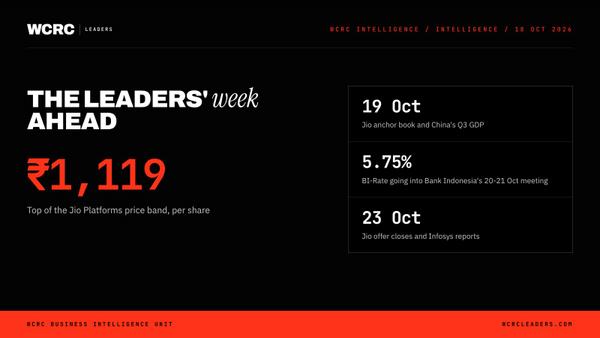
Jio's IPO, China's GDP: the leaders' week ahead, 19 to 25 October
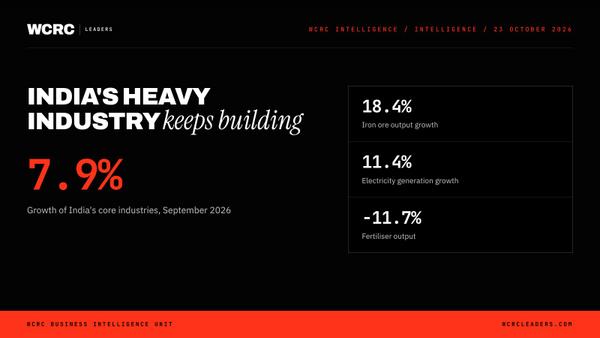
India's core sector grows 7.9% in September despite the oil shock
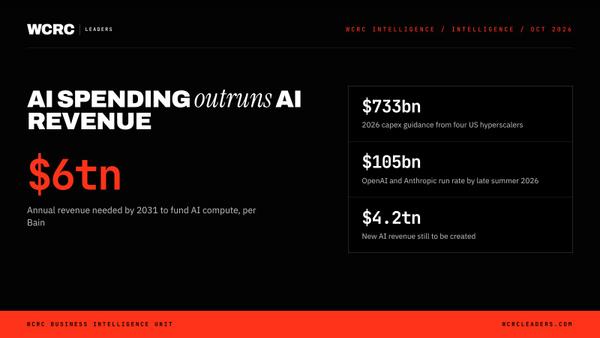
The $6 trillion question: is AI spending outrunning AI revenue?
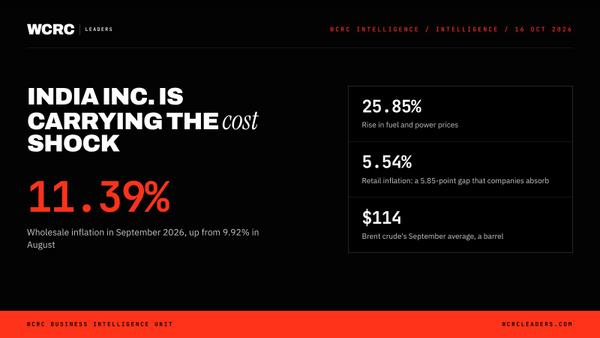
India's 11.39% wholesale inflation: the margin squeeze is here
Filed under