Technology
Anthropic files for ANT listing: $16.3bn in sales, $80.7bn net loss
Anthropic's Form S-1 puts detailed numbers on the AI boom at a scale no AI lab has disclosed before: revenue up fourteenfold, a loss driven by its own rising valuation, compute bills that run to 2045, and a share structure that leaves public investors with little say.
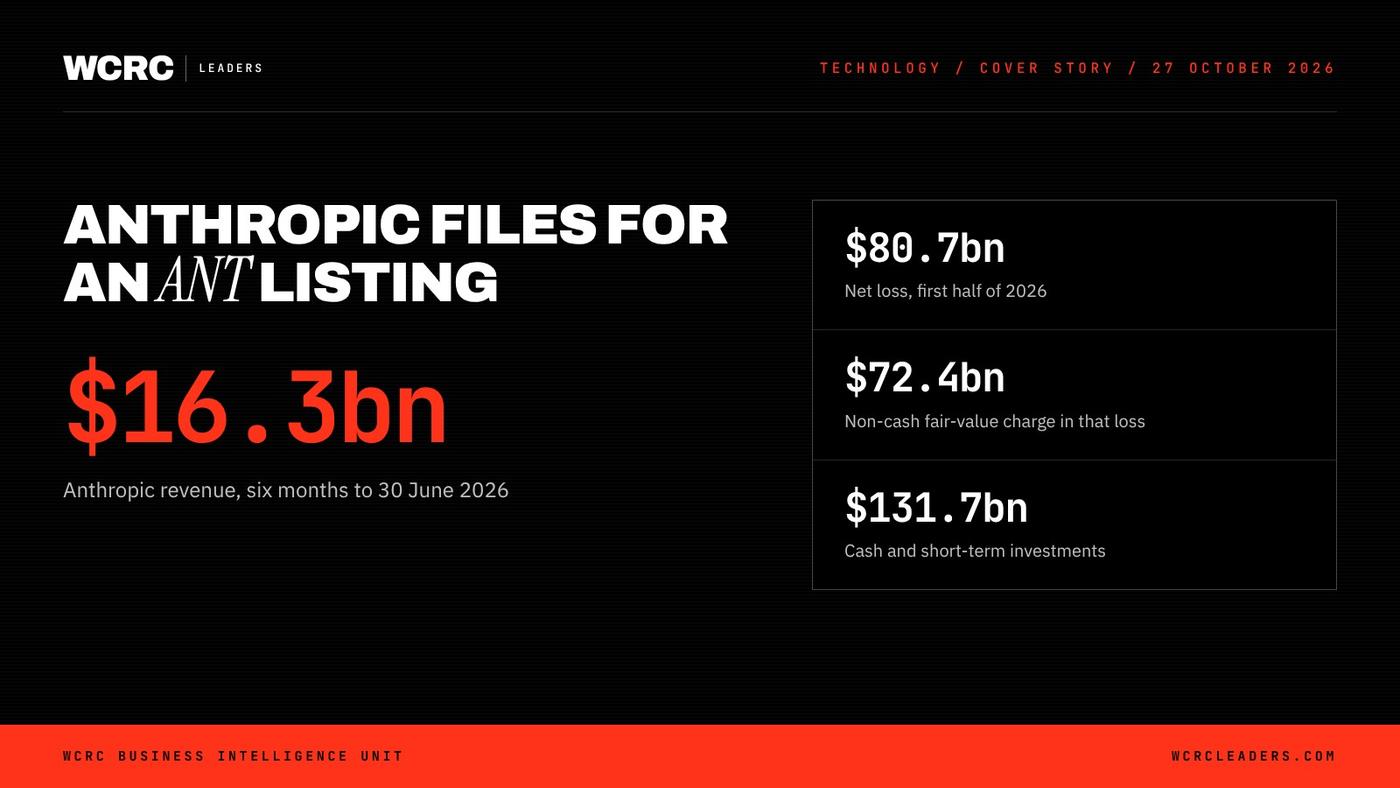
At a glance: WCRC Leaders' assessment: Anthropic's filing shows that enterprise AI revenue is now real at scale, but the cost, concentration and control behind it are just as large, and boards should price both. Anthropic, PBC filed a Form S-1 with the US Securities and Exchange Commission on 26 October 2026 for a Nasdaq Global Select listing under the ticker ANT, with Goldman Sachs and Morgan Stanley first on the cover. Share count and price range are not yet set.
What did Anthropic file, and what is still missing?
The maker of the Claude models filed a registration statement for an initial public offering of Class A common stock on 26 October 2026. The company said the number of shares and the price range "have not yet been determined", and the registration is not yet effective. Goldman Sachs & Co. LLC and Morgan Stanley & Co. LLC head a syndicate of about 20 banks.
Several figures in the draft remain blank. The total of Anthropic's compute purchase commitments and leases is shown as "more than $" with no number, as are the amounts due in the next 12 months and before 31 December 2030. The filing says "substantially all of the remainder" falls between 2031 and 2045.
How large is the revenue, and how real is it?
Revenue for the six months to 30 June 2026 was $16,286m, against $1,163m a year earlier. That is roughly 14 times higher, and more than three times the $4,585m Anthropic booked in the whole of 2025. Full-year revenue was $41m in 2023 and $386m in 2024.
The customer base explains where the money comes from. As of 30 September 2026, the filing counts more than 11,900 customers paying over $100,000 on a trailing 12-month basis, more than 1,900 paying over $1m and about 250 paying over $10m. Trailing revenue per employee was "over $6.6 million".
Operating losses have narrowed sharply. Anthropic reported a GAAP operating loss of $693m for the first half of 2026, an operating margin of minus 4%, compared with a loss of $2,135m and a margin of minus 184% a year earlier.
Why is the net loss $80.7bn?
The headline loss is mostly an accounting effect, but not entirely. Net loss for the half year was $80,748m. Of that, $72,388m came from changes in the fair value of convertible notes, derivative liabilities and SAFEs (simple agreements for future equity), which the filing attributes mainly to Anthropic's higher enterprise valuation. In plain terms, as the company became worth more, the instruments it owes to earlier backers became more costly on paper.
That still leaves a further $8,757m of "other income (expense), net", which the summary tables do not itemise, partly offset by $1,111m of interest income. The 2025 net loss was $41,965m. Investors will want the full notes before treating the business as close to breakeven.
The balance sheet is deep. Cash and cash equivalents stood at $112.4bn and short-term investments at $19.3bn on 30 June, a total of $131.7bn.
What does the filing say about compute, concentration and competition?
The risk factors deserve as much attention as the growth. Anthropic says demand "has historically exceeded available capacity" and that it signs multi-year compute commitments "typically entered into well in advance". It runs on AWS Trainium, Google TPUs, NVIDIA GPUs and AMD GPUs, and is moving to a "hybrid model" that adds directly leased chips in dedicated facilities. It warns that delays in securing "energy, water, and other critical services" could slow new capacity.
The company also questions the premise behind that spending. The link between more compute and better models, "commonly referred to as 'Scaling Laws'", may "plateau, diminish, or fail to materialize at larger scales", the filing says.
Concentration runs both ways. "A substantial portion of our revenue and accounts receivable is driven by a limited number of customers and distribution channels," the filing states, without giving percentages. Claude is sold through Amazon Web Services, a WCRC MegaBrand in cloud platforms, Google Cloud Platform and Microsoft Azure, and Anthropic pays each cloud provider a fee. Those same suppliers "have strategic and investment relationships with us and are our customers", and "certain CSPs from which we obtain substantial compute also develop and offer their own AI models". Amazon Web Services holds convertible notes that convert into non-voting Class N shares at the offering.
Anthropic also lists intense competition, a limited operating history in "an evolving and nascent industry", an "evolving and uncertain regulatory and political environment", and the risk of misuse or of models behaving in unintended ways.
Who will control a listed Anthropic?
Not the public shareholders. Class A stock carries one vote a share. A single Class F share, held by a Founder LLC whose initial members are the seven co-founders, including chief executive Dario Amodei, carries 50.1% of total voting power and no economic rights. Separately, the Long-Term Benefit Trust, designed as five financially disinterested trustees, generally elects and removes the Class T directors, who will form a board majority.
Anthropic will be a "controlled company" under Nasdaq rules, though it says it will use the exemption only for its nominating and governance committee. As a public benefit corporation it must balance shareholders' financial interests with its stated purpose, "the responsible development and maintenance of advanced AI for the long-term benefit of humanity". The filing warns this "may conflict with short-, medium-, or long-term financial interests" and could weigh on the share price, and that the structure "may effectively eliminate the ability of holders of our Class A common stock to influence important decisions".
What does it mean for India, the Gulf and Asia?
For Indian IT services, the filing sharpens a question boards already face. Anthropic said in February that India is the second-largest market for Claude.ai and that its India run-rate revenue had doubled since October 2025. It works with Infosys, one of WCRC 1000, India's Most Valuable Enterprises 2026, combining Claude with the Infosys Topaz platform. Infosys is also named among India's Most Loved 250 Workplaces 2026 by WCRC. Yet Infosys has just cut its FY27 guidance to 1-2% even as AI reached 10.5% of revenue, and Anthropic's own data showed junior technical hires falling to 9%. WCRC's reading: value is moving towards model providers, and services firms will have to win on integration and governance in regulated sectors.
For Gulf and Asian sovereign investors, the listing would put a public price on an existing exposure. Qatar Investment Authority was named among participants in Anthropic's $13bn Series F in September 2025, as was Singapore's GIC. A listing gives such holders a future route to liquidity, but no extra say over the company.
For Asian chipmakers, the message is demand that the buyer itself calls hard to secure. Anthropic's list of risks, from chip supply to power, matches what WCRC reported when ASML said tool supply would fall short to 2028. In WCRC's analysis, Asia's foundries and memory makers gain from that scarcity but are exposed if the scaling assumption the S-1 itself questions weakens.
The WCRC View
Analysis by the WCRC Business Intelligence Unit.
The call: the S-1 settles one debate and opens three. Frontier AI now earns real money from large companies: $16.3bn in six months, and about 250 customers paying over $10m a year. But the same document shows a business whose costs, suppliers and control sit in very few hands, and whose biggest liabilities, long-dated compute commitments, are not yet quantified in public.
Who gains: cloud providers and chip suppliers, which are at once Anthropic's partners, customers, investors and competitors; early backers, whose instruments drove the $72.4bn fair-value charge; and enterprises that can turn model access into productivity faster than rivals. Public Class A investors gain access but not influence.
What boards in India, the Gulf and Asia should do now: treat AI vendor concentration as a board-level risk, not an IT purchase. Ask which model and cloud providers your core processes depend on and what happens if pricing or access changes. IT services boards should test their pyramids against the junior-hiring evidence and price contracts on outcomes. Investors in the Gulf and Asia should read the governance sections as closely as the revenue line: a founders' LLC will hold the majority vote and a benefit trust will elect most of the board.
What WCRC will watch: the amended S-1 with the compute commitment totals and the price range; the breakdown of the $8.8bn "other" expense; any disclosure of customer or channel percentages; and how Indian IT firms report AI revenue in the December quarter.
Quick answers
Q: When did Anthropic file for its IPO, and where will it list? A: Anthropic, PBC filed a Form S-1 with the SEC on 26 October 2026 for a listing on the Nasdaq Global Select Market under the ticker ANT. Price range and share count are not yet set.
Q: How much revenue did Anthropic report? A: $16,286m for the six months to 30 June 2026, against $1,163m a year earlier. Full-year 2025 revenue was $4,585m.
Q: Why did Anthropic lose $80.7bn in six months? A: $72.4bn of the net loss was a non-cash change in the fair value of convertible notes, derivatives and SAFEs, linked mainly to its higher valuation. The GAAP operating loss was $693m, and an unitemised $8.8bn other expense also contributed.
Q: Will public shareholders control Anthropic? A: No. A founders' LLC holds 50.1% of the votes and the Long-Term Benefit Trust elects a board majority. Anthropic will be a controlled company under Nasdaq rules.
Your customers will send their agents: what the Personal Agent Protocol means for the board
Infosys cuts FY27 guidance to 1-2% as AI reaches 10.5% of revenue
SK hynix shelves the Solidigm IPO: what it says about the AI capex cycle
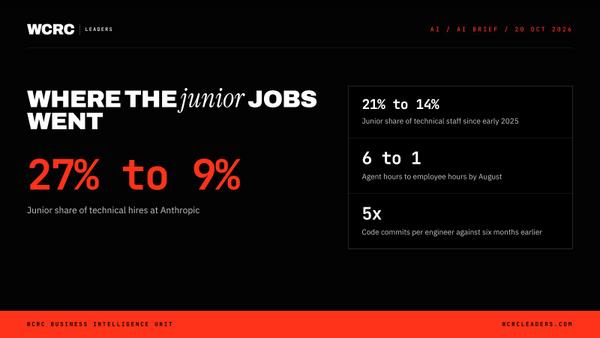
Junior hires fall to 9% at Anthropic: a warning for India's IT pyramid
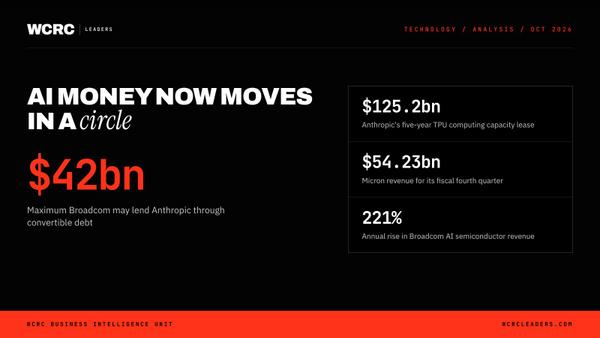
Supplier-funded compute: what CFOs should read into the AI financing loop
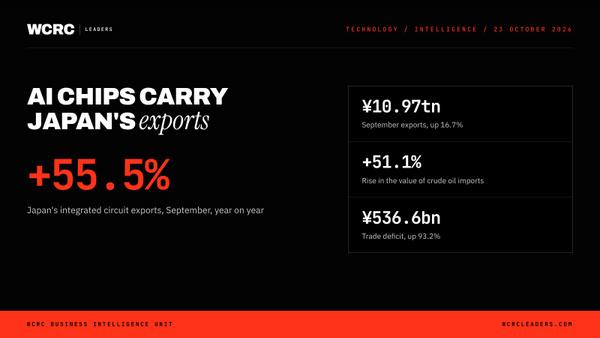
AI chips lift Japan's exports 16.7% as oil nearly doubles its deficit
Filed under