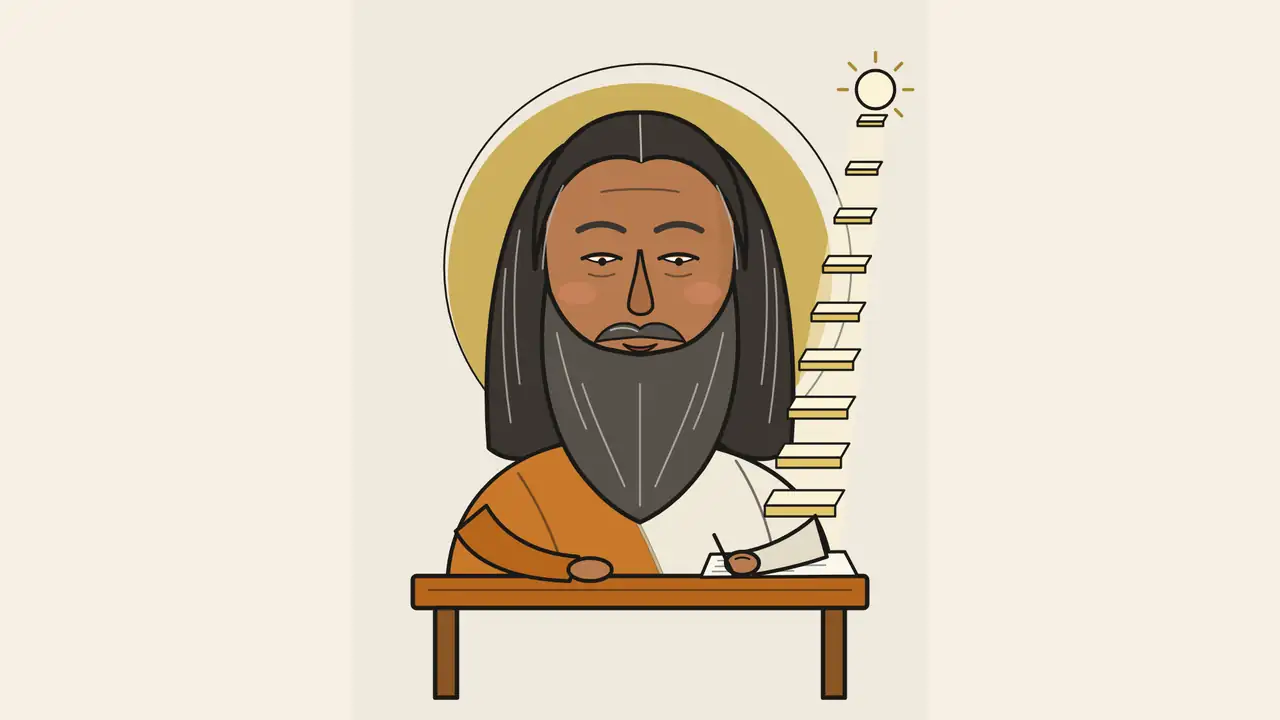
Original illustration drawn for WCRC. © Abhimanyu Ghosh & WCRC.
Spirituality · The Modern Sages · No. 19 of 27
Sri Aurobindo and why most transformations never reach the mind that runs the company
A Cambridge-educated nationalist became a yogi in Pondicherry after a year in an undertrial's cell changed how he saw everything around him. His teaching gives leaders a hard standard for change: alter the way the institution sees, or the new structure will slide back into the old one.
WCRC Consulting · Strategy into execution
Implement these strategies inside your organisation
Deep analysis of where your organisation stands and a strategic implementation of The WCRC Integral Transformation Model, built for your leadership team, culture and business.
Models created exclusively by Abhimanyu Ghosh; proprietary to Abhimanyu Ghosh and WCRC. WCRC's consulting service is not connected with, or endorsed by, any teacher, tradition or organisation discussed here.
Dates
1872 – 1950
Region
Puducherry (Pondicherry)
Tradition
Yoga
WCRC model
WCRC-GLC-19
The model in one line
Change how the institution sees, then everything it does changes.
The WCRC Integral Transformation Model™ · anchored in All life is Yoga
Cambridge, Baroda, Calcutta, Alipore, Pondicherry
Sri Aurobindo's life can be told as a list of places, and each one belongs to a different man. He was born Aurobindo Ghose in Calcutta on 15 August 1872, the date that would later become India's Independence Day, a coincidence he himself remarked on. In 1879, aged seven, he was sent to England. He studied at St Paul's School in London and then at King's College, Cambridge.
He returned to India in 1893 and spent thirteen years in Baroda, in the service of the state and at Baroda College, while quietly involved in revolutionary work. In 1905 he began the practice of yoga there. In 1906, after the Partition of Bengal, he moved to Calcutta and became a leader of the nationalists. The Sri Aurobindo Ashram records that he was the first to call publicly for complete independence.
In 1908 two things happened to him. He had his first major spiritual realisation, after brief early guidance from the Maharashtrian yogi Vishnu Bhaskar Lele; the tradition holds that he accepted no formal guru. And in May that year he was arrested in the Alipore Bomb Case and held for a year in Alipore jail as an undertrial. He was acquitted in May 1909.
In 1910 he left politics and went, by way of Chandernagore, to Pondicherry, then under French rule. His major works include The Life Divine, The Synthesis of Yoga, Essays on the Gita, The Human Cycle and the epic poem Savitri. With the Mother, Mirra Alfassa, who was his spiritual collaborator, he shaped what became the Sri Aurobindo Ashram. The Ashram dates its formal beginning to 1926.
He left his body in Pondicherry on 5 December 1950 and was laid in the Ashram Samadhi on 9 December. Auroville, the international township near Puducherry, was founded later, by the Mother, on 28 February 1968.
Yoga carried into the whole of working life
Sri Aurobindo's system is called Integral Yoga, or Purna Yoga: a synthesis of his own, with roots in Vedanta and Tantra. Four ideas in it matter most to anyone who runs an institution.
The first is compressed into a phrase from the introduction to The Synthesis of Yoga: "All life is Yoga." Spiritual practice, in this view, belongs inside work, relationships and daily life. Anything can become sadhana, disciplined practice, if it is done in the right spirit. There is no separate compartment for the inner life.
The second is that the real work of yoga is a change of consciousness. Techniques by themselves do not achieve it. What has to change is how a person sees and how a person is, and behaviour follows from that change. The Ashram and Britannica both describe his aim as larger than personal liberation: the transformation of human nature itself, bringing the divine into earthly life.
The third is evolution. Auroville's account of its founders describes his view that humanity is a transitional stage, and that consciousness is evolving towards a higher level, which he called supramental. Growth comes in stages.
The fourth concerns how such change happens. The Ashram's teaching pairs sincere aspiration from below with surrender to the Divine Mother's force from above. The two work together. Read as a leader, aspiration with nothing to open to wanders, and guidance that meets no aspiration has nothing to act on. Every leader who has tried to impose a culture change on an unwilling workforce, or tried to grow one from enthusiasm with no direction, has met one half of this teaching without the other.
The same prison, seen a second time
The defining episode in Sri Aurobindo's life took place in Alipore jail, during the year from May 1908 when he was held as an undertrial in the bomb case. He gave his own account of it on 30 May 1909, shortly after his acquittal, in what is known as the Uttarpara Speech.
Devotees recount, drawing on that speech, that in the jail he began to see Vasudeva, Krishna, everywhere: in the prison walls, in the trees, in the warders and in his fellow prisoners.
Leave aside, for a moment, what a reader believes about the experience itself. Look at its structure. Nothing about the jail changed. The walls, the warders and the other prisoners were exactly what they had been the day before. What changed was the consciousness looking at them, and with that change the whole place became something else.
In 1910 he left politics and went to Pondicherry to give his life to that inner change.
That is the episode's lesson for an organisation. Most corporate transformations change the jail: the org chart, the reporting lines, the systems. They leave untouched the way the company sees its customers, its risks and itself. Then everyone is puzzled when, eighteen months later, the new structure behaves exactly like the old one.
Transitional beings with new tools
Sri Aurobindo's view of humanity as a transitional stage reads differently in a year when companies are rebuilding their work around AI. Every firm is now deciding what it is becoming, and the tools are arriving faster than the thinking.
Adoption is no longer the hard part. The Stanford AI Index 2026 reports that organisational AI adoption continued to rise in 2025, up to 88% of surveyed organisations. What decides the result is elsewhere. Microsoft's 2026 Work Trend Index, which surveyed 20,000 workers using AI across 10 countries, found that organisational factors such as culture, manager support and talent practices account for more than twice the reported AI impact of individual factors, 67% against 32%. The same report found that only one in four AI users surveyed (26%) say their leadership is clearly and consistently aligned on AI.
Heifetz and Laurie drew the relevant distinction in Harvard Business Review. Technical problems have known solutions. Adaptive challenges require people themselves to change values, habits and ways of working. Installing an AI platform is technical. Changing how a company sees the work that the platform now does is adaptive, and it is the part that fails.
In Sri Aurobindo's terms, an AI programme that changes the tools and leaves the consciousness alone is yoga reduced to technique. The Integral Transformation Model is designed to prevent exactly that.
The WCRC Integral Transformation Model
Created by Abhimanyu Ghosh · A proprietary model of Abhimanyu Ghosh and WCRC
WCRC calls this the WCRC Integral Transformation Model. It treats change as a matter of an organisation's consciousness, meaning the assumptions, attention and values from which every process flows, and lays it out in the five steps of the diagram above. Change begins with sincere aspiration from people at every level, opens to clear guidance from leadership, produces a shift in how the organisation sees, is carried into the whole of working life, and is consolidated before the next stage begins. The model is WCRC's reading of Sri Aurobindo's teaching for business, and carries no endorsement from the Sri Aurobindo Ashram, the Sri Aurobindo Society or Auroville.
A model for changing an organisation at the level of its consciousness: the assumptions, attention and values from which every process flows. Sincere aspiration from people at every level meets clear guidance from leadership, and the change is carried into the whole of working life, one stage at a time.
Fig. 1The WCRC Integral Transformation Model™
© Abhimanyu Ghosh & WCRC
The building blocks
01Aspiration from below
Real change starts with a sincere wish for growth among the people who do the work, which no programme can manufacture.
In practiceThe CEO asks every team what they want the organisation to become and acts visibly on what comes back.
02Guidance from above
Leadership supplies direction, clarity and support that people can open to, so aspiration has a shape to grow into.
In practiceThe CEO states the intended change of mindset in plain words and repeats it consistently in every forum.
03Change of consciousness
The target is how the organisation sees customers, risk and itself; new processes on an unchanged mindset fall back.
In practiceBefore approving a restructure, the CEO names the belief that must change and how anyone would notice it had.
04Whole-life integrationPurna (integral)
The change has to show up in budgets, hiring, meetings and small daily choices together, or it stays a slogan.
In practiceThe CEO audits one ordinary workflow each quarter to see whether the new mindset is actually present in it.
05Evolution, stage by stage
An institution grows through stages, and each stage needs consolidating before the next is attempted.
In practiceThe CEO marks which stage the organisation is in and refuses to skip the consolidation work.
The chief executive who keeps restructuring
Many chief executives have a familiar pattern: a reorganisation in the first year, another in the third, a third shortly before departure. Each is announced as a transformation. Each changes the structure and leaves the habits of mind intact.
The model asks one decision of a CEO before any restructure is approved: name the belief that must change, and say how anyone would notice that it had. If a sales reorganisation is meant to make the company see customers as long relationships instead of quarterly transactions, say so, and say what a customer would notice in six months. A restructure that cannot name its belief is very probably moving furniture.
The habit that follows is integration. All life is Yoga, in Sri Aurobindo's phrase, and in the model all of working life has to carry the change. The playbook below asks the CEO to sit inside one ordinary workflow each quarter, a budget round or a hiring panel, and see whether the new way of seeing is present in it. Budgets and hiring decisions are where a company's real consciousness shows.
The blind spot is in the relationship between above and below. Sri Aurobindo's teaching pairs aspiration with guidance. In a company, guidance from above slides easily into command, and aspiration from below into compliance. The early warning is subtle: frontline ideas grow fewer, and the ones that do arrive echo the leadership's own words back to it. When that happens, the CEO is hearing an echo, and nothing new is coming up from below.
There is one more trap, and it is linguistic. Transformation vocabulary spreads fast. A leader can hear their own phrases repeated in every town hall and mistake that for change. The operating model judges progress only on workflow audits and on whether changes are still in use a year later, never on how often the language is heard.
Founders and the first belief worth changing
A start-up has less consciousness to change and more of it to form. That makes the model unusually practical at the founding stage.
The founder's first task is to ask each person what they want the company to become, and to listen to the answers. In a team of fifteen this takes an afternoon. It also establishes, early, that aspiration from below is part of how the company decides things.
The second task is to name, plainly, the one belief the company must hold or change to succeed, and to test the founder's own budget and hiring decisions against it. Founders are often the first to violate the culture they describe. A founder who says the company exists to serve small businesses and then spends the quarter chasing one large account has already shown the team its real consciousness.
Sri Aurobindo's idea of evolution through stages also helps founders resist a common temptation, which is to behave like a much larger company too early. Each stage has its own consolidation work. Skipping it to look bigger tends to produce a company with the processes of a corporation and the habits of a start-up, and the strengths of neither.
Boards and the long arc of an institution
Boards see transformations from a distance, usually through slides. The model gives them a better instrument: an annual stage review that asks which stage the organisation is in, what consolidation that stage still needs, and whether the changes approved a year ago are still in use.
Change persistence is the measure boards should care about most. A programme that has been announced, celebrated and then quietly abandoned has cost money and credibility. Sampling workflows twelve months after a change is the simplest honest test there is.
Boards also hold the counterweight to the model's third failure mode. Stage-thinking can become an excuse for endless delay, with every hard decision pushed to the next stage. The operating model sets an end date for each consolidation and requires board approval for any extension. A board that grants extension after extension should ask whether it is consolidating or avoiding.
If you sit on the board of a company in the middle of an AI programme, one question will tell you a great deal. Ask management to name the belief about the business that the programme is meant to change, and how the board will know, a year from now, that it has.
The business model
Inside a company, the model runs on sincere aspiration across the workforce, clear leadership intent, an honest view of the current mindset and patience for staged growth. Those inputs drive four practices: naming the belief behind each change, keeping two-way channels open between teams and leadership, carrying change into ordinary workflows such as budgets, hiring and meetings, and consolidating each stage before the next. The outputs are a shared language for the new mindset, processes that reflect changed assumptions, fewer relapses after change programmes and frontline ideas taken into strategy. The outcomes, set out in the operating model below, include an organisation able to reinvent itself repeatedly and strategy and culture pointing the same way.
Fig. 2Operating model: running the WCRC Integral Transformation Model
© Abhimanyu Ghosh & WCRC
Inputs
What the company commits
- Sincere aspiration across the workforce
- Clear leadership intent for change
- Honest view of current mindset
- Patience for staged growth
Practices
What leaders do, repeatedly
- Name the belief behind each change
- Two-way channels between teams and leadership
- Carry change into ordinary workflows
- Consolidate each stage before the next
Outputs
What changes in the work
- Shared language for the new mindset
- Processes that reflect changed assumptions
- Fewer relapses after change programmes
- Upward ideas taken into strategy
Outcomes
What the enterprise gains
- Organisation able to reinvent itself repeatedly
- Strategy and culture pointing the same way
- Durable advantage from mindset, hard to copy
- Higher-order purpose people recognise
The benefit model
The leader gains a way to change the source of behaviour, which makes each reform last longer than the restructure before it. Employees are asked what they aspire to and see their work treated as part of a larger purpose. Customers meet an organisation whose behaviour matches its promises, because the change has reached the front line. Investors back a company that can adapt its thinking as markets shift, with less waste on programmes that fade. And institutions that grow in awareness tend to act with more care for the people and places around them, which is the benefit to society the model records.
Fig. 3Benefit model: who gains what
© Abhimanyu Ghosh & WCRC
The leader
The leader stops relying on one restructure after another and gains a way to change the source of behaviour, which makes each reform last longer.
Employees
People are asked what they aspire to, and see their work treated as part of a larger purpose instead of a set of disconnected tasks.
Customers
Customers meet an organisation whose behaviour matches its promises, because the change has reached the front line.
Investors
Investors back a company that can adapt its thinking as markets shift, with less waste on change programmes that fade.
Society
Institutions that grow in awareness tend to act with more care for the people and places around them.
Fig. 4Where the model moves the needle
© Abhimanyu Ghosh & WCRC
- Vision Quotient
- ●●●●●
- Impact Index
- ●●●●●
- Innovation Score
- ●●●●●
- People Leadership
- ●●●●●
- Stakeholder Trust
- ●●●●●
- Resilience Factor
- ●●●●●
- Global Mindset
- ●●●●●
How to implement the WCRC Integral Transformation Model
Your first move
Ask every team, in writing, what they want the organisation to become, and commit to telling them within a month what you will act on.
If you are the founder or CEO
- 1
Ask what people aspire to
In the first week, ask every team what they want the organisation to become, and read the answers yourself. A founder can ask face to face; a large-company CEO uses a written question with follow-up visits.
- 2
Name the belief to change
State in plain words the change of mindset you intend, and repeat it the same way in every forum. Before approving any restructure, name the belief that must change and how anyone would notice.
- 3
Act visibly on aspirations
Pick some of what teams asked for and act on it where people can see, within a month. Report back on what you did not act on and why.
- 4
Audit one ordinary workflow
Each quarter, sit inside one everyday workflow, such as a budget round or hiring panel, to see whether the new mindset is present. Fix what you find.
- 5
Mark and hold the stage
Say which stage of change the organisation is in and refuse to skip the consolidation work. Review the stage with your leadership team every six months, and do not let it become an excuse for delay.
Rolling it out across the company
| Step | Owner | What the company puts in place |
|---|---|---|
| 01Read the current consciousness | CEO office with CHRO | Find out how the organisation now sees customers, risk and itself, through interviews and a sample of real decisions. Check how many past change programmes are still in use. |
| 02Pilot in one unit | One business head | In one unit, name the belief to be changed, open a two-way channel for frontline ideas and carry the change into budgets, hiring and meetings together. Review after a quarter. |
| 03Embed whole-life integration | CFO and CHRO | Require every change business case to name the belief it targets, and align budgets, incentives, hiring criteria and meeting formats with the intended mindset. Log frontline ideas and their adoption. |
| 04Train managers as guides | CHRO and all people managers | Teach managers to give clear guidance without turning it into command, and to treat team aspirations as input rather than compliance. Use the unit's own workflows as practice cases. |
| 05Measure change that lasts | Strategy office with HR analytics | Track the mindset-named change ratio, upward aspiration uptake, the leadership alignment pulse and change persistence. Review them each quarter by business unit. |
| 06Scale stage by stage | CEO and board | Extend to further units only once the pilot stage is consolidated, and check each year that new vocabulary is matched by changed budgets, incentives and meetings. Name hard decisions that cannot wait for the next stage. |
The execution roadmap
Four phases, each closed by a gate. Do not move on until the gate is met.
Days 0–30
Phase 1 · Diagnose and commit
Read the organisation's current consciousness and ask people what they want it to become.
- Ask every team in writing what they want the organisation to become, and commit to replying within a month on what will be acted on.
- Review the change portfolio and record how many initiatives name the belief or assumption they are meant to change.
- Run the leadership alignment pulse by business unit, and sample last year's process changes to see which are still in use.
- Mark which stage of development the organisation is in, and what consolidation that stage still needs.
Deliverable
A consciousness reading: themes from the teams' answers, the CEO's written reply, the stage marker and the KPI baselines.
Gate to proceed
Every team has answered, the CEO has replied in writing within the month, and a baseline is recorded for all four KPIs.
Days 31–90
Phase 2 · Pilot and prove
Prove in one unit that naming the belief to change, and carrying it into ordinary work, makes change stick.
- The unit head names the one belief that must change, for example how the unit sees customers or risk, and how anyone would notice it had changed.
- The head states the intended change in plain words and repeats it in every forum, as guidance from above.
- Adopt frontline ideas from the teams' answers into the unit plan and log each one, honouring aspiration from below.
- Audit one ordinary workflow in the unit, covering a budget, a hiring decision and a regular meeting, to see whether the new belief shows up.
Deliverable
A pilot workflow audit showing where the new belief is and is not present in budget, hiring and meetings.
Gate to proceed
The belief is named in the unit's plan, the workflow audit shows it in at least one budget, hiring or meeting decision, and adopted frontline ideas are logged.
Days 91–180
Phase 3 · Embed and scale
Carry the change into budgets, hiring and incentives across the whole organisation, one stage at a time.
- The CFO and CHRO require every change business case to name the belief it is meant to change.
- Align budgets, hiring criteria and incentives with the new belief, so it is integrated across working life.
- Train managers as guides who give direction and support rather than commands.
- Complete the consolidation work for the current stage before launching the next.
Deliverable
A revised change business case template, aligned budget and hiring criteria, and a trained manager group.
Gate to proceed
The mindset-named change ratio is reported across the portfolio, and the consolidation work for the current stage is signed off before the next stage starts.
Month 7 onwards
Phase 4 · Sustain and renew
Make sure the change lasts and that the vocabulary never runs ahead of behaviour.
- Check twelve months on which process changes are still in use, by sampling workflows.
- Repeat the question to every team about what they want the organisation to become, and compare the answers with the first round.
- Review the organisation's stage with the board each year and decide what the next stage requires.
- Audit for transformation language that has spread without any change in budgets, incentives or meetings.
Deliverable
An annual integral review to the board covering change persistence, aspiration uptake, alignment and stage.
Gate to proceed
Change persistence is measured for every major process change, and the board has confirmed the current stage and its consolidation needs.
Governance
- Sponsor
- The CEO, because guidance from above has to come from the person whose words every forum hears.
- Lead
- The head of strategy, working with the CHRO, who runs the change portfolio, the ideas log and the workflow audits.
- Review forum
- Quarterly in the leadership meeting, with an annual stage review at the board.
- Decision rights
- The lead can adopt frontline ideas into plans and commission workflow audits; naming the belief to change and moving to a new stage go to the sponsor.
Operating rhythm
- MonthlyThe CEO repeats the intended change of mindset in plain words in each leadership forum.
- QuarterlyFrontline ideas adopted into plans are counted from the ideas log and reported back to the teams that raised them.
- QuarterlyThe CEO audits one ordinary workflow to see whether the new mindset is present in it.
- AnnuallyThe stage review: the board confirms which stage the organisation is in and what consolidation remains.
Implementation risks and how to handle them
| Risk | Early warning | Mitigation |
|---|---|---|
| Transformation vocabulary spreads while budgets, incentives and meetings stay the same. | The new words appear in presentations while workflow audits find the old belief in decisions. | Judge progress only on workflow audits and change persistence, never on how often the language is used. |
| Guidance from above turns into command, and aspiration from below becomes compliance. | Frontline ideas fall in number, and those raised echo leadership's own words. | Publish which frontline ideas were adopted, including those that challenged leadership's view. |
| Stage-thinking becomes an excuse to defer every hard decision. | Consolidation work has no end date, and the next stage keeps being postponed. | Set an end date for each consolidation, and require the board to approve any extension. |
| Spiritual language alienates staff who do not share it. | Alignment pulse scores fall in some units after the launch. | Use plain business terms such as belief, assumption and attention, and keep the source as background. |
By stage of company
Startup
Founder-led, under ~50 people
The founder asks every person what they want the company to become and names the one belief the company must change to get there. Changes are checked in the founder's own budget and hiring decisions.
Scale-up
~50 to 1,000 people
Every change business case names the belief it is meant to change, the CEO audits one workflow a quarter, and managers are trained as guides. Consolidation of each stage is completed before the next begins.
Enterprise
Large or listed company
The change portfolio is managed against named beliefs across businesses, with alignment tracked by unit. The board reviews the organisation's stage each year and checks change persistence before approving the next stage.
Are you ready?
- Can our leadership name the belief behind the process that a planned change must alter?
- Do frontline ideas regularly make it into our plans?
- Do our budgets, incentives and meetings match the mindset we say we want?
What success looks like at 12 months
- People can say which belief the organisation set out to change and show where that change appears in daily work.
- Process changes made a year ago are still in use.
- Frontline teams see their ideas in plans, and leadership speaks with one voice on the direction of change.
Habits to start this quarter
- 1
Notice the lens before the facts
When a piece of news irritates or alarms you this week, write down the assumption that made it feel that way before you act on it. Sri Aurobindo's jail did not change; his seeing did. Your first lever is usually the assumption.
- 2
Make one routine task an offering
Choose a task you usually rush, such as approving expenses or writing a short update, and for one month do it with full care, as if it mattered completely. All life is Yoga, in his phrase. See what changes in you and in the people who receive the work.
- 3
Begin with a sentence of aspiration
Start each working day by writing one sentence about how you want to grow as a leader, before you read any messages. Keep the sentences in one place. After a quarter, read them through and notice what has changed.
- 4
Ask a question you cannot answer
Once a month, put a question to a junior colleague that you genuinely do not know the answer to, about the work or the customer, and act on something in their reply. Aspiration from below only rises where it has been invited.
- 5
Compete without contempt
In your next hard negotiation or competitive fight, refuse to use contemptuous language about the other side, and ask your team to do the same. Sri Aurobindo moved from nationalist politics to a yoga of transformation; contempt narrows what a leader can see.
What to measure
| Leading indicator | How to measure it |
|---|---|
| Mindset-named change ratio | Share of approved change initiatives whose business case names the belief or assumption to be changed, from the portfolio register. |
| Upward aspiration uptake | Number of ideas raised by frontline teams that are adopted into plans each quarter, tracked from the ideas log. |
| Leadership alignment pulse | Quarterly survey item asking whether leadership is clearly and consistently aligned on the intended change, by business unit. |
| Change persistence | Share of process changes still in use twelve months later, checked by sampling workflows. |
Where the model goes wrong
- Transformation language without behaviour change: the vocabulary spreads while budgets, incentives and meetings stay as they were.
- Guidance from above turns into command, and aspiration from below is treated as compliance.
- Stage-thinking becomes an excuse for delay, with every hard decision deferred to the next stage.
Change the seeing, and the structure follows
Sri Aurobindo moved from Cambridge to Baroda, from nationalist politics to a prison cell, and from there to forty years of yoga in Pondicherry. Through all of it his question was how human beings change at the root, and his answer was that the change has to happen in consciousness and then be carried into every part of life. WCRC reads that as the most demanding standard of transformation a leader can adopt, and the most honest.
Companies spend heavily on new structures and new tools, and those matter. But the walls of Alipore jail stayed exactly as they were. What changed was the man looking at them, and everything else followed from that.
Powerfacts
- What did Sri Aurobindo mean by "All life is Yoga"?
- Sri Aurobindo taught that spiritual practice belongs inside work, relationships and daily life, and that anything can become disciplined practice. The phrase comes from the introduction to The Synthesis of Yoga, and it sums up the spirit of his Integral Yoga.
- What happened to Sri Aurobindo in Alipore jail?
- Arrested in the Alipore Bomb Case in May 1908, he spent a year in Alipore jail as an undertrial before his acquittal in 1909. In his Uttarpara Speech of 30 May 1909 he described how, in the jail, he began to see Vasudeva (Krishna) everywhere around him. In 1910 he left politics and went to Pondicherry to give his life to yoga.
- What is the WCRC Integral Transformation Model?
- It is WCRC's leadership model drawn from Sri Aurobindo's teaching that real change is a change of consciousness. It asks leaders to name the belief a change must alter, combine aspiration from below with guidance from above, carry the change into everyday work and consolidate each stage before the next.
Sources
- Sri Aurobindo, Encyclopaedia Britannica
- Sri Aurobindo, Sri Aurobindo Ashram
- Important Dates in the Ashram, Sri Aurobindo Ashram
- Uttarpara Speech, Sri Aurobindo Institute of Culture, Kolkata
- The Founders, Auroville
- "All Life is Yoga", Renaissance, Sri Aurobindo Society
- The 2026 AI Index Report, Chapter 4: Economy, Stanford Institute for Human-Centered Artificial Intelligence
- Agents, human agency, and the opportunity for every organization (Work Trend Index 2026), Microsoft WorkLab
- The work of leadership (Heifetz & Laurie), Harvard Business Review
Read Sri Aurobindo's life and teachings on Gurushakti.
The WCRC Integral Transformation Model™ (WCRC-GLC-19) is part of The WCRC Guru Leadership Codex™. Created exclusively by Abhimanyu Ghosh; a proprietary model of Abhimanyu Ghosh and WCRC. © 2026 Abhimanyu Ghosh and World Centre for Research and Consulting. All rights reserved.