Brand Studio
How Batra Henlay Cables Turned Copper Volatility Into a Competitive Advantage
A wire maker founded in Badarpur in 1992 supplied hospitals in 2020, the new Parliament complex in 2022 and transit lines after that. The product barely changed. The discipline behind it did.

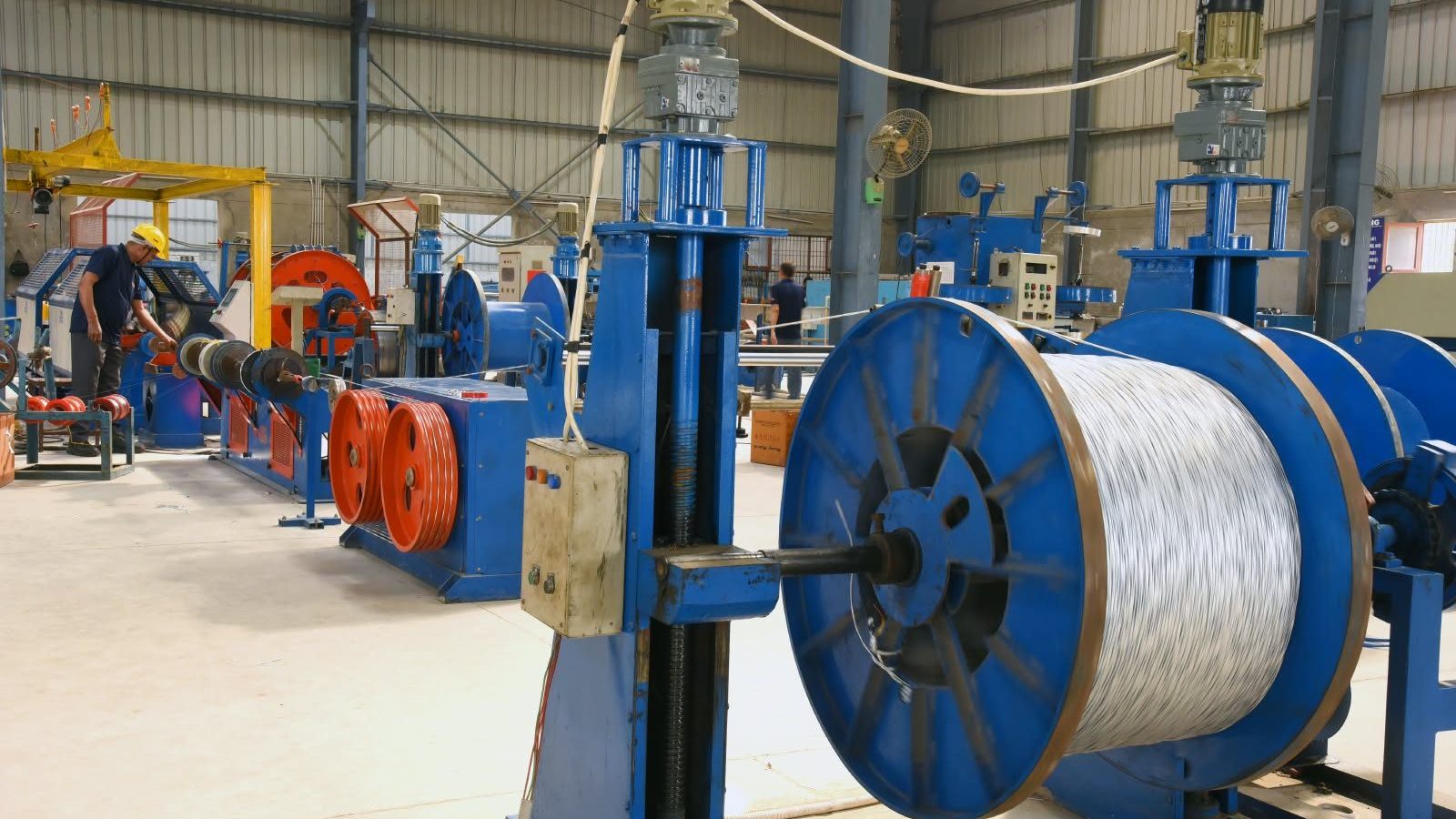

In the spring of 2020, Batra Henlay Cables, a Delhi wire and cable manufacturer with a plant in Greater Noida, watched the same thing every Indian industrial company watched: order books going quiet while the country shut down. What it did next is the reason this story is worth a manager’s time. It did not pivot. It did not launch a new product. It made sure that when the next wave of construction demand arrived, whatever it turned out to be, the company would be able to quote a price, hold that price, and deliver.
The wave arrived three times in five years, each time from a different direction. First came the emergency build-out of hospitals, medical colleges and care centres in 2020 and 2021, which needed wiring at speed. Then, as the economy worked through what the company’s leadership describes as a W-shaped recovery to 2022, government spending came through in the form of the Central Vista redevelopment in New Delhi, including the new Parliament building, which Batra Henlay supplied. From 2023 the money moved again, to mass transit, airports, railways and roads, as a nation of 1.5 billion people went back to commuting every day.
Three demand shocks, one product category, one company able to answer each. The interesting question is not what Batra Henlay makes. It is what sits underneath a business that can keep its promises when the input that makes up most of its cost is being traded on a screen in London by people who have never seen a cable drum.
Idea in brief
- The problem — Cable making is a commodity business. Copper is the bulk of the cost and its price moves on events the factory cannot control: a pandemic, a mine on half its workforce, a currency swing. Most mid-sized manufacturers absorb the swings and hope their margin survives.
- The approach — Batra Henlay Cables runs copper like a treasury function. It forecasts stock, anneals rod in-house, buys from several suppliers, plans foreign exchange ahead of imports, and uses futures and options so that a quotation can be honoured for its full validity period.
- The lesson — In a commodity business the brand is built in the back office. Reliability of price and delivery, not product novelty, is what won the company its place on Central Vista, on transit projects and in three neighbouring markets.
A commodity business with a treasury inside it
Rajesh Batra, the company’s promoter, has been making cables since the early 1990s, and his working assumption is blunt: cable making is a commodity-driven business, and the commodity is copper. Anything that moves copper moves the profitability of every order on the books. A pandemic, a drought, a war. The job of management is to make sure the factory is never surprised by a price it has already quoted.
The post-Covid copper market was the test. When demand bounced back in 2021, many mines were still operating under Covid protocols with reduced workforces and could not meet it. The London Metal Exchange price rallied past what most forecasters expected and then became volatile enough to invite speculation. For a cable maker that is a specific kind of pain. Orders are quoted weeks or months before copper is bought, projects run for years, and the dollar, the pound and the metal were all moving against each other over short and long periods at the same time.
Batra Henlay’s response was to treat the problem as a finance problem rather than a purchasing one. The company built a forecasting routine for copper stock, brought the annealing of copper rod in-house so that it buys rod rather than finished conductor and controls one more step of the cost, and spread its supply chain across several sources so that one late shipment does not stop a line. It planned foreign exchange purchases ahead of imports. And it adopted futures, options and hedging so that a quotation is backed by a position for the full period of its validity, not by hope.
None of this is exotic for a listed metals company. It is unusual for a family-run manufacturer with a large workforce, and that is the point. The management practice that distinguishes Batra Henlay from a hundred other wire makers in the National Capital Region is one most of its competitors would classify as “finance” and leave to an accountant.
“The management practice that distinguishes the company is one most competitors would classify as ‘finance’ and leave to an accountant.”
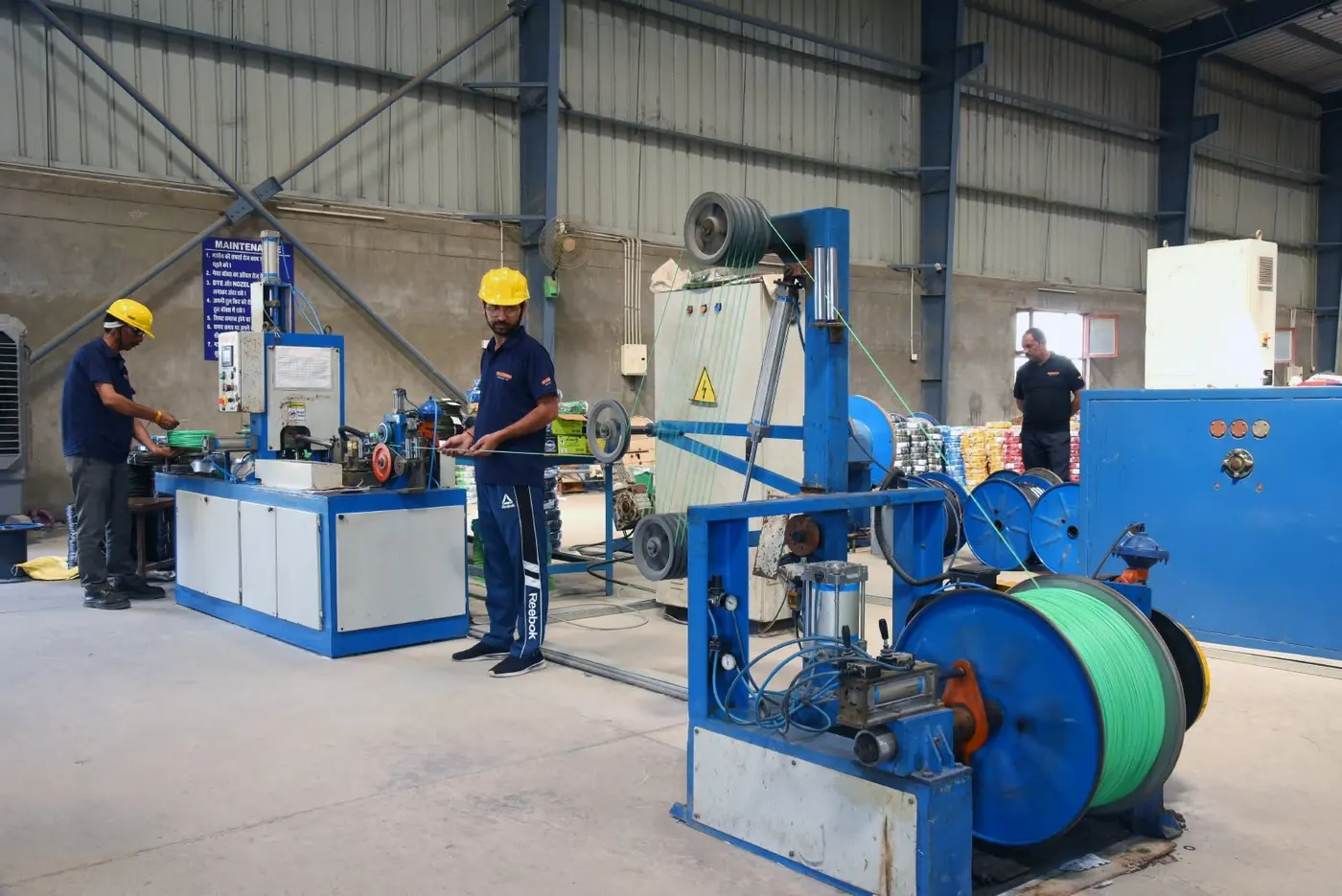
Selling safety to electricians, not specifiers
Ask most cable companies who their customer is and they will name the EPC contractor or the consulting engineer who writes the specification. Batra Henlay names a different person: the electrician who will be inside the building in May, when the circuits are on full load and the panel is hot.
The reasoning starts with geography. Asian buildings run their electrical systems under permanent stress from humidity and heat, and the weak point is rarely the new installation. It is the ageing network of a building that has been added to for twenty years. So the company maps active construction zones and runs what it calls micro events: electricians’ meets at community centres, organised with its local distribution partners, where its safety engineers and regional sales staff sit down with facility managers and working electricians.
The content is practical. What the National Building Code now requires. Why a flame-retardant cable is not the same as a fire-resistant one, and when a life-safety circuit needs the second. Case histories of building fires that started in a cable pathway nobody had looked at in a decade. The company also argues, at these meetings, for IoT monitoring devices in buildings with heavy public movement, and it is open about the fact that this costs more than the alternative.
There is a commercial logic here that is easy to miss. In a product category where every brand claims the same standards, the person who decides what gets pulled through the conduit on a Tuesday afternoon is often the electrician, and the brand they trust is the one whose engineer explained something useful to them. The company’s regional supplies also ship with bilingual documentation, test reports and safety guidelines in the local language as well as English, which is a small cost that removes a large excuse.
Three products and one regulatory bet
Since 2023 Batra Henlay has put what it describes as a double-digit million-dollar investment, with international and local technology partners, into three product lines: halogen-free wires; fire-resistant cables up to and including the low- and mid-voltage power categories; and cross-linked low-smoke zero-halogen cables with a UV coating for outdoor use, aimed at solar installations where surface temperatures pass 50 degrees Celsius.
The products matter less than what the company did with them. Each has been certified and licensed under the Bureau of Indian Standards, and the company says it now holds Category 1 status with the relevant central and state bodies. That status, together with endorsement from Chief Fire Officers and senior electrical officials, is what opened the specifications of architects, mass transit authorities, central public sector undertakings, roads and buildings departments, regional development authorities and grid operators to the new range.
For a manager outside the industry, the transferable idea is this: in regulated infrastructure, certification is distribution. A better cable without the licence is a sample. A certified cable is a line item in a government tender. Batra Henlay spent on the product, but it spent at least as deliberately on the paperwork, the in-house consultants who steered it through the harmonised code, and the relationships with the officials whose signature turns a product into an approved material.
The factory that watches itself
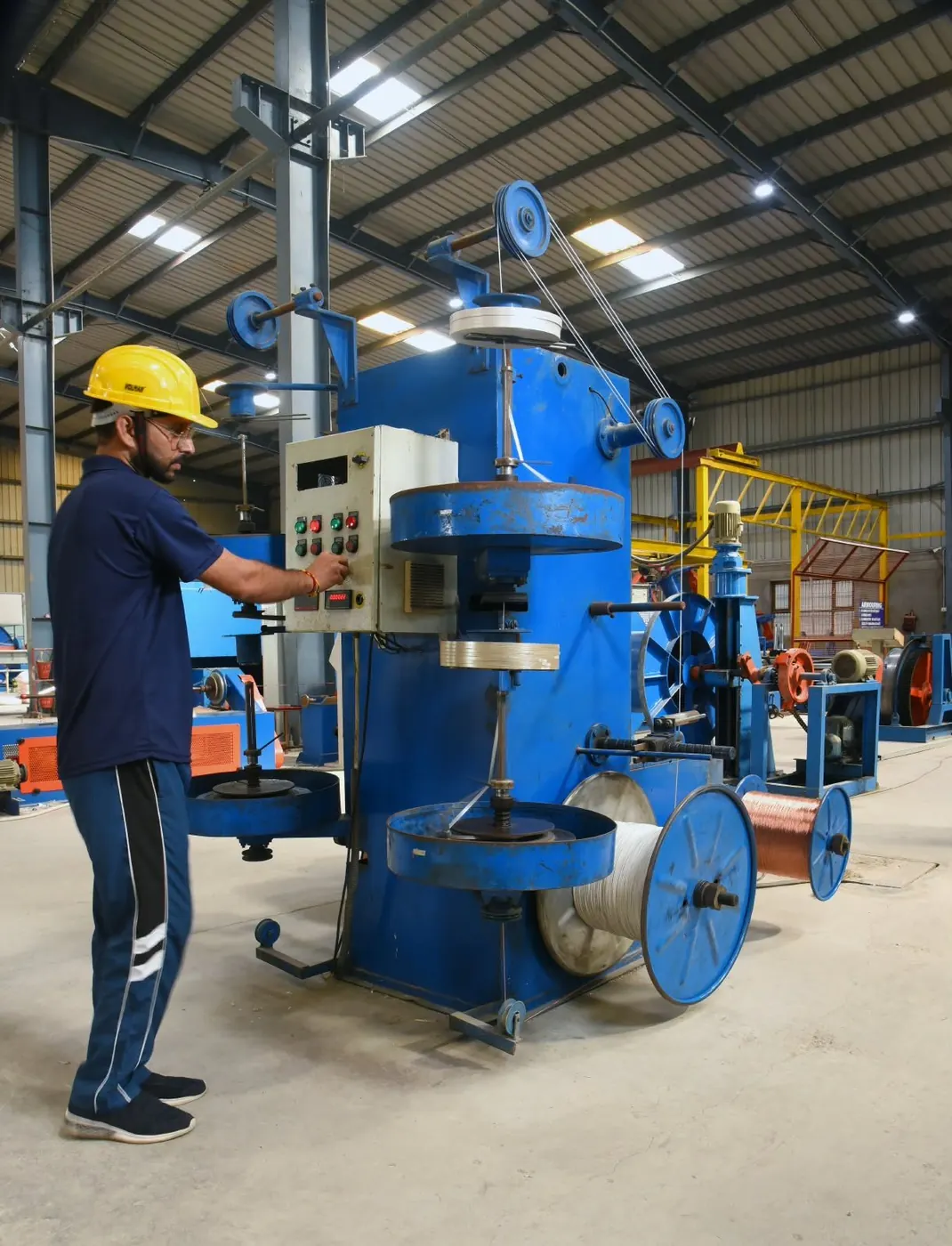
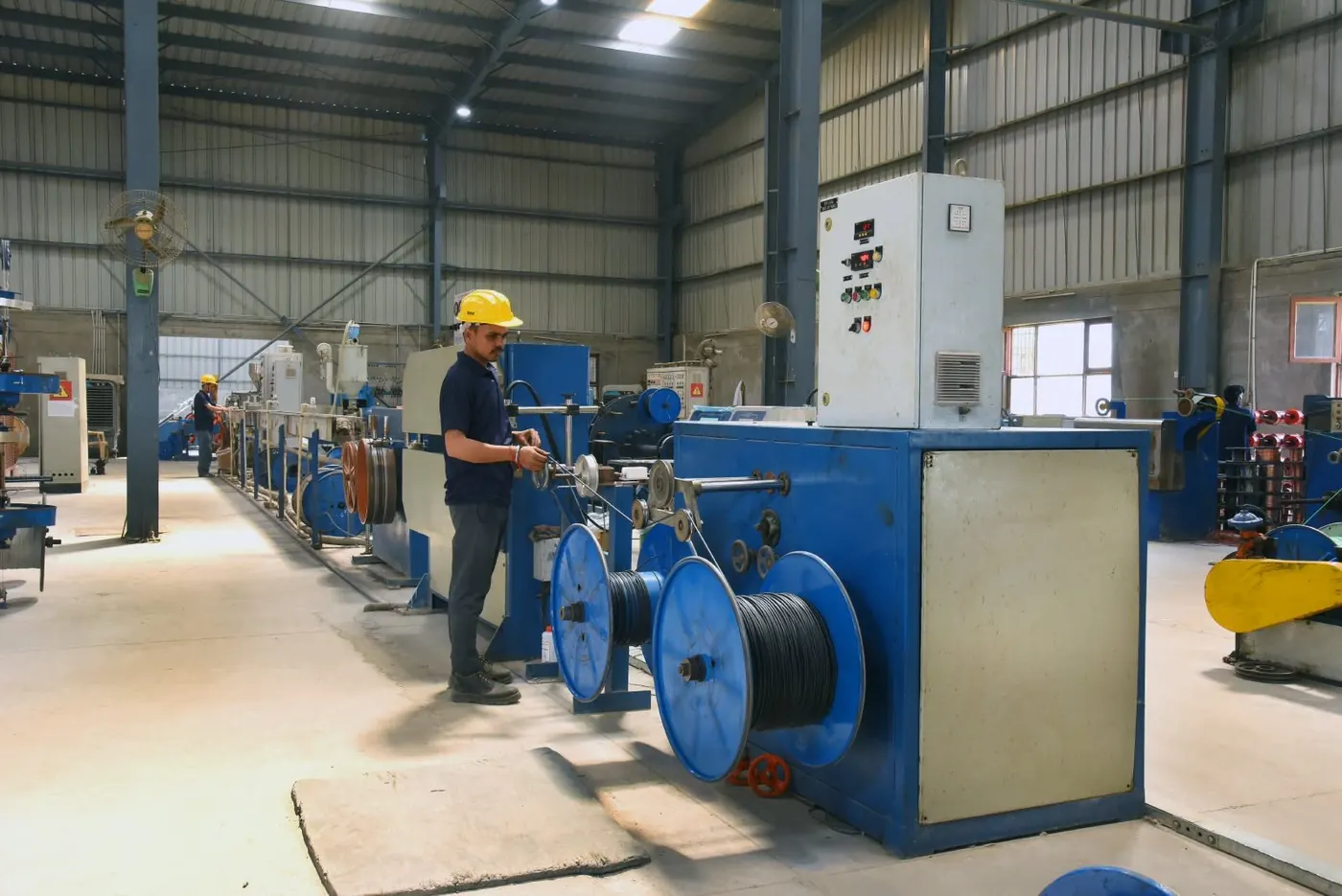
The company’s description of its digital transformation is unusual because it starts with physics rather than software. A cable fails where the insulation is thin, where the conductor is off-centre, where the surface is uneven. Under load that weak point heats, and heat is where a short circuit becomes a fire. So the first job of any sensor on the line is to catch those defects before the drum leaves the building.
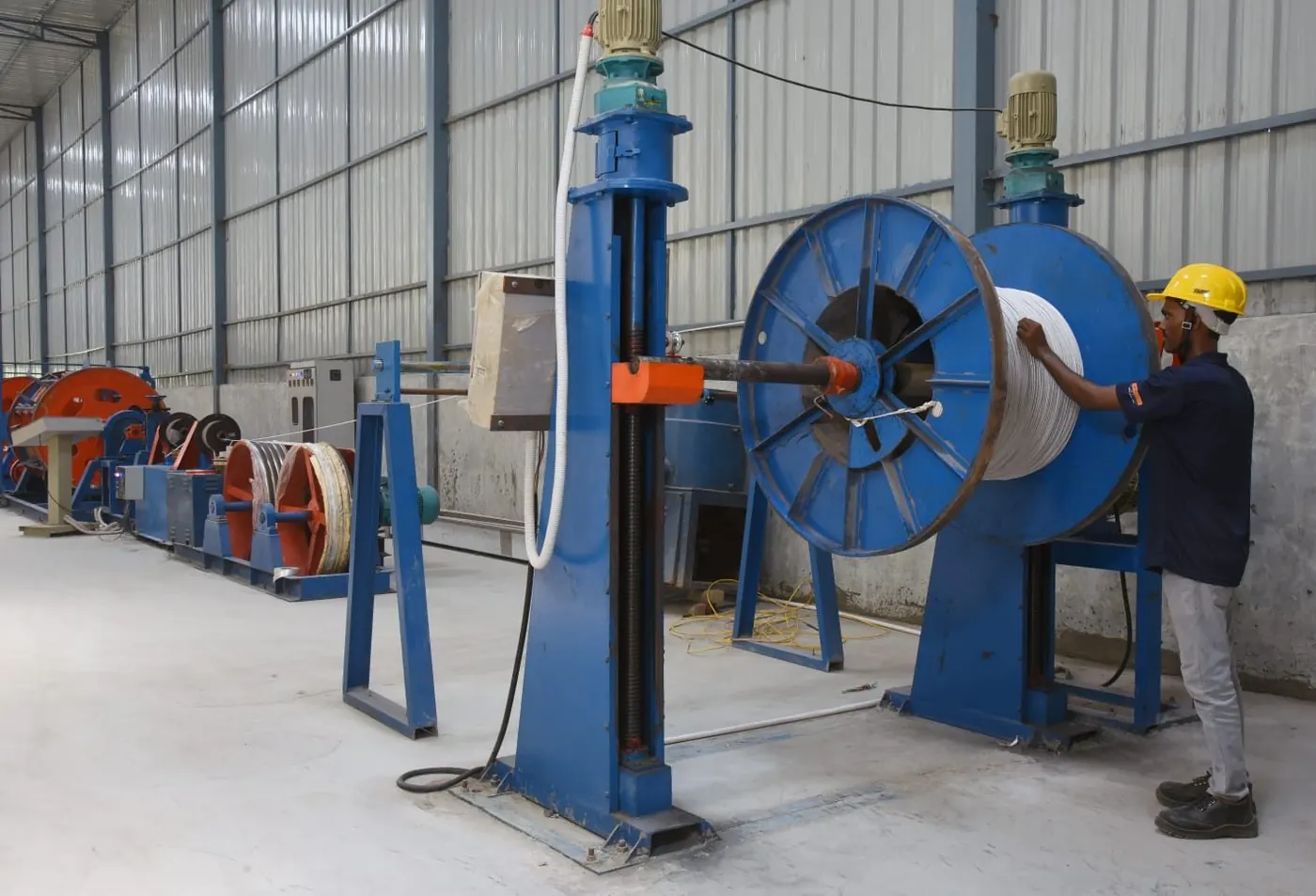
Batra Henlay has fitted its extrusion lines with laser marking machines that print the cable in real time, measure for uniformity as they do so, and report line speed and extrusion intensity to a central server, so that a shift’s output is known before the shift ends. The same systems flag printing faults in advance and raise a maintenance warning before a component fails. Pneumatic controllers monitor the compressors feeding the lines and adjust air pressure continuously, which the company credits with steadier quality, better machine efficiency and lower emissions. Robotic rotators stack packed bundles once a preset metre count is reached.
The 80/20 reversal
Batra Henlay’s sustainability target is specific enough to be held to. Today, the company says, eco-friendly products are 20 percent of sales and traditional insulation-based cable is 80 percent. By 2028 it intends to reverse that ratio across every size up to 630 square millimetres.
The honest part of the plan is the admission of what stands in the way: price. The reversal only happens, in the company’s own words, on the back of a cost-volume-profit analysis that its supply chain team is working through with its technical staff, developing lighter and cheaper insulations on REACH and RoHS formulations. A sustainable cable that costs noticeably more than a PVC one will stay at 20 percent of sales no matter how good the intention.
Around that target sits a set of smaller practices that together make up a circular model: waste vendors who take back empty reels and end-of-life components; PVC recycled into the sample boards and display bases the marketing team uses; scrap cut down at site by partner vendors to reduce transport movements; operators trained against copper and aluminium scrap targets; plastic spools made reusable. Under its ISO 14001 environmental management system the extrusion process recirculates cooling water and monitors discharge to the local sewage authority’s limits. A Plan 2030 for full circularity is tied to the company’s Extended Producer Responsibility obligations and, it notes, has to stay inside BIS and IEC rules on which thermoplastics and fillers can be used, with NABL-accredited third-party testing on the material recovery from mica tapes and cross-linked sheaths.
What the grid numbers do to a boardroom
The company’s leadership frames the decade ahead in grid arithmetic. It cites a national power generation target of 900 gigawatts and a Central Electricity Authority projection of peak demand reaching 366 gigawatts against roughly 243 gigawatts today, an increase of about half. Every one of those gigawatts has to be carried on a conductor.
The commercial effect has already shown up in cash. Since 2023 the EPC contractors and utilities that make up the company’s regular customer base have been placing orders with secured advances backed by bank guarantees in order to lock in supply. The company says this has streamlined its cash inflows and supported organic financial growth, and that it is redirecting those stronger inflows into a more diverse portfolio and into emerging markets that need current technology at lower prices, which it believes it can reach on skill and scale.
Internally, the C-suite of chief executive, chief financial officer and chief operating officer comes from different cultural and professional backgrounds, recruitment is set up to be gender-balanced with monitoring of the pipeline beneath them, and annual training hours per employee are being raised from twenty to over thirty across a large workforce. Executive incentives are tied to targets that include ethical practice, occupational health and safety under ISO 45001, and decarbonisation, with each target assessed on the likelihood and severity of the risks it is meant to control. The company’s language on culture is warmer than most of its competitors would use, and the proof will be in retention figures it has not yet shared. But the structure is there, which is more than many family-run industrials in the sector can say.

What leaders can take from this
- Find the input that sets your margin and manage it like money. If one commodity is most of your cost, the hedging desk belongs in operations, not in the accounts department. Batra Henlay’s edge is a finance discipline most of its peers never built.
- Identify the last person who touches your product and teach them something. The specifier writes the tender; the electrician decides what gets pulled. Serving the second group is cheaper than advertising to the first.
- In regulated markets, treat certification as a product in its own right. Budget for it, staff it, and measure it by the number of approved-materials lists you appear on.
- Put a number on the sustainability target and name the obstacle. “20 to 80 by 2028, if the cost-volume-profit work comes through” is more credible than any pledge without a price attached.
Powerfacts
What does Batra Henlay Cables make?
Batra Henlay Cables manufactures wires and cables for building, infrastructure, industrial and renewable energy use, including halogen-free wires, fire-resistant low- and mid-voltage power cables, and UV-coated cross-linked low-smoke zero-halogen cables for solar installations, all certified under the Bureau of Indian Standards.
Where is Batra Henlay Cables based?
Batra Henlay Cables was founded in 1992 in Badarpur, New Delhi, by promoter Rajesh Batra and his brothers. Its head office is in New Friends Colony, New Delhi, and its manufacturing plant is at Ecotech 1, Greater Noida, Uttar Pradesh. About 90 percent of sales are in India, with the rest in Nepal, Bhutan and the Maldives.
Which major projects has Batra Henlay Cables supplied?
Batra Henlay Cables supplied the Central Vista redevelopment in New Delhi, including the new Parliament building, as well as hospitals and medical institutions built during the pandemic, and mass transit, airport, railway and road projects from 2023 onward. Its customers include EPC contractors, utilities, central public sector undertakings and regional development authorities.
About this story
Facts and figures are drawn from the WCRC Brand Coverage submission made by Batra Henlay Cables and are the company’s own statements unless otherwise noted; founding details and locations were checked against the company’s website. Batra Henlay Cables was named among the World’s Leading Brands 2025 by WCRC Leaders. WCRC publishes only excerpts approved by the brand.
Is your brand built this carefully?
WCRC’s MegaBrands assessment benchmarks a brand against five competitors on fifty parameters, with quarterly Pulse Scores for consumer and market sentiment. FutureBharat Brands assesses the brands consumers say are building the future of Indian consumption. For help putting a practice like Batra Henlay’s copper discipline into your own operation, write to consulting@wcrcint.com.
LTG INFRASTRUCTURE LIMITED - ASIA'S MOST TRUSTED BRAND 2021-22
Crafting Unforgettable Experiences: The Nocturnal Network's Captivating Brand Story

Philips Domestic Appliances - Leading the domestic appliances market
Petrol with Energy Boosters from Hindustan Petroleum: HPCL poWer

Elevating Travel Experiences: The DreamFolks Journey
Afinoz: India's Most Promising Digital Finance Brand
Filed under